
EditorialDear friends,
This is our Eucalyptus Newsletter number 07. It is the opening number for the year 2007. Now, we are receiving the financial sponsorship from ABTCP - The Brazilian Technical Association of Pulp and Paper and from Botnia. ABTCP decided to take the leadership in a consortium of organizations that have the interest to sponsor the online publications Eucalyptus Newsletter & Eucalyptus Online Book, helping the dissemination of information’s about the Eucalyptus. With a financial support, I'll be able to have a closer dedication to this project; and the newsletter issues and online book chapters will be more frequent. I'd like to register my special thanks to ABTCP's directors and friends, who are helping me to achieve the targets I have in mind with regard to these services. A special thanks to Botnia, a pulp & paper company is placing trust in our work. Botnia is the first forest-based company sponsoring this project. As a Brazilian, but also as a world citizen, my gratitude to this help coming from abroad, showing that the Eucalyptus world is enormous, as well the interest on them. Any other organizations or companies interested on providing financial support to these online publications, please go to know the conditions and opportunities at: http://www.eucalyptus.com.br/sponsor.html
The mini-article in this edition deals about the most modern bleached kraft pulp fiberlines being built for Eucalyptus as raw materials. In recent years, the technologies for digesting, bleaching, washing and the closures of water systems are leading to very eco-efficient pulp mills. The consumption’s of water, energy, steam and chemicals are being substantially reduced. We know that any residues or losses are converted into pollution. As a consequence, more efficient mills are a lot cleaner and less polluting.
As a function of the contradictory viewpoints about the modern technologies for bleached Eucalyptus pulp manufacturing, even in these state-of-the-art fiberlines, I decided to provide several euca-links to inform more about these fiberlines and about some Environmental Impact Assessment Reports. Also, I'm introducing to you magnificent reports about the environmental legislation and guidelines to the pulp and paper manufacturing industry. Some of these reports and related studies were written as requested by the Tasmania government, as preliminary studies preceding the approval of the Gunns Eucalyptus pulp mill in Tasmania. My friend Mr. Roberto Miotti was the project leader and the coordinator for the majority of these studies. The purpose of the Tasmania government is to guarantee that a new mill may come to the state, but having the most modern and green technology.
Another interesting issue about environment is the open forum on forestry, known as "The Forests Dialogue". I'm bringing several information about this unique and valuable initiative.
In continuation to our Wood Anatomy and Wood Structure Tutorial, several new links are being provided. Something to improve what has been started in the previous edition of the Eucalyptus Newsletter.
Some revisions on specific new themes are being opened: genomics in eucalyptus, honey production potential and eucalyptus essential oils. In this sense, we are combining very advanced scientific knowledge with practical applications for the Eucalyptus.
I'm also bringing several suggestions about guides, books, speeches, statistics and events on Eucalyptus. In the Eucalyptus Newsletter, we are not used to promote events that are to come in the future. Our intention with regard to events is to show to you links with events that have recently happened, and with the speeches available for downloading. Several organizations are used to show all contents of their events, in a particular way to promote future events. Definitively, a new way to promote and to disseminate the knowledge, without any egoism. Thanks to them, on behalf of we all.
Another chapter of my professional life is being brought to you, with a lot of valuable technical information. You may visit my participation in the creation of the "Graduate Course in Forest Engineering - Forest Products Technology Major - UFSM Federal University of Santa Maria". A privilege on my life. Besides the report on my experiences in the university, you may also find the quizzes, some hand-outs and my ex-students' master and PhD theses, all available for downloading.
In case you like these Euca-Links, please download the files as soon as possible, since the web is very dynamic, and websites are always being changed, updated or restructured.
Just in case you are not registered yet to receive the Eucalyptus Newsletter, and the book chapters attached to it, when they are made available, do it immediately. There are no costs involved. Please, use the short cut Click here to register. Please, accept my most sincere thanks for supporting our work when accessing regularly our websites.
In case I may eventually count with your help, please, send a recommendation to your friends who have the same level of interest for the Eucalyptus, suggesting them to register to receive these virtual publications. Thanks for this cooperation. We are now over 2.300 registered readers, thanks to you all.
Remember, this is a no-cost service offered to you. What we want is to provide good benefits to the users.
Thanks for everything
Celso Foelkel
http://www.celso-foelkel.com.br
http://www.eucalyptus.com.br

Lots of Euca Links and Knowledge
Graduate Course in Forest Engineering - Forest Products Technology - UFSM Federal University of Santa Maria
Wood Anatomy: A Complement to our Previous Tutorial
"The Forests Dialogue"
Eucalyptus Essential Oils
Honey Production from Eucalyptus
Genomics in Eucalyptus
Environmental Impact Assessment Studies for Modern Pulp Fiberlines
Environmental Legislation for Modern Pulp Fiberlines: a Study Made Available by the Tasmania Government
Literatures and Events about the EucalyptusTechnical Mini Article by Celso Foelkel
Modern Bleached Kraft Eucalyptus Pulp Fiberlines
 In
this edition
In
this edition
Lots of Euca Links and Knowledge
The websites we are suggesting as links are not ours. Their contents are not our responsibility. Our suggestion is based on the fact that they are offering good technical material that we feel could be valuable to you. In case you do not agree with their contents, please get in touch directly to their web addresses. Please, be patient when opening some of the suggested URLs. They may take some minutes due to the fact some files are very heavy. In case the URL does not open in your first attempt, try it again, one or more times. In case of heavy files, this is a common problem in the internet use. Since most of the URLs are contemplating pdf files, you are recommended to have Adobe Acrobat Reader in your computer. Please, give some minutes of your precious time for these links, you are not to feel sorry.
Graduate Course in Forest Engineering - Forest Products Technology - UFSM Federal University of Santa Maria
I had the privilege to be one of the persons involved in the creation of this graduate course in Forest Products and Pulp and Paper, in Brazil. At the Federal University of Santa Maria, along more than 10 years, I was able to build a fantastic network of friendship and expertise with professors, students and organizations supporting the course. This story is being told to you, with the possibility to download the theses, quizzes, and technical hand-outs that have been written at that time. The generation of students we had was really talented. You may check this spending some time having a look in their theses. This section is completely written in Portuguese, but the theses have abstracts in English.
To know more about this story, please visit:
http://www.celso-foelkel.com.br/relatos2.htmlTo access hand-outs and theses:
http://www.celso-foelkel.com.br/artigos_ufsm2.html
Wood Anatomy:
A Complement to our Previous TutorialIn our Eucalyptus Newsletter number 06 we had the opportunity to introduce you to the Wood Anatomy Tutorial, an enormous collection of references on wood anatomy and wood structure. In case you have not visited this tutorial, take this chance and go to:
http://www.eucalyptus.com.br/newspt_out06.html
More recently, I found and I received indications of new websites, very good ones, to be included in our Tutorial.
Check these new euca-links:
"Wood anatomy" (Spanish)
http://www.biologia.edu.ar/plantas/maderas.htm"Characteristics of the wood from some Eucalyptus species planted in Brazil" - Embrapa Florestas (Portuguese)
http://www.cnpf.embrapa.br/publica/seriedoc/edicoes/docum38.pdf"Parenchyma cells" (Spanish)
http://www.inea.uva.es/servicios/histologia/celulas_parenquimaticas.htm"Phloem" (Spanish)
http://www.inea.uva.es/servicios/histologia/floema.htm"Vegetal tissues" (Spanish)
http://www.inea.uva.es/servicios/histologia/inicio_real.htmhttp://www.inea.uva.es/servicios/histologia/mapa_del_web.htm
"Eucalyptus wood products for the construction of houses" (Spanish)
http://www.inta.gov.ar/concordia/info/documentos/forestacion/productos%20de%20
eucalipto%20sanchez%20acosta.pdf"Propriedades físicas, mecânicas e químicas das madeiras e da parede celular" - notas de aulas do professor Umberto Klock da Universidade Federal do Paraná (Português)
http://www.madeira.ufpr.br/umbertoklock/quimica/notasdeaula.htm
http://www.madeira.ufpr.br/umbertoklock/QuimicadaMadeira.pdf
http://www.madeira.ufpr.br/umbertoklock/Quimicadaparedecelular2004.ppt
"Physical, mechanical and chemical properties of the woods and cell walls" - Prof. Umberto Klock's classes hand-outs - Federal University of Parana (Portuguese)
http://www.madeira.ufpr.br/Tecnologiadamadeira.pdf"Xylem" (Spanish)
http://www.inea.uva.es/servicios/histologia/xilema.htm"Dr. Calvino Mainieri' s Wood Collection " - IPT - State of Sao Paulo Technological Institute (Portuguese)
http://www.ipt.br/areas/ctfloresta/lmpd/madeiras
http://www.ipt.br/areas/ctfloresta/lmpd/madeiras/busca

One of the best ways to face the challenges to promote the Sustainable Development is through the dialogue among interested parties, no matter whether or not the points of views are similar. A constructive dialogue, with confidence and interest to achieve negotiated targets is a good way to improve the environment. For this reason, our admiration to the initiative of a group of persons from private industry and NGOs, when they decided to create a forum to discuss forest issues: TDF - The Forests Dialogue. This is a good indication that sustainability has to be reached understanding the different angles it may be seen. In reality, "The Forests Dialogue" program consists in a kind of NGO, that houses, since 1999, a diverse group of people from different interests, origins, background and regions. They are committed to find better ways to manage forests (natural and plantations) and to the conservation of forest biodiversity in the world. The TFD members are individuals, they are not delegates from organizations or companies, although they are linked to them. The priority issues being discussed are: forest certification, illegal forest logging, plantations based on intensive silviculture, conservation of forest biodiversity, and forests as agents to reduce poverty. Private companies, NGOs and universities are supporting these debates. Among the private companies we may list: Aracruz, Cenibra, International Paper, Mondi, Rigesa, Suzano, Stora Enso, Veracel, Weyerhaeuser, World Bank, etc. Among NGOs: Conservation International, Friends of the Earth - Amazonia, Biodiversitas, IIED - International Institute for Environment and Development, ITTO - International Tropical Timber Organization, SOS Mata Atlantica, The Nature Conservancy, WAC - World Agroforestry Center, WBCSD - World Business Council for Sustainable Development, WRI - World Resources Institute, WWF - World Wildlife Fund, etc. Several dialogues have already happened in South Africa, Brazil, China, Indonesia, England, Russia, Switzerland and other countries. The TFD Secretariat is housed by the Global Institute of Sustainable Forestry at Yale University, in USA.
Know more about the TFD program, the history, targets, purposes, etc:About the TFD program (webpages in English):
http://research.yale.edu/gisf/tfd
http://research.yale.edu/gisf/tfd/ifm.html
http://research.yale.edu/gisf/tfd/biodiversity.html
http://www.conservation.org.br/noticias/noticia.php?id=122 (Portuguese)
Some of the Dialogues on Forest Biodiversity have taken place in Brazil, aiming the preservation of the Mata Atlantica biodiversity. In these events in Brazil, most of the presentations are in Portuguese:
1st International Dialogue- 2003:
http://research.yale.edu/gisf/tfd/biodiversity%20materials.html1st International Dialogue- 2005:
http://research.yale.edu/gisf/tfd/regionalfandb.html2nd Regional Dialogue - 2006:
http://research.yale.edu/gisf/tfd/regionalfandb2.html3rd Regional Dialogue - 2006:
http://research.yale.edu/gisf/tfd/regionalfandb3.htmlMany articles and reports have been made available. We are listing the presentations of the Brazilian forest companies.
Apremavi - Klabin:
http://research.yale.edu/gisf/tfd/Dialogo%20Florestal%20Apremavi.pdfCenibra:
http://research.yale.edu/gisf/tfd/Deuseles%20Combio.pdfhttp://research.yale.edu/gisf/tfd/Projeto%20Ribeirao%20do%20Boi.pdf
Suzano:
http://research.yale.edu/gisf/assets/pdf/tfd/conservation/presentations/Cornacchioni.pdfMoreover, there are also interesting debates about intensively managed plantation forests. They have happened in Switzerland, China and Indonesia. The presentations are excellent, very rich on details, pictures, etc.
Switzerland 2005:
http://research.yale.edu/gisf/tfd/impf%20scoping.htmlChina 2006:
http://research.yale.edu/gisf/tfd/impf%20china.htmlhttp://research.yale.edu/gisf/assets/pdf/tfd/ifm/Word_Bank_report.pdf
Indonesia 2007:
http://research.yale.edu/gisf/tfd/ifm.htmlFinally, a good number of publications may be downloaded free of charge from:
http://research.yale.edu/gisf/tfd/documents.html
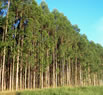
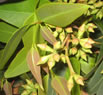
All Eucalyptus have some percentage of essential oils in their leaves. This may be very easily noticed , just squeezing one of their leaves with the fingers. The odor is unique and nice. Some of these essential oils are valuable to medicine, and others to the manufacture of detergents, deodorants, candies, food, insecticides, fungicides, insect repellents, etc. This industry is very huge now, it is no longer an artisan work of distilling oils with steam at home. We have now specialized distilleries with their own cultivation of leaves in a typically managed plantation of Eucalyptus trees. It's definitively a growing business. The market for Eucalyptus essential oils is global, today you may feel the Eucalyptus odor everywhere in the world. It is something light, nice, that provides satisfaction and happiness.
Some species are known for having more percentage of oils than others. Some oils, due to their uses, are more valuable than others. Eucalyptus globulus, E.cinerea and Corymbia citriodora are some of the well-known species for being raw materials for this extraction. I'm providing a good number of euca-links this time. Some of these links were presented in the Eucalyptus Newsletter number 04, but I'm repeating them with many others. This is because the good number of people asking me questions about this Eucalyptus valuable utilization.
Please, have a look at:
http://ci-67.ciagri.usp.br/pm/agronomicaIII.ppt (Portuguese)
http://www.pucrs.br/oleosessenciais/info.php (Portuguese)
http://dspace.c3sl.ufpr.br/dspace/bitstream/1884/1248/1/pretextuais.pdf (Part 1 - Portuguese)
http://dspace.c3sl.ufpr.br/dspace/bitstream/1884/1248/2/texto.pdf (Part 2 - Portuguese)
http://www.ipef.br/publicacoes/docflorestais/df17.pdf (Portuguese)
http://volpi.ea.ufrgs.br/teses_e_dissertacoes/td/000387.pdf (Portuguese)
http://www.revista.inf.br/florestal01/pages/artigos/artigo06.htm (Portuguese)
http://www.destilariameneghetti.com.br/meneghetti_port_todas.htm (Portuguese)
http://www.remade.com.br/revista/materia.php?edicao=75&id=407 (Portuguese)
http://www.remade.com.br/revista/materia.php?edicao=59&id=19 (Portuguese)
http://sbrt.ibict.br/upload/sbrt2057.pdf (Portuguese)
http://www.ipef.br/tecprodutos/gomaeoleos.asp (Portuguese)
http://www.scielo.br/pdf/sa/v63n1/27908.pdf (Portuguese)
http://www.ipef.br/publicacoes/scientia/nr56/cap11.pdf (Portuguese)
http://globoruraltv.globo.com/GRural/0,27062,LTO0-4370-152944-1,00.html (Portuguese)
http://www.dierberger.com.br/globulus.htm (Portuguese)
http://www.editora.ufla.br/revista/27_2/art01.pdf (Portuguese)
http://www.biologico.sp.gov.br/biologico/v68_supl_raib/271.PDF (Portuguese)
http://www1.folha.uol.com.br/folha/equilibrio/noticias/ult263u4256.shtml (Portuguese)
http://www.embrapa.gov.br/noticias/banco_de_noticias/2003/outubro/bn.2004-11-25.8761533284/mostra_noticia
(Portuguese)http://www.ufrrj.br/institutos/if/revista/pdf/p181.pdf (Portuguese)
http://www.cpafac.embrapa.br/pdf/bp37.pdf (Portuguese)
http://www.ufgd.edu.br/~omard/docs/a_matdid/silvicultura/Sil_07_Manejo_CV.pdf (Portuguese)
http://www.ruralnet.com.br/especiarias/eucalipto.asp (Portuguese)
http://www.fao.org/docrep/v5350e/v5350e07.htm (English)
http://www.publish.csiro.au/pid/3093.htm (English)
http://www.aciar.gov.au/web.nsf/doc/JFRN-5J4757 (English)
http://www.ricecrc.org/reader/other-oil-crops/eucalyptus-leaf-oils (English)
http://www.oilmallee.com.au/docs/BARTON.doc (English)
http://pubs.acs.org/cgi-bin/abstract.cgi/jafcau/2003/51/i27/abs/jf034799k.html (English)
http://www.anu.edu.au/BoZo/BillsLab/PDF%20files/2005/Baranska%20et%20al.pdf (English)
http://www.newcrops.uq.edu.au:80/newslett/ncnl4214.htm (English)
Honey Production from Eucalyptus
The Eucalyptus are able to have rich blossoming. The flowers have many anthers, pollen and nectar. These flowers are very much loved by honey bees, and they result in a delicious, abundant and nutritive honey. For this reason, always we have an Eucalyptus forest, we may have honey bee culture associated with. There are many farmers who are used to have partnerships with the forest based companies. The foresters allow farmers to use the Eucalyptus flowers by cultivating the bees, and they receive a certain amount of the produced honey. This honey received by the forest companies is in general used in social programs with the communities. This makes the Eucalyptus forests more attractive and productive. There are Eucalyptus species that yields many flowers, and others fewer. It is relatively known that Eucalyptus dunnii tress have few flowers and do not seed well in South America. For this reason, these forests are not recommended for this end-use. E.urograndis hybrid has in general many flowers, but more in forests established with seedlings obtained from seeds. The clones have flowers, but less than the more heterogeneous forests obtained from seeds. Clonal forests have small canopies, because they have been improved by genetics to be very efficient in terms of photosynthesis. There are clones very productive and with many flowers when they blossom, and others not as good for this purpose. For this reason, the production of flowers for honey bee cultivation is something to be upgraded by forest breeding, and not discarded as it is being in most of the forest improvements programs. The College of Agriculture Luiz de Queiroz, from the University of Sao Paulo, has a very wide program for developing non-wood products from Eucalyptus plantation forests. The name of the program is TUME - Test of Multiple Uses for Eucalyptus. You may visit the TUME websites at:
http://www.gfmo.esalq.usp.br/projetos.htm
http://www.esalq.usp.br/destaques.php?id=116.
There are many sources of online information's about the honey production from Eucalyptus forests. Some of them, we are offering as euca-links to you:
http://www.agrobit.com/Info_tecnica/alternativos/apicultura/AL_000012ap.htm (Spanish)
http://www.culturaapicola.com.ar/apuntes/floraapicola/aptitud%20melifera%20del%20eucaliptus.pdf (Spanish)
http://www.inta.gov.ar/concordia/info/indices/tematica/cd-manual-prod-eucaliptos/25.pdf (Spanish)
http://www.sada.org.ar/Articulos/Tecnicos/polinizacion_eucaliptus.htm (Spanish)
http://www.remade.com.br/revista/materia.php?edicao=75&id=393 (Portuguese)
http://www.scielo.br/pdf/cta/v22n2/a07v22n2.pdf (Portuguese)
http://www.naturlink.pt/canais/Artigo.asp?iArtigo=139&iLingua=1 (Portuguese)
http://www.iac.sp.gov.br/bragantia/volume/5901/1078.pdf (Portuguese)
http://www.bracelpa.org.br/br/social/pdfsocial05/03_cap2.pdf (Portuguese and English)
http://www.aracruzcelulose.com/doc/pdf/publicacao_050423.pdf (Portuguese)
http://www.veracel.com.br/web/pt/outros/noticias0006.html (Portuguese)
http://sbrt.ibict.br/upload/sbrt233.pdf (Portuguese)
http://www.tume.esalq.usp.br/simp/arquivos/edimilsonbitti.pdf (Portuguese)
www.alpa.org.ve/ojs/include/
getdoc.php?id=79&article=42&mode=pdf (Portuguese)www.alpa.org.ve/ojs/include/
getdoc.php?id=87&article=50&mode=pdf (Portuguese)http://www.ipef.br/publicacoes/scientia/nr29/cap01.pdf (Portuguese)
http://calvados.c3sl.ufpr.br/ojs2/index.php/alimentos/article/view/1159/960 (Portuguese)
http://www.ial.sp.gov.br/publicacao/revista/2003/n1/63.pdf (English)
http://www.ial.sp.gov.br/publicacao/revista/2003/n1/64.pdf (English)
http://www.parliament.vic.gov.au/enrc/inquiries/old/enrc/unff/report/util3-06.htm (English)
http://web.uniud.it/eurbee/Proceedings/quality%20control%20residues.pdf (English)
http://www.alimentosargentinos.gov.ar/miel_comisiones/COMISIONES/honey_book-Alberta_Canada.pdf (English)
http://www.coford.ie/iopen24/pub/pub/Reports/NWFP.pdf (English)
http://www.deh.gov.au/biodiversity/invasive/publications/bees/pubs/honeybees-overview.pdf (English)
Today, there is a huge effort being placed by R&D in order to better know the Eucalyptus genome. After all, the genes are highly responsible for the expression of the Eucalyptus qualities. The knowledge of the Eucalyptus genetic code will allow faster and more qualified forest trees and wood products improvements. The identification of some selected genes will speed up the forest genetic breeding. We have a lot of R&D in Eucalyptus genomics in Brazil, South Africa, Portugal and Chile, among others. Surely, many of these investigations are duplications by the scientists, but the developments in genomics are being fast and in a productive way. Genetic engineering is another tool being considered and investigated by the universities and private R&D laboratories. Genetic engineering should be developed in the correct speed, and with all details for a very safe procedure. Mainly considering that the Eucalyptus have a high potential for hybridization and gene transfer from one species to another. In case of the Eucalyptus, the genes do not respect the geographical frontiers, no matter they are limits for farms, or countries. In Brazil, the partnerships between government R&D agencies, private companies and universities have gained room for developing the genomics of the Eucalyptus. The goal now is to relate the gene sequences with the correct expressions of trees, woods and wood products qualities. In the global scene, several researchers in the world decided to create a consortium of Eucalyptus genomics to exchange knowledge and experiences. The idea came just after the IUFRO Eucalyptus Forest Genetics Meeting which took place in Hobart/Australia, The consortium houses scientists from several countries: Brazil, Australia, Japan, USA, Portugal, Spain, France, South Africa, Belgium, etc.
To know more about genomics in the Eucalyptus, please visit:
http://www.ieugc.up.ac.za (English)
http://www.ieugc.up.ac.za/founding_meeting.htm (English)
http://www.edpsciences.org/articles/forest/pdf/2002/05/23.pdf?access=ok (English)
http://www.ars-grin.gov (English)
http://www.ipef.br/melhoramento/genoma/english.asp (English)
http://www.funpecrp.com.br/gmr/year2004/vol3-3/gmr0109_full_text.htm (English)
http://www.nature.com/omics/subjects/genomesequenceandanalysis/index.html (English)
http://www.nature.com/omics/index.html (English)
http://dendrome.ucdavis.edu (English)
http://www.genesis.co.nz/Press_Releases/News_Article.php?id=38 (English)
http://www.ipef.br/melhoramento/genoma/pdfs/schmidt98.pdf (English)
http://www.cenargen.embrapa.br/laboratorios/LIMPP/PDFs/01.pdf (English)
http://www.ces.ncsu.edu/nreos/forest/feop/Agenda2004/iufro_genetics2004 (English)
http://www.csir.co.za/plsql/ptl0002/PTL0002_PGE100_LOOSE_CONTENT?
LOOSE_PAGE_NO=7009843 (English)http://www.csir.co.za/websource/ptl0002/pdf_files/nre/2006/forestry.pdf (English)
http://www.cenargen.embrapa.br/pre-melhoramento/Por/prog_por.htm (Portuguese)
http://www.cenargen.embrapa.br/palestras/21102006/21102006_001.pdf (Portuguese)
http://www.cenargen.embrapa.br/palestras/19102006/19102006_011.pdf (Portuguese)
http://www.cenargen.embrapa.br/publica/trabalhos/fn2004/arquivos/23110401.pdf (Portuguese)
http://www.cenargen.embrapa.br/publica/trabalhos/cot091.pdf (Portuguese)
http://www.cenargen.embrapa.br/palestras/18102006/18102006_002.pdf (Portuguese)
http://www.cenargen.embrapa.br/publica/trabalhos/cot121.pdf (Portuguese)
http://www.genmelhor.ufv.br (Portuguese)
http://www.ipef.br/melhoramento/genoma (Portuguese)
http://lcf.esalq.usp.br/lrgfb/arvores.pdf (Portuguese)
http://www.teses.usp.br/teses/disponiveis/11/11144/tde-08032006-141346 (Portuguese)
http://ftp.mct.gov.br/especial/genolyptus.htm (Portuguese)
http://ftp.mct.gov.br/especial/genolyptus3.htm (Portuguese)
http://ftp.mct.gov.br/especial/genolyptus4.htm (Portuguese)
http://ftp.mct.gov.br/especial/genolyptus5.htm (Portuguese)
http://www.lge.ibi.unicamp.br/eucalyptus (Portuguese)
http://www.ufv.br/dbg/bio240/GenolyptusGuilherme42102.htm (Portuguese)
http://inventabrasilnet.t5.com.br/heleuca.htm (Portuguese)
http://atlas.sct.embrapa.br/pdf/cct/v21/v21n1_11.pdf (Portuguese)
http://www.biotecnologia.com.br/biochat/viewchat.asp?id=7&data=06/10/2003 (Portuguese)
http://www.inta.gov.ar/ediciones/idia/forest/genetica12.pdf (Spanish)
http://www.inta.gov.ar/ediciones/idia/forest/genetica01.pdf (Spanish)
Environmental Impact Assessment Studies for Modern Pulp Fiberlines
Today, it is becoming more often the availability of good and transparent Environmental Impact Assessment Studies and Reports through the web. The industrial companies want to have a better understanding coming from the community. For this reason, the transparency to the interested parties is one of the targets in the new way to manage environment. As a result of this trend, we all are able to know more and to better understand these environmental and technological issues, mainly those related to impacts in the physical, biological, social and economic segments. In a recent Eucalyptus Newsletter (number 04), we have introduced several environmental impact studies for the new mills being or to be built in Uruguay (Botnia and ENCE). You may visit this newsletter and find the reports to each of the mills, and also the cumulative impact study report, since both mills were originally supposed to be built very close one to another, in Fray Bentos. Today, the situation in Uruguay has changed. The Botnia mill is being built at the designed speed and in the same location, but the ENCE mill will be relocated in the place and with another size. A new environmental study surely will be made to the new ENCE project. It is also important to mention that the original cumulative impact study (December 2005) was made by Malcolm Pirnie & Pacific Consultants. This report was submitted to a Canadian consultant company, named Hatfield, to evaluate and to identify potential weaknesses and opportunities for improvements. All this process was guided by IFC - International Finance Corporation, a World Bank entity. IFC had requests from both companies to finance part of the total investment. Due to the Hatfield report, the first original cumulative impact assessment was considered to be a draft. After the report from Hatfield, a new Canadian company, EcoMetrix, has been requested to review and to rewrite the cumulative impact study. EcoMetrix has done this task with a group of international and qualified consultants. The Hatfield report and the final cumulative impact study by EcoMetrix are available for downloads. All these reports are valuable source of information to all people in the pulp and paper sector, for the great contribution they are bringing for a better understanding of the environmental impacts of a bleached kraft Eucalyptus pulp mill.
Let's cover all this in the following order:
Original reports and cumulative impact assessment studies for the ENCE and Botnia mills in Uruguay: visit the Eucalyptus Newsletter number 04 and travel on the available euca-links about these topics:
http://www.eucalyptus.com.br/newspt_may06.html#sete .You have the option to enter in the IFC website and to go the page of the final cumulative impact report from EcoMetrix: http://www.ifc.org/ifcext/lac.nsf/Content/Uruguay_Pulp_Mills_CIS_Final .
It is also valid to know in details the environmental impact report from the Botnia mill (Orion project) at: http://www.ifc.org/ifcext/lac.nsf/Content/Uruguay_PulpMills_Background_Docs
Finally, the draft report on cumulative impact assessment from December 2005, prepared by Malcom Pirnie and Pacific Consultants, the basis for the other reports, is also available at the IFC website:
http://www.ifc.org/ifcext/lac.nsf/AttachmentsByTitle/Uruguay_PulpMills_Part1/$FILE/CIS_Part1_UruguayPulpMills.pdfReport from Hatfield Consultants, a study made by L.Wayne Dwernychuck and Neil McCubbin:
Report from the Canadian consulting company EcoMetrix, the final version for the cumulative impact assessment study:
Another very famous and well-published undertaking on Eucalyptus pulp manufacturing is known as the Gunns Bell Bay project, a mill to be built in Tasmania/Australia. Gunns at Bell Bay is claiming to be the greenest and the most technically advanced pulp mill in the world. This is surely something that needs a careful comparison to other very modern and sophisticated fiberlines, as well. The new mill will be located in a region very attractive, with natural beauties and tourist landscapes. For this reason, very extensive studies are being made, to guarantee the construction of a minimum impact mill, with the most modern and available technologies.
Know more about Gunns and its Bell Bay project:
http://www.gunnspulpmill.com.au (English)
http://www.gunnspulpmill.com.au/iis/default.htm (Draft of the Environmental Impact Study, in English)
http://www.gunns.com.au/downloads/FMS_10_LR.pdf (English)
http://www.pulpmill.tas.gov.au/factsheets/TheFacts.pdf (English)
http://www.rpdc.tas.gov.au/projects_state_signif/pulp_mill/pm_docs/pm_index.htm (English)
http://www.rpdc.tas.gov.au/projects_state_signif/pulp_mill/pm_dwnl/Project_Scope_Revised_260805.pdf
(scope of the Bell Bay project, in English)
Environmental Legislation for Modern Pulp Fiberlines: a Study Made Available by the Tasmania Government
The Bell Bay project from Gunns demanded a very wide range of pre-feasibility studies. Australian authorities have been very concerned about the potential impacts of the project. At the same time, the Tasmanian authorities were favorable to the project, as far as the mill could represent the best available technology, and running according to the best environmental practices. The process to evaluate all these issues was requested to be as transparent as possible to all interested parties. To guarantee this communication process, there are two websites available to general public:
http://www.rpdc.tas.gov.au/projects_state_signif/pulp_mill/pm_docs/pm_whats_new.htm
and also http://www.pulpmill.tas.gov.au/index.htmIn the studies, we may find good reports about the best environmental practices for pulp making, best available technologies, comparisons to other mills in the world, and surprisingly excellent reports about environmental legislation applicable to similar mills in a world basis. All these studies had the goal to provide knowledge for the environmental guidelines to Gunns mill. The RPDC - Resource Planning & Development Commission consists in an independent commission that had the mission to coordinate these studies. The commission decided to get the required information through an international and well qualified group of experts on environmental issues. The follow up of the generated documentation is very open, and RPDC accepts contributions and comments from the interested parties. The major part of the study has been requested to a consulting company, Beca Amec, including the definitions of the guidelines and environmental control standards to be fulfilled by the new mill. Mr. Roberto Miotti, a good friend of mine, had a significant contribution to these studies. These indispensable studies are made available as online reports, vital to all pulp and paper community. Something that nobody can miss.
The documentation on environmental legislation is unique, an excellent comparison about pulp and paper mill controls, all over the world, mainly in the leading environmental performance pulp mills. Please, visit these recommended websites:
http://www.rpdc.tas.gov.au/BEKM/pages/bekm_final_report.htm (English)
http://www.rpdc.tas.gov.au/BEKM/pages/bekm.htm (English)
http://www.rpdc.tas.gov.au/BEKM/docs/Final_Report_Vol1.pdf (English)
http://www.rpdc.tas.gov.au/BEKM/docs/Final_Report_Vol2.pdf (English)
The scope for the studies on impact assessments are also very good to be known by all interested people:
http://www.rpdc.tas.gov.au/projects_state_signif/pulp_mill/pm_docs/pm_reports_publications.htm (English)
http://www.rpdc.tas.gov.au/projects_state_signif/pulp_mill/pm_dwnl/Final_IIS_guidelines2.pdf (English)
http://www.rpdc.tas.gov.au/projects_state_signif/pulp_mill/pm_dwnl/Further_comment_24_10_05.pdf (English)
http://www.rpdc.tas.gov.au/projects_state_signif/pulp_mill/pm_dwnl/Draft_Guidelines_060405.pdf (English)
Other valuable reports and documents, all very rich on knowledge and information have also been made available by RPDC, as below. Another website specially designed by the Tasmanian authorities has also the objective to inform the society about the project (http://www.pulpmill.tas.gov.au/index.htm):
a selection of reports on the best available technologies, mainly about the ECF and TCF bleaching sequences:
a study about the health of workers in bleached kraft pulp mills, both ECF and TCF sequenceshttp://www.rpdc.tas.gov.au/BEKM/docs/Literature%20Review%20of%20Epidemiological%20Studies.pdf (English)a leaflet "preparing a world class pulp mill"a report of visits to Brazilian and Chilean pulp mills
http://www.pulpmill.tas.gov.au/infopapers/Study%20Program%20Report.pdf (English)a report from visits to China, Europe and Canadareports about the requirements to be fulfilled by companies in countries that are adherent to the Stockholm Conference on Persistent Organic Pollutants (POPs)
overal data about the Gunns Bell Bay project
http://www.pulpmill.tas.gov.au/FactSheets.htm (English)environmental guidelines and control limits
http://www.pulpmill.tas.gov.au/EmissionGuidelines.htm (English)
Literatures
Handbook "Plantio de eucalipto na pequena propriedade rural" - Embrapa Florestas - 2000"Australia forest profile: eucalyptus forests" – National Heritage Trust - 2005"Manual para productores de eucaliptos en la Mesopotamia Argentina" - INTA Instituto Nacional de Tecnologia Agropecuaria , Concordia, Argentina - 1995http://www.inta.gov.ar/concordia/info/indices/tematica/cd-manual-prod-eucaliptos/manual.pdf (Spanish)"The Hardy Eucalyptus page: how to grow an eucalyptus as an ornamental plant"http://www.angelfire.com/bc/eucalyptus (English)"Proceedings of the International Conference on Timber Plantation Development" - FAO Forestry - 2002"Development of eucalyptus plantations: an overview" - FAO Forestry - 1995
Brazilian Statistics
Fatos e numeros do Brasil florestal" - SBS Sociedade Brasileira de Silvicultura - 2006
http://www.sbs.org.br/FatoseNumerosdoBrasilFlorestal.pdf (Portuguese)"Producao da silvicultura brasileira" - IBGE Instituto Brasileiro de Geografia e Estatistica ( Portuguese)
Important events with speeches for downloading
Please, find valuable speeches in the selection of events we have to you:
Course "Wet end chemistry" - ATCP Chile 2006
" I Simposio de tecnicas de plantio e manejo de Eucalyptus para uso multiplo", an event by the TUME (Test for Multiple Uses of Eucalyptus) and GELQ (Group of Studies Luiz de Queiroz - www.gelq.com.br)http://www.tume.esalq.usp.br/simp (Portuguese)
Internation Meeting "Celulosa en Chile al 2010 - Sustentabilidad ambiental y competitividad de la industria" - Fundacion Chile and Universidad de Concepcion - 2006 – (Spanish and English)
www.fundacionchile.cl/pls/portal/docs/page/portal_corporativo/administracion_del_contenido/
medio_ambiente/tab4816318/tab4816326/programa.html
" II Simposio Ibero-Americano de Eucalyptus globulus" - (videoconferences available in Spanish , Portuguese or English)
CIADICYP's - Congresos Ibero-Americanos de Investigadores de Celulosa y PapelThe CIADICYPs consist in a series of events that occur in a two years basis. The main participants are university professors, researchers from technical institutes and private industry, suppliers and other interested people. Most of participants are from Argentina, Chile, Brazil, Venezuela, Colombia, Peru, Cuba, Uruguay, Spain and Portugal, but we have people from other countries, too. It is a rule to change the meeting location from one congress to another, and till now, we had CIADICYPs in the following countries: Argentina, Brazil, Spain and Chile. The main promoter of the CIADICYPs is RIADICYP - Red Ibero Americana de Docencia y Investigacion en Celulosa y Papel. This network has always the enthusiasm and the leadership of professor Maria Cristina Area from Universidad Nacional de Misiones, Argentina.Congress 2000: http://www.riadicyp.org.ar//index.php?option=com_remository&Itemid=39&func=select&id=2Congress 2002: http://www.lscp.pqi.ep.usp.br/ciadicyp2002/proced/proced.htmCongress 2004: http://www.riadicyp.org.ar//index.php?option=com_remository&Itemid=41&func=select&id=4Congress 2006: http://www.riadicyp.org.ar//index.php?option=com_remository&Itemid=41&func=select&id=5
Technical Mini Article by Celso Foelkel
Modern Bleached Kraft Eucalyptus Pulp Fiberlines
In recent years, we had remarkable advances in the bleached kraft Eucalyptus pulp manufacturing technologies. More important than the technologies, is the new concept the technologies are been developed: closer water cycles, reduced losses, better energy efficiency, high eco-efficiency and minimum environmental impacts. The water cycle closures are now being considered welcome and searched with more care. The reason is that several new technologies are also being proved efficient to reduce the contamination build up in the pulping and recycling systems. Today, bleached Eucalyptus pulp may be produced with a total effluent discharge corresponding to about 20 m³/adt. In few years, we were able to reduce the water consumption, to significantly close the water cycles, and to introduce creative procedures to prevent the detrimental build up of chlorides, potassium, oxalates and pitch in the industrial processes. The energetic gains have been remarkable. Today, we are able to manufacture one air dry ton of bleached pulp with about 600 kWh of electricity and 5 tons of steam. From a position of electricity buyer, we have switched to a supplier position. We are running to new developments and all of them are related to simplifications: simpler mills, fewer equipment’s, fewer buildings, reduced losses and cleaner production. There are still many other new opportunities to be touched, no doubts about. We are good, but there is a long way to become optimum. However, there are science, technology and people's commitment and enthusiasm to guarantee further improvements in our fiberlines. We are learning fast to walk in the eco-efficiency direction, and to reach the business and environmental sustainabilities.The recent and modern fiberlines are very efficient from the wood yard to the pulp or paper sheet dryers. The areas with more significant technological improvements have been: wood yard and chip production, cooking and digesting, pulp washing and screening, and pulp bleaching. We had notable process simplifications, closures in the systems, internal recycling, better recovery of wastes, conservation of energy, improvements in the operational efficiencies and in the scale of production. All this has been the result from the huge efforts to add more competence, environmental performance and competitiveness to our industry. A lot of science and new knowledge are being the foundation for these developments. As a consequence, the environmental impacts are reduced, the investments either, and the production costs more competitive, mainly to the Eucalyptus pulps. For all these reasons, the amazing recent growth in the world Eucalyptus pulp production has been based on state-of-the-art mills. This is being true either in existing mills, in their fiberline modernization’s, or in the new greenfield mills. This model can be noticed in all countries growing the production of Eucalyptus pulps: Brazil, Chile, Uruguay, South Africa, China, Australia, etc.
Any fiberline to manufacture bleached pulp for papermaking has several missions, and the most important are the following:
- to efficiently convert the wood in bleached pulp ,
- to guarantee an uniform quality, and in accordance to the market requirements,
- to run in a competitive pulp production cost,
- to have high operational efficiencies,
- to prevent or to reduce to a minimum the environmental impacts,
-
to generate wealth and happiness to the interested and affected parties.
The today's fiberlines, either the recently started up or those being built in several countries, they have wisely developed new mechanisms to control the key competitive factors for success. Some new management systems and concepts have been upgraded, as follows:
- segregation of the woods by species and by quality,
- reduction on the losses in the wood yard and wood preparation,
- reduction on the losses of fibers along all the fiberline,
- reduction on the losses of steam and electricity,
- selection of very efficient processes to cook the wood and to bleach the pulp,
- close association of the fiberline operation to the generation of electricity and steam from the biomass coming from pulp mill wastes or forest residues,
- maximum conservation of water and heat, with substantial growth in the utilization of hot filtrates and secondary heat,
- maximum safety to workers,
- maximum efficiency in the logistics, wood handling, intermediate stocks, internal flows and final destination to customers,
- efficient design of the equipment capacities, to prevent bottlenecks, usually very harmful to the operation, to the quality and to the environment,
- efficient utilization of the invested capital,
- reduction in the operational costs by optimization procedures based on the life cycle of costs,
- high emphasis in the training and development of all personnel,
- transparency and improved dialogue with the interested parties,
- high commitment and awareness about environmental and social issues.
The state-of-the-art technologies in these modern fiberlines have today the following basic guidelines:Wood preparation:
- maximum acceptance of the wood chips in the pre-defined dimensions (more uniformity in wood chip dimensions),
- reduction on wood losses in all operations,
- debarking at the forest, bringing to the mill a cleaner wood, and leaving more moisture and nutrients in the forest soil to improve the next generation of Eucalyptus forests.
Kraft cooking:
- batch or continuous digesters, all based on the modified cooking concept (super batch, compact cooking, lo-solids, etc),
- pre-impregnation of wood chips to improve pulping, pulp yield and to reduce shives and knots after digesting,
- low temperature kraft cooking (145 a 155ºC),
- efficient control of kappa number after digester and washing area.
Pulp screening & washing:
- very efficient washing with minimum carry over along all fiberline,
- utilization of wash presses,
- very efficient screening to reduce to a minimum the contamination on rich lignin debris, shives and also pitch.
Oxygen delignification as pre-bleaching stage:
- fundamental step, in general in medium consistency, but in one or two reactors,
- very efficient pulp washing, either before or after the oxygen delignification.
Pulp bleaching:
- ECF sequences, with a strong trend to ECF-Light sequences, due to the growing addition of hydrogen peroxide, acids and ozone in some cases,
- utilization of highly acid and hot stages to the degradation by hydrolysis of the hexenuronic acids generated during the kraft cooking,
- recycling of the hot alkaline Eop filtrate in the countercurrent washing, with the recovery cycle as the final destination to this filtrate,
- emphasis on a high and stable pulp brightness,
- low consumption of water (about 10 m³/adt) along the bleaching line, with emphasis on the recycling of filtrates and recovered waters.
General improvements in the fiberlines:
- efficient processes to reduce the accumulation of contaminants as pitch, oxalates, chlorides and potassium in the mill systems,
- very low values for the specific generation of AOX, COD, color and toxicity in the fiberline effluents.
Several modern and recent fiberlines are in operation or in construction in the leading Eucalyptus pulp manufacturing countries. For your better understanding on them, you may visit their websites or some websites with information about them:
Australia:
Gunns: http://www.gunnspulpmill.com.au
Brazil:
Veracel: http://www.veracel.com.br/web/pt/industriais/
Ripasa: http://www.ripasa.com.br/ripax.cfm?cg=EBXComoSeFazRipax
VCP: http://www.vcp.com.br/Celulose/Processo+Produtivo/default.htm
VCP projeto Losango: http://www.vcp.com.br/losango/ptb/home
Aracruz: http://www.aracruz.com.br/show_prd.do?act=stcNews&menu=true&id=107&lastRoot=16&lang=1
Cenibra: http://www.cenibra.com.br
Bahia Pulp: http://www.bahiapulp.com/paginas.asp?s=2&p=2&i=pt-br
International Paper do Brasil: http://www.internationalpaperdobrasil.com.br/ipengine.asp?pagina=Institucional - ptl&lingua=PT
Suzano Bahia Sul Mucuri: http://www.suzano.com.br/projetomucuri/
Chile:
Arauco Nueva Aldea: http://www.complejonuevaaldea.cl
Arauco Valdivia: http://www.plantavaldivia.cl
CMPC Santa Fe: http://www.cmpccelulosa.cl/index.htm
China:
Hainan Jinhai : http://www.trade-india.com/Foreignexporter-1047050-980353-589-BRANDING/Paper-and-Pulp/Hainan-Jinhai-pulp-and-Paper-Co.html
http://www.tappsa.co.za/html/challenging_limits.html
South Africa:
Mondi Richards Bay: http://www.mbpsa.co.za/operations/richardsbay.htm
Uruguay:
Botnia: http://www.metsabotnia.com/en/default.asp?path=204,208,1364,1385
Eucalyptus Newsletter is a merely technical online bulletin, containing articles and information about eucalyptus forestry and industrial utilization
Technical coordination - Celso Foelkel
celso@celso-foelkel.com.br
Webmaster / editing - Alessandra Foelkel
Celsius Degree: Phone (+55-51) 3338-4809
Copyright © 2005-2007
This newsletter is a Celsius Degree production and it was made possible through sponsoring support provided by ABTCP - Brazilian Technical Association of Pulp and Paper and Botnia. The opinions expressed herein are those of the author or of the suggested websites, and do not necessarily reflect the view of the sponsors.
In case you prefer not to receive the Eucalyptus Newsletter and the Eucalyptus Online Book, send a cancellation e-mail message to webmanager@celso-foelkel.com.br
In case you want to support or to sponsor the Eucalyptus Newsletter or some chapter in the Eucalyptus Online Book, having your logo or name associated with them, click here - to get more information