

Editorial
Dear friends,Good morning, my dear Eucalyptus friends. Here we are again, with the 12th issue of our Eucalyptus Newsletter. In this edition, we are again bringing a lot of information and knowledge about these wonderful trees and their utilization. I hope you enjoy them.
In the section "The Friends of the Eucalyptus", we are telling to you the professional life, scientific production, and career of one of the most renowned pulp and paper researcher and educator in Latin America: our dear friend Dr. Maria Cristina Area. The chemical engineer Maria Cristina Area is a great expert in the science and technology of pulp and paper, with an outstanding generation of knowledge in these fields, related to the practical utilization of the eucalyptus woods. Her emphasis has been placed to develop clean and minimum impact technologies to the sector. She is being very important to her country Argentina, performing as teacher and researcher at the Universidad Nacional de Misiones. I'm very proud and happy to have had the chance to introduce her to you in this issue of the Eucalyptus Newsletter.
Since I have observed a great interest from our readers about the plantation and cultivation techniques with eucalyptus, I've this time decided to bring a special section offering to all of them the possibility to find good literature about these subjects. The section is specially oriented to rural farmers and other people involved with eucalyptus plantation forestry. I decided to entitle this section as "Planting and Growing Eucalyptus Forests".
In this issue, we are also bringing to you the seventh chapter of our Eucalyptus Online Book. The title of this chapter (only in Portuguese till now) is: "Ecoefficient Management of the Woody Forest Residues from the Eucalyptus Plantation Forestry".
We are also introducing to you the number 05 chapter in English, titled "Industrial Solid Wastes from Eucalyptus Kraft Pulp Production. Part 1: Fibrous organic residues". The English translations for chapters 06 and 07 are on the way, please, be patient and wait a little more.
The mini-article in this edition deals with the biodiversity of fauna and flora in the eucalyptus plantation eco-mosaics: "Eucalyptus Planted Forests and the Biodiversity". It is a very controversial issue, and I felt myself with the obligation to bring my viewpoint on this topic, since there are many people who have never been at an eucalyptus plantation forest, and placing criticism to them.
As you may notice, I'm dedicating a lot of efforts in environmental issues. This is a key point nowadays. I hope to be bringing my contribution to the forestry and pulp and paper segments. I'm being quite strong and positive on this. My purpose is that the eucalyptus pulp and paper production continues to grow in an environmentally sound way in the direction of the dreamed sustainability.
We are also bringing a new section to you, and I hope you may enjoy it. It is written by the agronomist Ester Foelkel and we decided to call it "Curiosities and Oddities about the Eucalyptus". In this first appearance, Ester will tell you about the utilization of the eucalyptus by the artisans for art craft manufacturing of artistic goods.
As we are used to do, in this newsletter issue, we are bringing a lot of interesting subjects about the eucalyptus. The purpose is to offer knowledge in a way that you may learn more, and to enjoy doing such. For this, we are forcing you, in some extent, to navigate the web to grab as much on good information as possible. We also offer good articles, and recommendations of books and interesting events.In case you are not registered yet to receive free-of-charge the Eucalyptus Newsletter and the chapters of the Eucalyptus Online Book, I suggest you to do it through the following link: Click here for registration.
We have now several non financial supporting partners to the Eucalyptus Online Book & Newsletter: TAPPI, IPEF, SIF, CeluloseOnline, CETCEP/SENAI, RIADICYP, TECNICELPA, ATCP Chile, Appita, CENPAPEL, TAPPSA, SBS, ANAVE and AGEFLOR. They are helping to disseminate our efforts in favor of the eucalyptus in countries as Brazil, USA, Chile, Portugal, Colombia, Argentina, Australia, New Zealand and South Africa. However, thanks to the world wide web, in reality they are helping to promote our project to the entire world. Thanks very much to our partners for believing in what we are doing.
Know more about all of our today’s partners at the URL address:
http://www.eucalyptus.com.br/partners.html
Thanks again for the support to our work. I beg your help to inform about and to promote our project to your friends , in case you feel these publications may be helpful to them. Please, accept my personal thanks, and also the gratitude from ABTCP, BOTNIA, ARACRUZ, INTERNATIONAL PAPER DO BRASIL and partners.Our best wishes to all of you, and please enjoy your reading.
Celso Foelkel
http://www.celso-foelkel.com.br
http://www.eucalyptus.com.br
http://www.abtcp.org.br

Eucalyptus Online Book Chapter 7 (in Portuguese)
Eucalyptus Online Book Chapter 5 (in English)
Online Technical References
References on Events and Courses
Euca-Links
Planting and Growing Eucalyptus Plantation ForestsNew Section (by Ester Foelkel): Curiosities and Oddities about the Eucalyptus
The Friends of the Eucalyptus - Dr. Maria Cristina Area
Technical mini-article by Celso Foelkel
Eucalyptus Planted Forests and the Biodiversity
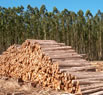
Eucalyptus Online Book Chapter 7 (in Portuguese)
For downloading the chapter (in Adobe pdf - 8.8 MB) just click the name of the chapter. In case you do not have the Adobe Reader installed in your computer, please visit http://www.eucalyptus.com.br/available.html and find the instructions how to get it.
"Ecoefficient Management of the Woody Forest Residues from the Eucalyptus Plantation Forestry"
Eucalyptus Online Book Chapter 5 (in English)
For downloading the chapter (in Adobe pdf - 9.3 MB) just click the name of the chapter. In case you do not have the Adobe Reader installed in your computer, please visit http://www.eucalyptus.com.br/available.html and find the instructions how to get it.
"Industrial Solid Wastes from Eucalyptus Kraft Pulp Production. Part 1: Fibrous organic residues"
In this section, we are offering some very good euca-links with relevant publications available in the virtual world wide web library. You have only to click the URLs addresses to open the documents and/or to save them. Since they are references, we are not responsible for the opinion of the corresponding authors. However, believe me, they are valuable references that should be watched carefully, since they are very much connected with the eucalyptus. In this section, we are trying to balance recent and historical publications, those that are helping to build the foundations and the history of the eucalyptus forestry, environment, industrial utilization, and many other areas related to these magic trees.
RIMA - Environmental Impact Assessment Report on Silvicultural Activities - (Portuguese)
Recently, the forest-based company Stora Enso, through its Brazilian subsidiary Derflin Agropecuaria, has contracted an Environmental Impact Assessment Study for its eucalyptus forestry activities to be developed in the State of Rio Grande do Sul (RS), Brazil. This study is part of the requirements for licensing the company afforestation program in RS. The environmental control and licensing agency is FEPAM (http://www.fepam.rs.gov.br ). The assessment and the report was performed and written by the forestry consulting company Silviconsult. The executive report, a summary of the conclusions and findings is available in the web for public consultation by interested parties. Please, visit to know more about the impacts of the silviculture, both positive and negative, the measures for mitigation and the programs for minimizing risks and maximizing the benefits of the eucalyptus plantations in the region.
http://www.silviconsult.com.br/relatorio_de_impacto_ambiental.pdfEucalyptus microcorys Wood Characterization by Embrapa - (Portuguese)
Physical, chemical and anatomical characterization of Eucalyptus microcorys wood. R.Marchesan, P.P.Mattos, J.Y.Shimizu. 5 pp. (2005)
http://www.cnpf.embrapa.br/publica/comuntec/edicoes/com_tec133.pdfArticle about the Eucalyptus Museum - Forest Farm "Navarro de Andrade" at Rio Claro / SP - (Portuguese)
Know more about the birthplace of the Brazilian silviculture. At this farm, the agronomist Edmundo Navarro de Andrade introduced, about 100 years ago, tens of species of the Eucalyptus genus. For this reason, this farm is an important site, both historical and also as a bank of eucalyptus genomes. The farm and the museum are also related to the origin of the Brazilian plantation forest technology.
Eucalyptus museum: the one thousand and one uses of the eucalyptus are proved in a museum in Sao Paulo state. Joao Teixeira. Article published in the journal O Papel (August, 2002)
http://www.celso-foelkel.com.br/artigos/outros/Museu%20do%20eucalipto.pdf
Proceedings of the 1st Iberian Congress of Soil Sciences - (Portuguese)
The event happened in Braganca/Portugal in the year 2004.
http://www.cics2004.ipb.pt/imagens/CienciaSolo2004.pdf
Wood Productive Chain in Brazil - (Portuguese)
This is a very good study made available by the Brazilian Ministry of Agriculture. The study has the leadership and coordination of A.M.Buainain and M.O.Batalha. Published in 2007, it has 84 pages. The key factors for the success and competitiveness of the plantation forestry and wood industrial manufacturing in Brazil are discoursed.
http://www.agricultura.gov.br/pls/portal/docs/PAGE/MAPA/PRINCIPAL/DESTAQUES/
SERIE_AGRONEGOCIO/CADEIA%20PRODUTIVA%20MADEIRA_0.PDFHandbook of Agro-Biodiversity - (Portuguese)
This is a very interesting publication showing new concepts for the preservation of native germoplams, mainly from agricultural crops. Since there is a funneling of the genomes due to vegetal breeding, the preservation of native and wild crop germoplams is considered vital. The book is a creation of the NGO Centro Ecologico, it has 83 pages, published in 2006, under the coordination of L.R.Meirelles and L.C.D.Rupp.
http://www.centroecologico.org.br/cartilhas/cartilha_agrobiodiversidade.pdf
Guidebook Planning Rural Farms and Landscaping - (Portuguese)
This is a very important project and publication oriented to farmers who are interested in sustainable agriculture. The guidebook gives orientation how to preserve ecosystems, where and how to plant crops and plantation forests, to combine productive activities with Nature preservation. This book has been published by APREMAVI, a Brazilian NGO.
http://www.apremavi.org.br/programas/planejando-propriedades-e-paisagens (program website)
http://www.apremavi.org.br/download.php?codigoArquivo=76 (guidebook)
Publication on Integrated and Ecological Soil Management - (Portuguese)
This is a publication made available in the website of the Fundacao Universidade do Tocantins. It was published in the year 2000 by EMATER/RS, with 95 pages. The authors are T.N.Ferreira, R.A.Schwartz and E.V.Streck.
http://www.unitins.br/ates/arquivos/Agricultura/Solos%20&%20Conservação/
Solos%20-%20Manejo%20Integrado%20e%20Ecológico.pdfProceedings of the 3rd Workshop on the Sustainable Management of Marginal Drylands - (English)
This is definitively something to be read with great attention. It brings new and fresh knowledge about the behavior of Eucalyptus camaldulensis in drylands, showing its beneficial role providing wood to society and also filtering the groundwater, by extracting nitrates from it. There are interesting studies in regions with less than 400 mm of rainfall per year. The event happened in Tunis, in 2004, sponsored by UNESCO and MAB. You are to find a lot of knowledge in the 184 pages that you may download. Have a look.
http://unesdoc.unesco.org/images/0014/001424/142426E.pdf
PhD Thesis about the Inoculation of Ectomycorrhizal Fungi in Eucalyptus globulus Nurseries to Improve Plantation Forest Growth Rates - (English)
The thesis author is Dr. Yinglong Chan, who submitted this study to the Murdoch University, Australia. The thesis provides a good summary of the eucalyptus plantation forestry in China, with valuable description of the state of the art of this type of forestry in that country.
http://wwwlib.murdoch.edu.au/adt/browse/view/adt-MU20060809.93928

References on Events and Courses
This section has as aim to introduce to you several very good links with recently already happened events. The advantage provided to the readers is that the event organizers made the presentations or proceedings available for free downloading. This is a very good way to practice social and scientific responsibility. Our most sincere thanks to all these organizers for this friendly procedure, sharing the event material with the interested parties.
Forum 2007 ANAVE - (Portuguese or English)
This is a traditional event organized every year by our partner ANAVE - a Brazilian association of the commercial people in the pulp and paper segment. The forum consists of speeches and debates about competitiveness and marketing strategies for pulp and paper products.
http://www.anave.org.br/forum2007
Biowork IX - (Portuguese or English)
This is an important and traditional event about forest biotechnology. It was held in Vicosa, at the Federal University of Vicosa, in 2007. The guidance and coordination was in charge of our dear friend Dr. Aluizio Borem. The event received the support from several public & private organizations, universities, associations and NGOs. One of the partners was The Institute of Forest Biotechnology that had the kindness to place some of the presentations available for downloading at its website. You may find speeches about plantation forestry in Brazil, potential of transgenic plants, genetic engineering, molecular markers, etc. Go to visit:
http://forestbiotech.org/ifb-publications.phpSilvotecna 2007 - Chile - (Spanish)
Silvotecna is the most important Chilean event on silviculture of planted forests. It is an event simultaneous to EXPOCORMA, a group of events and exhibits that happens in Chile in a two years time basis. The organizer is CORMA - Corporacion Chilena de la Madera. In 2007, the main topic being presented at Silvotecna was forest fires: prevention, ways to combat, safety, etc. Check and visit at:
http://www.silvotecna.co.cl/presentaciones.htmlForest Events at EXPOCORMA 2007 - Chile (Spanish)
During EXPOCORMA, several events are held, bringing to the Chilean forestry community important updates in different subjects. CORMA, the main organizer, is used to make the presentations available to the society through its website. This positioning and also the events make the Chilean forest sector more integrated to the Chilean society. In 2007, the following events happened and their presentations may be downloaded in the referenced URL direction: Meeting on Forest Production; Seminar on Health and Occupational Safety; Seminar on Sawmills, Manufacturing and Converting. Visit the events and take the chance to download the presentations:
http://www.cormabiobio.cl/expo2007/www/presentaciones.htmSeminar on Planted Forests at Mato Grosso do Sul 2007 - (Portuguese)
Organized by REFLORE - Association of Producers and Consumers of Planted Forests in Mato Grosso do Sul State, Brazil. The speeches were outstanding, discoursing about: myths and realities related to the eucalyptus, charcoal production, use of eucalyptus wood for solid products, forest tree breeding, etc.
http://www.reflore.com.br/downloads.php
Brazilian Symposium about Forest Harvesting and Transportation - SIF 2007 - (Portuguese)
It is the number 8th of this kind of symposium. The leaders for their organization are my dear friends from UFV - Federal University of Vicosa and SIF - Society of Forestry Investigations Dr. Carlos Cardoso Machado and Dr. Amaury Paulo de Souza. The very efficient team of the Federal University of Vicosa is always able to guarantee excellent balance between presentations from equipment suppliers, forest companies, and universities.
http://www.sif.org.br/site/scripts/index.php?conteudo=17&tipo=5Conference about Forest Breeding and Genetic Conservation - IUFRO 2006 - (English)
This event was held in Turkey in the year 2006, organized by Division 2 of the IUFRO - International Union of Forestry Research Organizations. You have for your reading 235 pages of pure science and practical applications in the conference proceedings. Several experts have presented papers with different wood species, some of the papers had the eucalyptus as the center of the research. Besides the conference proceedings, you may also find a good material presented in a workshop about genetics and tree breeding.
http://www.akdeniz.edu.tr/english/iufro/2007.pdf (complete proceedings)
http://www.akdeniz.edu.tr/english/iufro (website of the event where you may find the material from the workshop. Be patient, because they are very heavy files to be downloaded)Conference Plantation Eucalypts for High-Value Timber - (English)
This event has just happened in Australia along 2007, organized by some Australian government agencies. The country has an interesting program called "Joint Venture Agroforestry Program", and the event was inserted in the targets of this program. The proceedings bring to you papers about: silviculture, forest management, wood and tree breeding, industrial manufacturing, forest products markets, forest certification, etc. It is a precious work, go to visit:
http://www.eucs4hvt.org/docs/Conference%20Proceedings.pdf
Here, we are bringing to you a series of links with several very good websites that have strong connection with the eucalyptus. I hope you may visit them, taking advantage of the good technical material they offer at a no cost basis.
Instituto Papeleiro Espanol - Spanish Paper Institute (Spain)
The IPE - Instituto Papelero Espanol is defined as a center for technological innovation, not oriented to profits, having the purpose to improve the technological qualification of the Spanish pulp and paper industry and the human resources working in this industrial segment. It is derived from the former Association for the Spanish Paper Industry Research, which had been founded in 1963. The IPE provides technical support to ASPAPEL - The Spanish Association of Pulp, Paper and Cardboard Manufacturers. Please, visit both websites, they may bring you valuable information about the Spanish pulp and paper industry.
http://www.ipe.es (IPE)
http://www.aspapel.es (ASPAPEL)ÁrvoresBrasil - TreesBrazil (Brazil)
It is a website to value the trees, from the main forest species growing in Brazil. You may find reports, information, projects, descriptions about tree morphology, botany, taxonomy, hydrology, carbon sinking, gallery forests, legislation, etc. There are also forums for debates with the interested people according to some selected topics.
http://www.arvoresbrasil.com.br
Forest Engineering in Brazil as described by WikipediA (Brazil)
Forest engineering is a young career in Brazil, it has just about 40 years. The first Colleges of Forestry started as branches of the Colleges of Agronomy in universities as UFV (Federal University of Vicosa), UFPR (Federal University of Parana) and USP (University of Sao Paulo). Today, there any many more offering this type of career. Recent statistics are showing that more than 13.000 forest engineers have been graduated in the country. Thanks to the generation of knowledge from these talented people, Brazil has reached the position of world leader in forest productivity, with the eucalyptus plantation forests. However, this is not all of the conquests, there are fantastic achievements with other exotic species and with native tropical forests management.
http://pt.wikipedia.org/wiki/Engenharia_florestal#column-one (Encyclopedia WikipediA in Portuguese)Florestar Sao Paulo (Brazil)
Florestar Sao Paulo is an entity dedicated to the promotion of forest production and sustainable consumption of forest products in Sao Paulo state, Brazil. With these targets on mind, Forestar Sao Paulo is developing strategies and partnerships to reach several goals. Some of the organization products are: statistics, information reports, publications, studies, cooperative projects, campaigns, etc.
http://www.florestar.org.br (general website)
http://www.florestar.org.br/index.php?interna=estatisticas/florestarestatistico&grupo=3 (Florestar Estatistico magazine)
http://www.florestar.org.br/index.php?interna=textos/textoseestudos&grupo=4 (reports and studies)
http://www.sisflor.org.br/sisflor.asp (forest information system)SAPPI Limited (South Africa)
SAPPI is one of the leading companies in the world which has the foundation of its businesses in the eucalyptus trees. The main products are pulp and paper and some other eucalyptus woody forest products. SAPPI website is very rich on information to the society, mainly to those working in the paper and printing industry and to foresters and farmers. There are very rich publications for downloading about the pulp and paper technologies, paper printing tips, and an amazing handbook of eucalyptus plantation forest technologies. Please, take some time visiting these pages, it worth definitively.
http://www.sappi.com/sappiweb (general website)
http://www.sappi.com/SappiWeb/Knowledge+bank/Technical+brochures (publications about pulp, paper, processes, printing, etc)
http://www.sappi.com/SappiWeb/Knowledge%20bank/How%20paper%20is%20made (how paper is made)
http://www.sappi.com/SappiWeb/Knowledge%20bank/Glossary (glossary)
http://www.sappi.com/SappiWeb/About+Sappi/Sappi+Forests/Tree+farming+guidelines.htm (forestry and silviculture technology guidelines to the eucalyptus forest planter)TEMAP - Canfor Pulp Limited (Canada)
The Canadian Canfor is one of the major world producers of market pulp, although not linked to the eucalyptus pulp fibers. The company has a great program for relationship and connection with customers and technical interested parties. The name of this program is TEMAP - Technical Marketing Program. Through the publication of very simple, objective and concise technical material and reports, Canfor tries to offer answers about the best way to use their fibers. TEMAP is defined as a way to solve the fiber puzzle, very valid and sound. Check in the suggested websites how Canfor answers some of the most common questions about their pulp fibers.
http://www.temap.com/temap/assets_temap/CPLP_FactSheet.pdf (about Canfor)
http://www.temap.com/temap/about.html (about TEMAP)
http://www.temap.com/howto/refine.html (how to refine pulps)
http://www.temap.com/assets_main/documents/HWVessels.pdf (the problem of vessel picking)
http://www.temap.com/assets_main/documents/Dimensional_stability_shrinkage.pdf (paper dimensional stability)
http://www.temap.com/assets_main/documents/Morph_mini.pdf (pulp fiber morphology)
Today, there is a lot of interest in Brazil and in the world about the eucalyptus. The agriculture is always searching new alternatives and planting eucalyptus forests is a source of additional incomes and diversification to the rural farmers. For these reasons, and because the better eucalyptus wood price in the Brazilian markets due to the raising number of eucalyptus wood utilization, there always are new people wondering to plant eucalyptus trees. Through my Ask the EucaExpert section, I very often receive questions from farmers and investors willing to have more information about how to grow eucalyptus. Most of the times, they are people with very little knowledge and tradition on the business. These questions come from Brazil and many Latin America countries. To all of them, I always recommend: before jumping to a business you don't know too much , please, read and study a lot about it, visit some farms or firms where you may see and talk about the business, search for technical support and good eucalyptus genetic material for planting. The value of "planting just for planting" is dangerous, and many times, a risk. Don't do in such way, to avoid to make your life bitter. Also, my recommendations are to evaluate the wood markets in the surrounding, the prices being paid to the wood, the kind of preferred wood, the distances from the buyers, etc, etc. It is very important to have a sound and strong foundation even before to take any decision about investing in the eucalyptus business.
Because of this, I'm bringing this section to you, a selection of excellent websites where anyone may find valuable information on the silviculture and management of the eucalyptus plantations. Use your time for reading what I'm suggesting to you. Some of the sources are not so recent, however, they are good in terms of techniques and orientations to beginners. On the other hand, most of these references may be even very helpful to those already in the business, for updates and improvements in their knowledge. Thus my friends, start your engines for good reading and efforts on studying. Do not forget that the responsibilities of the texts are of those writing them: in case you may have questions about them, try to get in touch with the referenced websites.
Cultivating Eucalyptus - Production Systems - Embrapa Florestas 2003 - (Portuguese)
http://sistemasdeproducao.cnptia.embrapa.br/FontesHTML/Eucalipto/CultivodoEucaliptoThe Eucalyptus at Wikipedia Encyclopedia- (Portuguese, Spanish and English)
http://pt.wikipedia.org/wiki/Eucalyptus (Portuguese)
http://es.wikipedia.org/wiki/Eucalyptus (Spanish)
http://en.wikipedia.org/wiki/Eucalyptus (English)Publications from AMS - Association of Silviculture of the Minas Gerais State - (Portuguese)
http://www.showsite.com.br/silviminas/html/AnexoCampo/cartilha.pdf (about the eucalyptus)
http://www.showsite.com.br/silviminas/html/index.asp?Metodo=ExibirDet&Grupo=2%20&SubGrupo=12 (the eucalyptus)ABRAF Publications - Brazilian Association of Planted Forest Producers - (Portuguese)
http://www.abraflor.org.br/duvidas/cartilha.asp (about the eucalyptus: environmental, social and economic aspects related to this cultivation)Forest Producer Handbook - CAF Santa Barbara - Acelor Group - (Portuguese)
http://www.imgdesigner.com/clientes/caf/arquivos/38_manual.pdfGuidelines about the Eucalyptus - a virtual publication by The House of Representatives of the Minas Gerais State / Brazil - (Portuguese)
http://www.almg.gov.br/index.asp?grupo=servicos&diretorio=Publicacoes&arquivo=cartilha_eucaliptoHandbook Eucalyptus Plantation Forestry and Environmental Preservation - Suzano S/A -(Portuguese)
http://www.suzano.com.br/suzano/Eucalipto.pdfSilviculture of the Eucalyptus - AmbienteBrasil Website Portal - (Portuguese)
http://www.ambientebrasil.com.br/composer.php3?base=./florestal/index.html&conteudo=./florestal/eucalipto.htmlIPEF Publications - Institute of Forest Research and Studies - (Portuguese)
http://www.ipef.br/silvicultura/plantio.asp (techniques for planting forests)
http://www.ipef.br/publicacoes/docflorestais/cap4.pdf (afforestation and planted forest management)
http://www.ipef.br/publicacoes/docflorestais/cap7.pdf (selecting trees for planting forest stands )
http://www.ipef.br/identificacao/eucalyptus/indicacoes.asp (indication of selected eucalyptus species)
http://www.ipef.br/identificacao/eucalyptus (information about selected eucalyptus species)
http://www.ipef.br/silvicultura/importancia_adubacao.asp (the importance of fertilization in plantation forestry)
http://www.ipef.br/publicacoes/seminario_cultivo_minimo/cap09.pdf (papers of a seminar about minimum impact planting systems)Agrobyte Handbook about the Silviculture of the Eucalyptus - (Spanish)
http://agrobyte.lugo.usc.es/agrobyte/publicaciones/eucalipto/indice.htmlEdward Fagundes Branco's Article about Planting Techniques for the Eucalyptus - (Portuguese)
http://www.ufgd.edu.br/~omard/docs/a_matdid/silvicultura/TecPlantEuca.htmSEBRAE Handbook about the Business of Cultivating Eucalyptus - (Portuguese)
http://www.sebraemg.com.br/Geral/arquivo_get.aspx?cod_documento=110Article "El Potencial del Cultivo de los Eucaliptos y Pinos" written by Dr. Joao Walter Simoes - (Spanish)
http://www.sagpya.mecon.gov.ar/new/0-0/forestacion/biblos/pdf/1998/77%20simoesIIfinal.pdfEucalyptus Forest Costs Charts provided by CEDAGRO - Center for the Agribusiness Development in Espirito Santo State / Brazil - (Portuguese)
http://www.cedagro.org.br/?page=pg_coeficientes
http://www.cedagro.org.br/coeficientes/eucaliptomotomecaltatec.html
http://www.cedagro.org.br/coeficientes/eucaliptomotomecbaixaamediatec.html
http://www.cedagro.org.br/coeficientes/eucaliptonaomotomecbaixaamediatec.html
http://www.cedagro.org.br/coeficientes/eucaliptonaomotomecealtatec.htmlSpecial Editions about the Eucalyptus - Revista da Madeira Magazine - (Portuguese)
http://www.remade.com.br/pt/revista_capa.php?edicao=59 (Revista da Madeira number 59 - September 2001)
http://www.remade.com.br/pt/revista_capa.php?edicao=75 (Revista da Madeira number 75 - August 2003)
http://www.remade.com.br/pt/revista_materia.php?edicao=92&id=804 (Revista da Madeira number 92 - October 2005)
http://www.remade.com.br/pt/revista_capa.php?edicao=107 (Revista da Madeira number 107 - September 2007)
New Section:
Curiosities and Oddities about the Eucalyptus
by Ester Foelkel
(http://www.celso-foelkel.com.br/ester.html)
In this edition: The eucalyptus and its art craftIt was already expected that such versatile, charming and graceful tree as the eucalyptus would become art. It’s absolutely natural that the eucalyptus, a common tree in many parts of the world, would bring people interest in creating decoration and art from its leaves, fruits, seeds, bark, wood, etc... This is an usual interaction between men and nature. The art craft is defined as a skill in doing or making something artistic, by using the hands; in our case, the artisan ability in using the eucalyptus colors, parts and forms. It’s a kind of art made using the hands. The crafter or artisan is responsible for all steps of its production, from designing to the end product, including the selection and acquisition of the raw materials. The eucalyptus art craft first started at the eucalyptus origin locations, where the trees occur naturally and abundantly, making part of people’s life. So, the great majority of eucalyptus crafters are in Australia, specially at the Tasmania island. However, with the globalization, these trees have been disseminated all over the world and the eucalyptus art craft is also spreading in a number of regions. We can find eucalyptus crafts in the USA, countries of Europe, Chile, Peru, Mexico and in Brazil too.
The eucalyptus art craft is getting such strength and creativity that, nowadays, all parts of the tree can be used for this goal. The eucalyptus leaves are the most common used part in the art crafts. Those, after special drying techniques (natural or with glycerin), are painted or/and dyed with infinite types of colors and textures. The leaves are finally used for ornamental flower arrangements, decoration bunches, and Christmas ornaments. The eucalyptus flowers, fruits and branches are also used for house decoration. The essential oils, extracted from leaves of some eucalyptus species, become the prime ingredient of soaps, candles, aromatic pillows, sachets, cleaning, hygienic, cosmetics products and even medical ones can be made, as those used in the aroma-therapy.
From the strong trunks and branches, little craft boxes and art furniture can be made, which aggregate artistic value to the products. The eucalyptus woods, specially those coming from the old trees, with lots of extractive impregnation, allow gentle carving. This fact enables these woods to be chosen for sculptures among lots of other wood types.The barks, after flattened, are also used for the aboriginal art craft. The native Australian aborigines make interesting paintings on them. Another bark byproduct is a natural dye, utilized for paintings in art crafts, as well. The eucalyptus ash can have the same utilization, helping to develop interesting colors in dyes. From the eucalyptus pulp fibers, the paper is made, and from paper wastes, the handmade craft paper is manufactured, becoming a great option for recycling. The roots, besides their medical potential, are also used in sculptures, due to their colorful wood and high density characteristics.
Finally, the seeds are frequently used as popular jewelry ornaments. They can be compared to the poppy’s and sesame’s seeds, but much more abundant and inexpensive.
The art craft with the eucalyptus in Brazil is also constantly growing and gaining increased motivation. We can see this at Biritiba-Mirim (state of Sao Paulo), where the eucalyptus seeds are used for stuffing little cotton pillows, used for a cultural hand coordination game. They are sold in groups of six and for this reason are called six Maries. Susano S/A, a Brazilian pulp and paper company, through its social work program, has created an art craft center at Sao Jose - Alcobaca district (state of Bahia), and it has two other centers in development: one in Helvecia, Nova Vicosa district (Bahia), and the other in Biritiba-Mirim (Sao Paulo). These centers are close to the company paper mills and the artisans may use some of the mill eucalyptus wood wastes and residues to make craft products, for this reason called eco-products. In the South of Bahia, the population of the Sao Jose de Alcobaca community depends very much on the eucalyptus art crafts. Many artisans manufacture a great variety of products using eucalyptus wastes, seeds, wood and wood chips. One particular product that is deserving international recognition is the fabric created with eucalyptus wood slivers, palm seeds and wire. This product is used for vases, flowerpots, and plants arrangements.
It’s for all the versatile utilization of the eucalyptus trees, which can be utilized from industrial factories to art craft, that we decided to create a new section of the Eucalyptus Newsletter. In this new section, our will is to pay attention to innumerous requests from readers, who want to know more about eucalyptus singularities. We’ll open space in the next editions for explaining the techniques, details and markets about some unusual and exotic products manufactured from eucalyptus. We’ll talk about painting, artistic pictures, bonsais, jewelry, aromatic products, essential oils, honey, handmade paper, and everything that have focus on the eucalyptus as a valuable resource to Mankind. After all, the eucalyptus are so present in our lives, that we do not even give the worth they deserve.
Don’t lose the opportunity to know some of the eucalyptus art craft products in:
Eucalyptus art crafting in Brazil:
http://www.suzano.com.br/suzano/Eucalipto.pdf (Portuguese)
http://www.netcafe.com.br/netcafe2.asp?cod=1094 (Portuguese)
http://www.descubrame.com.br/artesanato/geraisartesanatos (Portuguese)
http://www.sbs.org.br/detalhes_dia.php?ok=3&id=1674 (Portuguese)
http://www.artesanatocasadopepeu.blogspot.com (Portuguese)Eucalyptus art crafts being manufactured and traded throughout the world:
http://crafts.search.ebay.com/Eucalyptus_Floral-Crafts_W0QQ_trksidZm37QQsacatZ16491 (English)
http://www.absolutearts.com/cgi-bin/portfolio/art/your-art.cgi?login=reedy&title=eucalyptus_flower-1016663787t.jpg (English)
http://www.oldmillsoap.com/detail.aspx?ID=195 (English)
http://www.everythingfurniture.com/ih-laundry-box-1.html (English)
http://www.guild.com/gs/eucalyptus-vessel-steven-c-carlson.shtml (English)
http://www.nextag.com/eucalyptus-soap/search-html (English)
http://www.upfromaustralia.com/eusoandrubp.html (English)
http://www.lightsoutcandles.com/sc_euc.html (English)
http://home-and-garden.webshots.com/photo/2576544560010587375aJwsrQ (English)
http://www.ecologicalcandle.com/inc/sdetail/329 (English)
http://www.mrpillow.co.uk/tempurmemoryfoammattress/244/mia/d/eucalyptus+pillow+
anti+flu+pillows+soft+medium+pillow+from+mr+pillow/pid/1744249 (English)
http://www.planeandsimplewoodcrafts.com/index_files/Page505.htm (English)
http://www.xmission.com/~burlturn/skipgallery/upcomingprojects.htm (English)
http://www.pbase.com/image/78608986 (English)
http://www.nextag.com/eucalyptus-shampoo/search-html (English)
http://www.potentherbs.com/shop/Austrailian.Eucalyptus.Oil.html (English)
http://www.evolutionofform.com/wood_smooth/index.html (English)
http://www.codigobarras.com.ec/share-ht/product.php?idd=810&idp=3113346&prc=2.720&r=845&ic=11343&nc=Elportaldebelen.ec&u
=&ts=119633498837583595931&fr=5&kw=OTROS+ELEMENTOS+DECORATIVOS&referer=&pa (Spanish)Aboriginal art in Australia:
http://www.dcita.gov.au/__data/assets/pdf_file/41559/05030045_DIRECTORY.pdf (English)
http://www.artareas.com/ArtAreas/home.nsf/Item/NT00003392 (English)
http://www.asiasociety.org/arts/nativeborn/forests.html (English)
http://www.oneworldmagazine.org/gallery/abo/intro.html (English)
http://www.mossgreen.com.au/gallery/past.asp?idExhibition=188 (English)
http://www.australienbilder.de/e-aborig.htm (English)Photo opening this section: an artistic art craft manufactured by the artisan Fay Owen, New South Walles, Australia

Dr. Maria Cristina Area is one of the major names in the Latin America pulp and paper science and technology segment. Maria Cristina Area was born in La Plata, Argentina, in the year 1958. Her professional career consists in a collection of challenges, successes and a lot of hardworking. The more recent of her challenges has been her positioning in relation to the international crisis between her country Argentina and the neighbor Uruguay. The crisis is a consequence of people emotions due to the construction of two new eucalyptus bleached kraft market pulp mills in Uruguay. Maria Cristina has worked hard to clarify the Argentineans with regard to the eucalyptus plantation forestry, the kraft process, the ECF and TCF pulp bleaching sequences, the wastewater treatment facilities, the solid wastes treatment and disposal, and the odor potential for these new modern mills in Uruguay. Her determination to do this has been fantastic, by the use of TV and radio interviews, articles in journals and newspapers, reports to the Argentinean government entities, etc. She has been an equilibrium point in this dispute, a lot more political and emotional than technical and environmental. Surely, the forest based sector and the eucalyptus have to be very thankful to Maria Cristina for her timely and efficient clarification and elucidation.
Maria Cristina Area is chemical engineer, graduated in 1979 by the National University of La Plata. She has a Master of Science degree in Applied Sciences in Pulp and Paper by the Universite du Quebec in Trois Rivieres (1992) and the Ph.D. in Paper Engineering by the same Canadian university (2000). Today, she acts as academic professor at FCEQYN - Facultad de Ciencias Exactas, Quimicas y Naturales (http://www.fceqyn.unam.edu.ar) in UNaM - Universidad Nacional de Misiones. She is professor and category I researcher in accordance to the ranking of the Argentinean University Council (1998) and also independent researcher (2005) of the CONICET - Consejo Nacional de Investigaciones Cientificas y Tecnicas. Her main lines of research are linked to the adoption of clean technologies and environmentally-friendly processes by the pulp and paper industry, in the areas of pulping and bleaching (ECF/TCF), paper potential of fibrous species, high yield pulping and paper products. Since she started performing as researcher at UNaM, she has dedicated herself to the studies of pulp and paper. Until now, she has over 50 papers in magazines, and over 70 speeches in conferences and congresses in a world basis.
Since she is very well-known in Latin America, Iberia and Canada, she has constantly been invited by organizations in those countries for presentations, speeches, articles in journals, courses and seminars. She is also a regular columnist of the magazines Mari Papel (Colombia) and Celulosa y Papel (Argentina). Maria Cristina is also the coordinator of RIADICYP - Red Ibero Americana de Docencia e Investigacion en Celulosa y Papel (Iberian American Network for Teaching and Researching in Pulp and Paper), and the editor of this network information bulletin. Because of this, every month she reaches hundreds of people in the pulp and paper segment. For this and many other reasons, Maria Cristina is very well-known, admired and renowned, both technically and for her human skills. Maria Cristina is, no doubts about, a competent, charismatic person, always in love for her work and for her mission.
Her professional career is diversified and large, acting in several fronts and institutions. It is amazing how she is able to multiply the time to simultaneously assist so many things in an efficient way. Just to summarize some of her activities, we are offering a list of her recent assignments in her career:
• professor and researcher at FCEQYN - UNaM - Argentina;
• coordination of RIADICYP;
• consultant of PROCYP - Programa de Investigacion en Celulosa y Papel - UNaM (Pulp and Paper Research Program);
• ex-director of DIMA - Industry and Environment Department / Argentina (2002-2005);
• ex-director of ICADES - Instituto de Ciencia Ambiental y Desarrollo Sostenible (Environmental Science and Sustainable Development Institute)
(http://www.fceqyn.unam.edu.ar/icades/index.php) / Argentina (2003-2006);
• member of the directive council both in DIMA and ICADES;
• consultant of the Argentina Nation Environment and Sustainable Development Secretary. At this position, she has the mission to provide support to the development of the undergraduate, graduate, and technical courses in pulp and paper; and also to participate as expert in the Argentinean Plan for Revitalization of the Pulp and Paper Industry in the country (PRI-CePa);
• technical reviewer for several international magazine in the areas of chemistry, pulp and paper;
• member of several international pulp and paper technical associations, as TAPPI, PAPTAC, etc;
• adviser and major professor for many students working for M.Sc. and Ph.D. in several Argentinean Universities;
• adviser professor for over 25 students with assigned scholarships and R&D projects;
• director of the academic courses in Science and Technology of Wood, Pulp and Paper at FCEQYN - UNaM, with strong emphasis in pulp and paper;
• professor of several courses in the areas of wood, fibrous raw materials, pulping, bleaching, statistics. Her classes are made available by FCEQYN in a digital format at the URL address (http://www.aulavirtual-exactas.dyndns.org/index.php?category=INMAN); you are only requested to register yourself for free downloading of them;
• professor of several specialization courses both in Argentina, several Latin America countries and Iberia;
• regular evaluator of scientific projects for Argentinean and American institutes that are used to financially support the scientific development and the technological innovation.One life plenty of activities and work like this one could only be made possible thanks to competence, dedication and excellent teamwork. Dr. Area professional performance is very well balanced by her human characteristics of motivation, enthusiasm and leadership. The result could only be very fruitful to Argentina and to the Latin American pulp and paper industry. For these facts, Dr. Area has resulted in an enormous generation and diffusion of knowledge, formation of new talented people to the sector, and a source of reliability bringing light and explanation to the Argentinean society with regard to the pulp and paper industry.
These leadership and innovative characteristics have led Dr. Area, together with Dr. Song Won Park and Dr. Jose Mangolini Neves, to the creation of a very popular international event, the CIADICYP - (Congreso Ibero Americano de Investigacion en Celulosa y Papel - Iberian American Congress on Pulp and Paper Research). The first of these events has happened in Argentina, Iguazu-Misiones, in the year 2000. From that point onwards, this important event, with many excellent scientific papers, moved to happen in other countries as: Brazil (2002), Spain (2004), Chile (2006). Please, visit the CIADICYP website to better understand the role of these rich events and for downloading the several congress presentations
(http://procyp.unam.edu.ar/index.php?option=com_content&task=view&id=20&Itemid=32).
Maria Cristina Area started her career as researcher in 1982, when she received a scholarship from CONICET. She started investigating high yield pulping, microscopy of this type of fibers, followed by studies on semi-chemical and kraft pulping processes. In 1983, she was hired in partial time by the Universidad Nacional de Misiones, and some few years later (1986), she reached the position of full time dedication professor at that university. Her enthusiasm by the chemical and high yield pulping processes were in accordance with the Argentinean needs in the pulp sector. She was responsible for the introduction of several statistic tools for the improvement of the conclusions in her research projects. Today, she is also responsible for a course at UNaM in these statistics tools for improved reliability on the researches. At the same time she was able to improve her skills and knowledge, she was also getting in love with the pulp and paper industry. The transference of the acquired knowledge was soon converted into one of her missions and vocations. In a short period of time, she and her team were able to create undergraduate and graduate specialization careers in pulp and paper at UNaM . They also searched for support from ATIPCA, the Argentinean Pulp and Paper Technical Association. The professors had in mind to offer a better flow to the developed knowledge and to the supply of just graduated talented people to the pulp and paper industry. In 1988, an after-graduation specialization on pulp and paper (ECyP) was developed at UNaM. This career was the first career from UNaM to be declared of national interest by the House of Representatives of the Argentina nation.In 1989, being aware of the needs to raise her knowledge in a wider and more global scope, Maria Cristina decided to come back again to the classrooms, as Master of Science student. She elected the course to be taken at the University of Quebec in Trois Rivieres, Canada. This selection had two main reasons: the quality of that university and the fluency she has in the French language. There, she worked from 1991 to 1992 to attain the requirements for the Master of Science degree. Her R&D project was related to the high yield pulping process. She received a great support and advising from Dr. Jacques Valade. Maria Cristina Area and Dr. Valade had opportunity to publish several papers coming from that fruitful period of academic researches. When back to Argentina, Maria Cristina was nominated director of the PROCYP - Research Program on Pulp and Paper at UNaM (http://procyp.unam.edu.ar). With the expertise she had in high yield pulping, Maria Cristina selected the Eucalyptus grandis wood to be evaluated as source of fibers to this pulping process. E.grandis is a very popular planted tree species in Argentina. The project "Chemi-mechanical pulping of Eucalyptus grandis wood" was her first large project with the eucalyptus, and the beginning of a strong and long time friendship. Following the original project, some additions were also introduced, as the studies for eucalyptus high yield pulp bleachability with hydrogen peroxide. The goal was to have pulps with better brightness to be manufactured in Argentina by the local industry. Her researches attracted the attention of the Argentinean pulp segment: an extensive project to reach higher brightness semi-chemical cold soda pulp was developed to the Zarate mill, a mill owned by Celulosa Argentina. The fibrous raw material used in Zarate was a blend of Salix and Eucalyptus woods. Along this project, a partnership with another renowned Argentinean technical expert, my dear friend Dr. Alberto Venica, was consolidated in the form of publicating several papers on this subject.
Thanks to the success of the UNaM program in teaching and researching, the FCEQYN authorities made a request to Dr. Area to develop a "stricto sensus" Master of Science course in wood, pulp and paper technology. The first group of students on this M.Sc. course started in 1995. The course was upgraded with an excellent reference laboratory for pulp and paper studies, another great achievement at UNaM. The investments for building such laboratory were provided by FOMEC - Fund for the Improvements on the University Quality. Starting in 1996, a new diversification on the chemical engineer career was made available at FCEQYN, the one in pulp and paper specialization. With all these courses in UNaM, the undergraduate and graduate courses were now being covered in the pulp and paper expertise. Argentina could have to its inhabitants the required academic courses to fulfill the needs to the pulp and paper industry growth. A group of very dedicated team of experts and professors was making real a dream of many many years. Among them, we may name: Fernando Felissia, Olga Barboza, Graciela Gavazzo, Laura Villalba, Carlos Nuñez, besides others also involved in this course. Please, visit: http://mamcyp.unam.edu.ar. To access the theses already defended by the students of the program in pulp and paper technology, go to visit:
http://mamcyp.unam.edu.ar/index.php?option=com_content&task=view&id=22&Itemid=46Since the time of her arrival from Canada, Maria Cristina always maintained contacts with that university, mainly with Dr. Valade. In 1996, a new opportunity arrived to go to Trois Rivieres, for a short training period, during 4 months. Along this time in Canada, Maria Cristina and Dr. Valade designed and outlined the Ph.D. course to be taken as soon as the required funds could be raised. The decision was to concentrate the Ph.D. research in a topic that could be of utmost interest to the Argentinean pulp and paper industry. The project received support from FOMEC/UNaM. From 1997 till 1999, Maria Cristina stayed in Trois Rivieres again, working for her Ph.D. degree. Her thesis covered the NSSC pulping process and the potential to manufacture lignosulfonates from the spent liquors. Several papers were released from Dr. Area on this matter, an important issue to the Argentinean pulp sector.
From this time onwards, after the end of her Ph.D. work, Maria Cristina increased the participation in the global scene. She presented several papers in congresses that were held in countries as USA, Canada, Spain and Brazil. Her attendance in congresses promoted by ABTCP - The Brazilian Technical Association of Pulp and Paper became frequent. In 1999, when in Brazil to present a paper about peroxide pulp bleaching in that year ABTCP Congress, a partnership with Solutia was born. Solutia is the name of the previous Monsanto, division of chemical products. The partnership was scientifically very profitable and enabled the publication of several papers about ECF and TCF kraft pulp bleaching and peroxide bleaching of high yield pulps. Solutia had as aim, the understanding of the role and performance of chelating agents in pulp bleaching. Most of the pulps used in these studies were originated from Eucalyptus grandis, the major source of fibers to the Argentinean printing and writing and tissue paper industry. As milestones from this partnership, we may mention several M.Sc. and Ph.D. theses in UNaM, some of the most outstanding are the ones from Dr. Fernado Felissia. At this time, it comes to the ground several studies on the utilization of the APMP process ("Alkaline Peroxide Mechanical Pulping"). Maria Cristina Area, Fernando Felissia and Carlos Krusolek have proved to be very enthusiastic about this new process, being Eucalyptus grandis the preferred species in their evaluations. The reports and papers in this pulping process were considered fundamental to several new and modernization mill projects in Argentina and Paraguay. Also, several scientific papers resulted and they were published in journals and congresses in Brazil, Chile, Australia, Portugal and USA. All these research papers about ECF/TCF bleaching and the APMP high yield pulping have led Maria Cristina to place more attention to the new environmentally-friendly pulping processes. Clean technologies and minimum impact processes were considered her new choices in her research projects. From this time onwards, Maria Cristina declared her preference for environmental issues in association with the development of pulping technologies. Her team at UNaM started to place the utmost attention in minimum impact mills and pulping technologies.
However, there were also other issues to be evaluated to guarantee the sustainable competitiveness of the Argentinean pulp and paper industry: sugar cane bagasse pulping, NSSC pulping process, kraft pulp optimizations, pulp bleaching, etc. An agreement with the Massuh company enabled the study of the eucalyptus NSSC semi-chemical pulping process and the utilization of the residual spent liquor to the manufacture of lignosulfonates.
One of the things that blazes Dr. Area eyes is when she talks about RIADICYP. Everything started in 1999, when an opportunity was raised to bring together the Iberian and Latin American academic world in pulp and paper science and technologies. Some government funds were made available in Argentina and Brazil for such target. It was the origin of the already mentioned CIADICYPs. The first one happened in Iguazu/Misiones/Argentina in 2000. During this congress, a meeting was held with the interested participants for the creation of a network of the academic world linking countries as Brazil, Argentina, Chile, Paraguay, Venezuela, Cuba, and others. This meeting was the origin and the birth of RIADICYP (http://www.riadicyp.org.ar/index.php
and http://www.inti.gov.ar/celulosaypapel/pdf/red_celulosa.pdf).Since the network origin, Maria Cristina is the general coordinator of this fantastic group of scientists and teachers in pulp and paper. As a result of this effort, the CIADICYPs are blossoming and getting stronger. The desired and aimed integration of the researchers and professors in Iberia and Latin America was definitively achieved.
Beginning 2004, an emotional dispute came to the scene involving the countries and the people from Argentina and Uruguay. The seed of this commotion was the installation of two new eucalyptus bleached kraft market pulps in Uruguay, at the Uruguay river watershed. Maria Cristina has been regularly invited to talk and to express her points of view on this controversial issue. For this reason, she has written many articles about the clean technologies being adopted and used by the forestry and industrial segments of the pulp and paper industry. Since the new mills are based on the utilization of eucalyptus woods, Maria Cristina has regularly talked about them. This has happened through TV and radio interviews, newspapers and magazines articles, speeches in congresses, reports to government agencies, etc. Maria Cristina Area positioning in relation to the conflict is being very clear and transparent, based on the following statements:
• today, there are available to the new pulp mills several technologies of minimum impact to the environment, and these technologies may be considered clean technologies;
• eucalyptus plantations may be cultivated and managed in sustainable way, and also certified according to the compliance to these standards of sustainability;
• the two new mills being built or to be built in Uruguay are based on the most modern and advanced available technologies to the manufacture of bleached pulps;
• as far as the mills may sustain appropriate management, controls and implementation of clean technologies, the kraft pulping and bleached pulp manufacturing processes may be clean and to cause minimum impacts to the environment. These impacts must also be evaluated, controlled and mitigated.Maria Cristina, your dedication to the science, technology, generation, diffusion and application of the knowledge in pulp and paper, and your public defense of the eucalyptus as source of fibers to the manufacture of pulp and paper are more than enough reasons to consider you as one of the major friends of the eucalyptus. You deserve the most sincere appreciation and recognition from all people involved in the eucalyptus forestry and pulp and paper industry. Thanks my dear friend, for everything you have done, you are doing and you will do to the eucalyptus, to your country and to this industrial sector.
For better knowing Dr. Maria Cristina Area professional life and curriculum, please visit:
Curriculum Platform SICyTAR - Argentina
http://www.sicytar.secyt.gov.ar/busqueda/prc_imp_cv_int?f_cod=0000726109#Datos%20personalesExecutive curriculum vitae available at some selected websites
http://procyp.unam.edu.ar/index.php?option=com_content&task=view&id=8&Itemid=9
http://www.fceqyn.unam.edu.ar/icades/index2.php?option=com_content&do_pdf=1&id=46
http://www.cyted.org/CVCyted/463.pdfFollowing for your navigation, we are offering links to a series of selected articles and speeches by Dr. Maria Cristina Area and her team. These articles and this list were specially elaborated by Eucalyptus Newsletter, but receiving the support and cooperation of several organizations as ABTCP, TAPPI, Appita, ATCP Chile, FCEQYN, etc. They were all very kind by permitting the inclusion of some Dr. Area's papers in our website
http://www.celso-foelkel.com.br .
Just to facilitate to the readers, the papers are divided in two main groups: pulp and paper technology; and industry and environment.
Publications about Pulp and Paper Technology
Bleaching of Eucalyptus grandis chemimechanical pulps. M.C.Area; O.M.Barboza; J.L.Valade. Tappi Journal 80(3): 141- 145. (1997)
http://www.celso-foelkel.com.br/artigos/outros/MariaCristinaArea01.pdfLa ensenanza cientifica y tecnica en celulosa y papel en Argentina. M.C.Area. PowerPoint Presentation: 27 slides. 33rd ABTCP Annual Congress. (2000)
http://www.celso-foelkel.com.br/artigos/outros/MariaCristinaArea02.pdfOptimisation du procede au sulfite neutre (NSSC): pates et liqueurs residuelles. M.C.Area. PowerPoint Presentation: 60 slides. Doctorat Ingenierie Papetier. Universite du Quebec au Trois-Rivieres. (2000)
http://www.celso-foelkel.com.br/artigos/outros/MariaCristinaArea03.pdfEstudio de la efectividad de diferentes pretratamientos en el blanqueo al peroxido de pulpas celulosicas industriales. O.M.Barboza; M.C.Area; F.E.Felissia; A.D.Venica. PowerPoint Presentation: 30 slides. 33rd ABTCP Annual Congress. (2000)
http://www.celso-foelkel.com.br/artigos/outros/MariaCristinaArea04.pdfAplicacion de variantes del proceso de pulpado al peroxido alcalino a Eucalyptus grandis de 6 y 15 anos. M.C.Area; C.Kruzolek. I CIADICYP. 14 pp. (2000)
http://ciadicyp.unam.edu.ar/trabajos/trabajos/pulpa_y_pulpados/AreaCK-7-PROCYP-Arg.pdfChelating agents in Eucalyptus kraft pulps. F.E.Felissia; M.C.Area. PowerPoint Presentation: 37 slides. I CIADICYP. (2002)
http://www.celso-foelkel.com.br/artigos/outros/MariaCristinaArea05.pdfOptimizacion de la carga de Na2SO3 y Na2CO3 en el proceso NSSC de Eucalyptus viminalis. M.C.Area; F.E.Felissia; J.E.Clermont; A.D.Venica. PowerPoint Presentation: 27 slides. I CIADICYP. (2002)
http://www.celso-foelkel.com.br/artigos/outros/MariaCristinaArea06.pdfProblematica de la ensenanza en celulosa y papel en Ibero America: antecedentes y perspectivas. M.C.Area. PowerPoint Presentation: 46 slides. (2003)
http://www.celso-foelkel.com.br/artigos/outros/MariaCristinaArea07.pdf
Chelating agents management to obtain TCF bleached Eucalyptus grandis kraft pulps. I. Selecting the best sequence. M.C.Area; F.E.Felissia. PowerPoint Presentation: 31 slides. 36th ABTCP Annual Congress. (2003)
http://www.celso-foelkel.com.br/artigos/outros/MariaCristinaArea08.pdfChelating agents management to obtain TCF bleached Eucalyptus grandis kraft pulps. II. Applying selected sequence to industrial pulps. M.C.Area; F.E.Felissia. PowerPoint Presentation: 31 slides. 36th ABTCP Annual Congress. (2003)
http://www.celso-foelkel.com.br/artigos/outros/MariaCristinaArea09.pdfVariacion tecnologica y aptitud de la madera de distintas origenes y procedencias de Eucalyptus grandis utilizadas comercialmente en Argentina. Project SAGPYA - BIRF. Technical coordination by M.S.Acosta. M.C.Area worked on this project as an expert. 27 pp. (2003)
http://www.inta.gov.ar/concordia/info/documentos/Forestacion/caracteristicas_madera.pdfBlanqueo en dos etapas de pulpas quimecanicas industriales. M.C.Area; F.E.Felissia; O.M.Barboza. Revista de Ciencia y Tecnologia RECYT 5: 29 - 38. (2003)
http://www.fceqyn.unam.edu.ar/recyt/index.php?option=content&task=view&id=65&Itemid=0Comparacion del blanqueo en una y dos etapas de pulpas quimimecanicas industriales. M.C.Area; F.E.Felissia; O.M.Barboza. Revista de Ciencia y Tecnologia RECYT 5: 40 - 47. (2003)
http://www.fceqyn.unam.edu.ar/recyt/index.php?option=content&task=view&id=66&Itemid=0The effect of phosphonates on kraft pulping and brown stock washing of eucalypt pulps. F.E.Felissia; M.C.Area. Appita 57(1): 30 - 34. (2004)
http://www.celso-foelkel.com.br/artigos/outros/MariaCristinaArea10.pdfEstudio comparativo de especies de Eucalyptus y su respuesta al pulpado NSSC. M.C.Area; F.E.Felissia; J.E.Clermont; C.E.Nuñez; A.D.Venica. PowerPoint Presentation: 27 slides. II CIADICYP. (2004)
http://www.celso-foelkel.com.br/artigos/outros/MariaCristinaArea11.pdfEstudio comparativo de especies de Eucalyptus y su respuesta al pulpado NSSC. M.C.Area; F.E.Felissia; J.E.Clermont; C.E.Nuñez; A.D.Venica. II CIADICYP. 8 pp. (2004)
http://www.riadicyp.org.ar/downloads/ciadi2004/TR032.pdfEfectividad de diferentes pretratamientos en el blanqueo al peroxido de pulpas celulosicas industriales. O.M.Barboza; M.C.Area; F.E.Felissia; A.D.Venica. Revista de Ciencia y Tecnologia RECYT 7b: 34 - 41. (2005)
http://www.fceqyn.unam.edu.ar/recyt/index.php?option=content&task=view&id=119&Itemid=0Chelating agents management to obtain TCF bleached Eucalyptus grandis kraft pulps. M.C.Area; F.E.Felissia. Appita 58(2): 143 - 148. (2005)
http://www.celso-foelkel.com.br/artigos/outros/MariaCristinaArea12.pdfRelaciones entre las condiciones de procesamiento y las propiedades de pulpas kraft de Eucalyptus grandis. M.C.Area; M.G.Carvalho; P.J.Ferreira; F.E.Felissia; C.S.Jorge; L.Vilalba. III CIADICYP. 9 pp. (2006)
http://www.riadicyp.org.ar/downloads/ciadi2006/03/08.pdfBlanqueo de pastas recicladas. Adición de quelantes: ventajas y resultados practicos. M.C.Area; F.E.Felissia; A.D.Venica. Revista Celulosa y Papel 2: 8 - 17. (2006)
http://www.celulosaypapel.com/revistas/atipca2.pdfRelaciones entre las condiciones de procesamiento y las propiedades de pulpas kraft de Eucalyptus grandis. M.C.Area; M.G.Carvalho; P.J.Ferreira; F.E.Felissia; C.S.Jorge; L.Vilalba. PowerPoint Presentation: 29 slides. III CIADICYP. (2006)
http://www.celso-foelkel.com.br/artigos/outros/MariaCristinaArea15.pdfAnti-scaling agents in kraft pulping. F.E.Felissia; M.C.Area; O.M.Barbosa; D.I.Bengoechea. Bioresources 2(2): 252 - 264. (2007)
http://www.bioresourcesjournal.com/index.php/BioRes/article/view/
BioRes_02_2_252_264_Felissia_ABB_AntiScaling_Kraft_Pulping/47Bleaching Eucalyptus grandis kraft pulps using a short TCF sequence. M.C. Area; F.E. Felissia. TAPPSA Journal (official journal of the Technical Association of the Pulp and Paper Industry of Southern Africa). (2007)
http://www.tappsa.co.za/html/statistical_process_control.htmlPulpa mecanica al peroxido alcalino (APMP) de Eucalyptus dunnii. F.E.Felissia, M.C.Area. XII Jornadas Tecnicas ATCP Chile. 7 pp. (2007)
http://www.celso-foelkel.com.br/artigos/outros/MariaCristinaArea17.pdfAlternativas de blanqueo de pulpas kraft de Eucalyptus spp. incorporando quelante fosfonado y enzimas. A.D. Venica, A.D.; F.E.Felissia; M.C.Area. 3rd ICEP - International Colloquium on Eucalyptus Pulp. (2007)
http://www.celso-foelkel.com.br/artigos/outros/MariaCristinaArea18.pdf
Publications about the Pulp and Paper Industry and the Environment
Review: DQO en efluentes de blanqueo ECF y TCF de pulpas. O.M.Barboza; D.I.Bengoechea; M.C.Area. Revista de Ciencia y Tecnologia RECYT 6: 61 - 69. (2004)
http://www.fceqyn.unam.edu.ar/recyt/index.php?option=content&task=view&id=94&Itemid=0Tecnologias limpias para la produccion de pulpa y papel de Eucalyptus. XX Jornadas Forestales de Entre Rios. 26 pp. (2005)
http://www.sagpya.gov.ar/new/0-0/forestacion/biblos/pdf/2005/253.%20Area.pdfTecnologias limpias para la produccion de pulpa y papel de Eucalyptus. PowerPoint Presentation: 65 slides. XX Jornadas Forestales de Entre Rios. (2005)
http://www.celso-foelkel.com.br/artigos/outros/MariaCristinaArea13.pdfMejores tecnologias disponibles para mitigar el impacto ambiental de la celulosa y el papel. M.C.Area. Argentina Forestal. (2005)
http://www.argentinaforestal.com/noticia_print.php?id=1300Fabricacion de pulpas celulosicas y desarrollo sostenible. M.C.Area. PowerPoint Presentation: 49 slides. Feria Forestal Argentina. (2006)
http://www.celso-foelkel.com.br/artigos/outros/MariaCristinaArea14.pdfEl desarrollo sostenible, el impacto ambiental y las papeleras. M.C. Area. Misiones Online. (2006)
http://www.misionesonline.net/paginas/opinion.php?id=2123
La industria del papel puede ser una tecnologia limpia. M.A.Area. Diario Clarin. (2006)
http://www.clarin.com/diario/2006/03/01/opinion/o-02501.htm
Legislacion ambiental e industria de pulpa y papel. M.C.Area. PowerPoint Presentation: 38 slides. RIADICYP/CYTED. (2006)
http://www.celso-foelkel.com.br/artigos/outros/MariaCristinaArea16.pdfLas plantas de pulpa y la contaminacion. M.C.Area. La Republica. (2006)
http://www.ambienteydesarrollo.com.ar/es/images/politicas/nota_la_repub.pdfEl metodo kraft y la no contaminacion. M.C.Area. Argentina Forestal. (2006)
http://www.argentinaforestal.com/noticia_print.php?id=2045La industria papelera y la sostenibilidad de los bosques. M.C.Area. Argentina Forestal. (2006)
http://www.argentinaforestal.com/noticia_print.php?id=1852Los 10 mitos argentinos acerca de la industria de pulpas celulosicas y la contaminacion. M.C.Area. 9 pp. (2006)
http://www.unsam.edu.ar/escuelas/posgrado/centro_ceps/Diez_mitos.pdf
http://www.nearural.com.ar/Noticias_nuevo.php?cdg=3&nro=2702200601La situacion en Latinoamérica. Competitividad industrial y medio ambiente. M.C.Area. Revista Celulosa y Papel 4: 10 - 11. (2007)
http://www.celulosaypapel.com/revistas/cyp4.pdfMudança do eixo da produção mundial: estrategia economica ou ecologica? M.C. Area. Revista Opinioes 8. Jun/Ago. (2007)
http://www.revistaopinioes.com.br/Conteudo/CelulosePapel/Edicao008/Artigos/Artigo008-23-G.htmMarcos regulatorios internacionales de la industria celulosico papelera. M.C.Area. PowerPoint Presentation: 28 slides
http://www.ambienteydesarrollo.com.ar/es/images/politicas/marcos_regulatorios.pdfOptimice el uso del agua. M.C.Area. Mari Papel y Corrugado.
http://www.latinpressinc.com/mari/index.php?option=com_content&task=view&id=75&Itemid=65
Eucalyptus Planted Forests and the Biodiversity
I have observed that some NGOs and some people connected with environmentalism place criticism about the eucalyptus plantation forests. They are systematically attacking this kind of forests (and also the pine planted forests) naming them as "green deserts". When they do this, they are trying to consolidate to the human society the image that these forests are plantations of a single species, and nothing else exists besides the planted trees. They are always claiming and attributing to these plantations very little biodiversity, both in fauna and in flora. On the other hand, I'm seeing very little reasonable explanation from the plantation forest sector to counter-argument in a sound basis these statements coming from the NGOs side. I know the commitments the planted forest segment has with regard to biodiversity. For this reason, I've decided to write this mini-article, to bring my viewpoints about the biodiversity in the eco-forest systems related to the eucalyptus plantations. Several of these arguments and elucidation are also valid to the pine planted forests. However, we all know that the forest sector is made up of a large variety of companies. What I'm bringing to you in this article is related to the behavior and commitments of the leading companies in the planted forest segment in Brazil. They are serious and environmentally committed companies, most of then certified in accordance to IS0 14001, FSC and CERFLOR. This is the usual case in the majority of forest companies dedicated to plant eucalyptus trees for industrial utilization in Brazil.
I will start saying that I strongly disagree with the nickname "green desert", that has been designated to these plantations by a part of our society. This phrase is inappropriate and inadequate. I'll show to you along this article why I'm stating this. When some people place criticism to the eucalyptus plantation forests, they have two possibilities to be acting as such: first, for ideological reasons, and second because they know very little about them. Impressed by the fabulous ability of these trees to perform the photosynthesis, the opponents imagine that these trees are aggressive and invasive. It is important to know that the green you see in a plantation forest comes from the tree living cells. These cells are able to perform a blessed function provided by Nature: the photosynthesis. In case the Mankind could be able to discover a way to dominate this reaction in industrial plants, reproducing the photosynthesis in a synthetic way, all the problems we have with food and fuel supply would be solved. This is a very simple reaction made by the green plants, the reaction of the carbonic gas with water. The resulting products are carbohydrates and oxygen. Soon, the carbohydrates are converted to fatty acids, proteins, waxes, etc. To all those receiving this gift from Nature, we have to agree that they received a fantastic and divine talent. The eucalyptus are the plants with record ability to convert CO2 in living cells, and with a lot of live, surely. These cells are able to multiply, to grow and to offer the results to Mankind in the form of essential oils, fibers for paper manufacturing, woods for furniture, firewood, etc. Thus, the green we see in a plantation forest corresponds to the green of life, in all of its majestic, flourishing to offer comfort and products to the human society, always demanding wood and forest products for its achievements and life style.
The other part of the expression "green desert" is the word desert. Desert is a name that also demands some considerations from my side. Deserts are, in the majority of the cases, natural ecosystems very interesting. They are rich on biodiversity, another type of biodiversity, in relation to a tropical forest for example. The deserts may be a result of water scarcity or very low fertility in the soil. However, this does not mean that they have no biodiversity. It is very well-known the example of the "blossoming desert", a phenomenon that happens once and a while in the Atacama desert, in Chile. When the rain occasionally reaches the Atacama desert, very soon and fast, thousands of plants emerge and blossom, offering one of the most fantastic examples of biodiversity in the botanical flora. Something unique and very much appreciated by all those who love Nature and its beauties. Also the fauna is rich and diversified in the deserts: insects, reptiles, birds, fowls, rats, scorpions, spiders, snakes, wild foxes and dogs, etc. It is an incredible biodiversity in fauna, something to please any ecologist. I've visited many desert areas along my life, and I always get surprised with the enormous biodiversity on fauna and flora I'm able to find on them. Nature is very wise, it is always enchanting us with its solutions to place different biodiversity in each kind of ecosystem.
The planted forests ecosystems are also unique and odd, very rich on biodiversity, too. We shall never forget that when we talk about a plantation forest, we have to consider the rich forest eco-mosaic they form, comprising areas planted with eucalyptus and areas of natural ecosystems as native forests, natural grass-fields, wetlands, swamps, natural lakes, emerging rock areas, etc. In a mosaic of Nature, the first step in any plantation forest is the environmental planning: where, in the available area, the tree planter will locate the areas with eucalyptus, dispersed in the complex eco-mosaic. Fortunately, the areas that are very suitable to the eucalyptus plantations are those corresponding to degraded and exhausted pastures, or areas intensively used by agriculture. The light and thin vegetation, the low cost of these lands, the easy effort to prepare and to cultivate these soils: all these factors are economic and technical reasons to use these lands for the eucalyptus plantations. The pastures are the preference, since the vegetation is scarce, due to intense use by the cattle along the years. Areas very rich on plants are not well suitable, because these plants compete as weeds with the just planted eucalyptus seedlings. For these reasons, poor areas have the preference for cultivating the eucalyptus plants. They are plants not very demanding for soil quality or richness. The Brazilian plantation forest sector does not harvest natural forests or fragile ecosystems to plant eucalyptus forests. Neither uses the wood from native forests in the industrial process. These facts may have happened in the past, when the environmental and social legislation and incentives to do such were of other type. Today, the prevailing model is for environmental sustainability, and the plantation forest sector is very aware and committed with these standards and strict Brazilian legislation.
Even the areas with thin and little vegetation have a typical biodiversity. These fauna and flora components must be identified, understood, monitored and preserved. The important is to know very well which are the main available species of fauna and flora in the region, to better displace the eucalyptus plantations in the area. For this reason, planning the eco-mosaic is fundamental and vital. Working in such way, the impacts on biodiversity are minimum and they may be controlled and mitigated. Fauna and flora will be protected or even enriched.
The rational environmental planning of the forest eco-mosaic, done prior to the plantation establishment, allows the following:
• to respect the hydrological aspects of the area, guaranteeing protection and minimum effects to the water courses and resources in the watershed;
• to maintain and to protect the natural and environmental resources, saving and conserving the fauna and flora resources. This issue is even upgraded by the management, enrichment, maintenance and regeneration of the areas of natural permanent preservation (ANPP) and the areas of legal conservation (ALC).
• to establish and to design ecological corridors by the interconnection of the areas of natural permanent preservation and areas of legal conservation;
• to search the natural equilibrium on the complex eco-mosaic, provided the prevention actions will minimize the risks of negative impact in the overall area;
• to monitor the environmental impacts due to the plantations and to act preventively to minimize the negative effects on the environmental quality;
• to promote the sustainable utilization of the natural resources;
• to design, to project and to implement mitigation measures as: erosion prevention, soil fertilization, location of roads, location of areas for fauna shelter, etc.The previous planning of the complex eco-mosaic has the purpose to guarantee the sustainable ability of the area to be productive for generations ahead. This means that the plantation forest activity is permanent and not migratory. The search is for sustainable production of the forest site along the time. This means that the forest planter will design and will project his future environment and his future activities in the region before planting the forest. This plan involves: ecosystem equilibrium, monitoring of pests and diseases, watershed protection, soil quality conservation, erosion prevention, biodiversity conservation, forest tree breeding for improved growth performance and better adaptation to the area, etc.
Forest science has improved very much in Brazil in the past 20 to 30 years. From an activity typically similar to agriculture in the past ("planting the forest to harvest the trees"); the forest science has evolved to the implementation of well-balanced eco-systems, integrated to the production of several forest products, such as: honey, essential oils, firewood, carbon sink, etc. This integrated systems allows better environmental protection and conservation, production of food through agroforestry managed areas, biodiversity conservation and enrichment, etc. The planted forests are designed to become integrated to the local landscaping, and not to replace people, agriculture, natural ecosystems, etc. This has been the logic and the behavior of the leading forest-based companies in the Brazilian recent times.
In case someone would ask me whether or not the practiced model of sustainable forestry is perfect, I'd say that it is very good, but we have a lot of room for further improvements, discipline and commitments. We should always search for opportunities for social and environmental improvements, this is the main rule in sustainability. Our main goal is to be linked to the continuous improvement management, not only in the planted area with eucalyptus, but in the whole eco-agro-forest-mosaic. Some 25 to 30 years ago, when the forest planter was installing his areas with eucalyptus, he was used to cover 75 to 85% of the total area with effective plantations. The remaining was destined to roads, houses, and ecological protection. Today, this proportion was improved to 50 to 65% of plantations, this means, a lot of more natural resources conservation. Today, for each hectare of effective eucalyptus plantation, the forest sector preserves from 0.6 to 1 hectare of environmental resources. For this reason, the planted forest segment is considered to be one of the most important segments preserving the natural environment in the country. Beyond the conservation, the sector does not allow hunting and fishing, prevent and combat forest fires, monitor the environmental health, and establish plans for continuous improvements along the time. These facts should be better known and understood to those censuring the sector.
It is also important to understand that in all cases that we have an anthropocentric activity of great magnitude, we have impacts on biodiversity, both to the fauna and to the flora. This happens with the agricultural crops, as sugar-cane, corn, soy-bean, rice, and also in the case of eucalyptus forests. We also know that the country is being anthropized in an intense manner, and the impacts on fauna and flora are being very aggressive by several Mankind activities. We all know this fact, but we should not act as "to run to save as much as we can, no matter how and where". Nature conservation must be well-balanced with social growth and life quality improvements to the domestic populations. In case we don't perform in such way, we may have drastic results in the near future, both social, economical and environmental. In accordance to the sustainability concept, the three pillars of the sustainable development model must be strong. For these reasons, it is very important to plan in advance the plantation forestry: how to protect the landscapes, how and where to scatter the plantation areas, the location of the conservation areas, the prevention of damages to anthropological resources, the monitoring plan, and the quality of the silvicultural activities. With appropriate planning and responsibilities in the implementation, the chances are for environmental improvements and not for environmental worsening. The silviculture of eucalyptus is not going to destroy the environment and it is not to cause fauna and flora to disappear. Since the silviculture is an activity of great magnitude in terms of total areas involved, as other agricultural crops, we are to have changes in the environment, no doubts about. Some of the changes are to be for better, others will have negative impacts. These latter have to be investigated, studied, understood, mitigated, compensated and monitored. In case we are expecting changes in biodiversity, we need to know which are the expected ones, and how to prevent the most serious ones to become a risk. Once more, the importance of continuous monitoring on fauna and flora.
Although I'm convinced that we have improved very much our plantation forestry model, I'd like to use this mini-article to place some recommendations and suggestions to the sector, as concerned to the biodiversity conservation. They have the aim to bring attention and improved actions to guarantee even better environmental performance:
• Try to increase to the maximum economically possible the proportion of the ecological preservation areas in the eco-mosaic. My suggestion is going to something like 50%/50%, what means that for each hectare of plantations, we will have the same equivalent area being preserved. This ratio does not have scientific foundations, it is only a conceptual thinking: to preserve the environment in the same proportion as it is being used for economic reasons. Some species of the fauna may not desire to stay on the area planted with the eucalyptus. To others, the situation may be the opposite. Anyhow, we need to offer conditions to them to migrate from one type of vegetation to another, in case they have this will. To the proper migration, we need to offer appropriate areas where this migrated fauna may find shelter and food. There is the need to follow these movements with adequate and planned monitoring. On the other hand, there are other fauna species that are attracted by the plantations, specially those depending on insects for feeding, and shade for living. The birds are the branch of fauna most attracted by the eucalyptus. This is definitively true. You may find birds of small dimension (hummingbirds, wild doves, song-thrushes, etc) and fowl of large sizes (emus, owls, eagles, hawks, etc). The presence of fowls and birds is so abundant, that some forest companies are using this type of fauna to monitor the environmental quality of the eucalyptus plantations (http://www.aracruz.com.br/minisites/aves/home.htm). As a result of this, there is a great space to the work of ecologists, geographers and biologists in the forest eco-mosaic.
• Before start planting, and even before the environmental planning of the eco-mosaic, it is important to make runs in the area along different seasons to identify the quality and the quantity of the fauna and flora. We may have in mind to identify the species, the mobility of them, which of them are endangered, the habits and the needs they have, the map of biodiversity, the location of the different species, the relation climate/soil to fauna/flora, etc. This previous work will allow a better planning of the eco-mosaic, by distributing better the areas for fauna and flora protection, to map areas for sheltering the fauna, to protect species living in emerging rocks and sandy areas, etc. This is what I am mentioning: each fauna and flora is specific, with proper and unique needs. Each slice of the eco-mosaic may provide conditions to shelter some of the species that are present in the region. Better to know and to understand all this prior to the plantation, do you agree? It will become easier to prevent damages to fauna and flora, and to act with the minimum impact to biodiversity.
• Locate the areas of eucalyptus plantations in a fragmented and segregated way. Try to avoid large and continuous areas of the same species, same clone and/or same tree age. In summary, the fragmentation is essential and vital to the health of the eco-mosaic.
• All times that the eucalyptus plantations may cause large interruptions in the geographical distribution of the native grasslands, man-made pastures or cerrados, try to dispose these elements in such way that the fauna and flora may have capacity to migrate from one place to another, without damages to their life quality.
• Plan the inter-links among the native vegetation areas and fragile ecosystems to be protected (ecological fragments and corridors), involving the own land areas and also the areas that belongs to rural farmers, who are located in the other border of the fences. With this in mind, it will be possible to improve the quality and the size of the natural fragments, and to disseminate the culture of ecological corridors designing and preservation.
• Plan better the landscaping, maintaining the local features of the region, the most relevant scenery, the historical monuments, etc.
• Plan better the forest harvesting not to clear extensive areas by clear cutting. It is important to guarantee that the fauna depending on the eucalyptus areas have chance to migrate to other plantation areas, as the forest harvesting advances.
• Include in the fauna monitoring the follow up of the migration birds/fowls, those that eventually may cross the plantation areas. The eco-mosaics, and the landscape fragmentation has to be planned in a way that do not interfere with the flow of these birds. In case the flows of migration are important in the region, it is vital to place buffering areas, to provide sheltering, food and rest to these fowls.
• Only allow hunting and fishing of invasive species of fauna in situations when the populations are growing in explosive and dangerous proportions. It is the case of animals such as wild parakeet, wild boars, African bees, piranhas, etc. Always fishing or hunting may become needed, it has to be done with the supervision of the competent government agencies.
• Evaluate very carefully the potentials for sustainable management of the areas of legal conservation. These areas may provide products as: seeds of the native flora species, honey production, pollen, germplasms, predators of pests and diseases (parasitoids), etc. Honey production is an interesting activity, both to the eucalyptus planted area, and to the natural preserved areas. Bees are important pollinators to the flora, as far as the bees are not competing with the native wasps. The sustainable management of these areas must comply with scientific findings and recommendations, and they need a careful monitoring when implemented. The utilization of the legal conservation areas for production of goods to the society may be important to Mankind, but there are chances to bring risks to the biodiversity. Thus, in the future, when the pressures for using these protected lands will become higher by the growing population or even by the governments, we will need to have answers to some question-marks. My suggestions is to start researching on this issue as soon as possible. New monitoring, evaluations, studies and investigations will be made required. It is important to have partners in the environmental agencies to perform such R&D programs.
• Search for the integration of well-succeed models as the agroforestry systems, to enlarge the complexity of the eco-mosaic, converting it to an eco-agro-forest-mosaic. More diversity, biodiversity and natural complexity will be placed together in the same system. Impossible to call such mosaic of "green desert", do you agree?
I am absolutely convinced that the leading Brazilian eucalyptus plantation forest companies are in full compliance with the Brazilian forest and environmental legislation. This fact may be confirmed by the IS0 14001, FSC and CERFLOR certifications they have. To obtain any of these certifications the company must have compliance with the applicable legislation. However, our companies are being incentived to work ahead of this minimum, in what we may call "beyond compliance". There are many wonderful opportunities for new environmental gains and for a continuous improvement in the today's models of managing our plantations and our eco-mosaics. This may be attained thanks to scientific knowledge, good will, involvement of the interested parties, and commitments from the industry leaders, executives and general public. In reality, those who are attacking and trying to hurt the growth of the eucalyptus plantations are promoting an ill-service to the country, to the society and to the environment. It would be a lot more favorable if they could integrate themselves to a constructive dialogue, better understanding and knowing what they are criticizing, suggesting and making comments and proposing new alternatives, as some I've placed previously in this mini-article.
From now onwards, I'd like to comment a little bit more on the biodiversity, the main topic of this mini-article. Surely, we may understand that in the areas planted with the eucalyptus, the biodiversity will be less prominent than in the areas of a pungent native forest. In the area of mono-culture with the eucalyptus, we may expect some biodiversity, as mentioned previously, but surely it will be not so rich in fauna and flora. However, areas with native forests are also present in large proportions in the eco-mosaic, as the areas of natural permanent preservation (ANPP) and areas of legal conservation (ALC). These protected areas provide shelter, food and they guarantee the conservation of the natural resources. However, the areas of plantations also have their biodiversity. First of all, because these different areas in the eco-mosaic are not limited by fences or by any other way to prevent mobility of fauna and flora. The areas may communicate to each other, they have different composition, but they allow transits. Fauna and flora may visit and transit from one to another. The animals may walk or fly, the plants may exchange seeds and organic parts of the vegetal. Birds, reptiles, amphibians, mammals, insects, etc. may migrate from one area to another, at their convenience. They may move to visit the eucalyptus areas to take advantage of the shade, to get food in the understorey vegetation, to build nests or asylum in the branches or roots, or just to rest. During this transiting process, they may bring seeds, pollen, and other parts both in the food they carry or in their excrements. Consequently, they are helping to improve the seed bank in the eucalyptus planted areas. The original area, a poor quality pasture, where seeds were scarce and seldom in the soil, starts to become richer and more diversified in vegetation in the understorey of the plantation. These seeds may germinate when they find appropriate conditions, giving origin to rich understorey vegetation. The understorey starts to grow and to develop after the second year of the plantation, after the phase of weed intense combat by the foresters. Weeds are weeds only in the initial phase of the plantation, after that they change the name to flora. The richness of the understorey is function of several factors: species or clone being planted, spacing between trees, richness of the seed banks, adaptation of the species to live in the shaded understorey, soil fertility, etc. Since the anthropocentric intervention will happen again just on the forest harvesting at the age 6 to 8 years, there is more than enough time for an understorey development along these 4 to 5 years. Many species of the Brazilian native flora will grow converting the region close to the ground in a very diverse vegetation. Most of these species are rich on small fruits and flowers, very much appreciated by birds, mammals, and pollination insects as bees and wasps. When the eucalyptus planted forests are managed in longer rotations, to large diameter logs, they are submitted to thinning along the rotation. The thinning will place one remaining tree more distant to the others. This corresponds to richer understorey, since the flora has more room, more light, more nutrients. These rotations are longer, 14 to 20 years, them my friends, could you imagine how wonderful the understorey is in this case? Only those who had the opportunity to visit these stands may imagine. In case you have not yet, please, try to find the chance to visit and to take a look. The eucalyptus species may live very well together with many species of the Brazilian flora. There pose no restrictions to the understorey development. We understand that some species may not like the shade of the plantations, or some seeds may find difficulties to germinate due to the organic litter deposition. However, many seeds are able to grow in seedlings, shrubs and bushes. The tolerance to the shade is very important in these cases. There are species that need intense sunshine, they may only grow in areas of clear spacing. Anyhow, these species have the areas of permanent preservation and legal conservation to develop. Once more, we may say that the biodiversity exists, it is different, we know this fact, however fauna and flora are present and abundant in the eucalyptus plantation areas. There is also another type of biodiversity very seldom noticed by those who are not used to an eucalyptus plantation. It corresponds to the soil micro-biota, the species of saprophytic and mycorrhizal fungi, bacteria, insects, spiders, scorpions, termites, etc that are abundant just underneath the organic litter (leaves, branches and bark deposited over the soil). It is an incredible biodiversity to a soil that was poor in organic carbon and in micro-biology in recent past.
The biodiversity we may find in the eucalyptus eco-mosaic is in reality a sum of different and diverse biodiversities. First, we have the specific fauna and flora that are common in the area of the eucalyptus culture. Second, we have the rich biodiversity may be found in the areas of natural permanent preservation and areas of legal conservation. These different types of fauna and flora are not jailed in these two types of ecosystems, they are able to migrate from one side to another. The final result is that the sum of biodiversity is fantastic, a lot richer than the previous acquired pastures or agricultural crops degraded lands. The biodiversity of the complex eco-forest-mosaic is most of the time astonishing and motivating. This fact may be guaranteed by any forest engineer. Well, there is no reason to be a forest engineer to check this, any citizen may do with his own eyes.
Another constant worry arising from the scientific communities of biologists and environmentalists is the invasive potential of exotic species. The species of eucalyptus planted in Brazil have poor ability of invasion, they need help to grow. Few of the eucalyptus seeds are able to result in adult trees by their own. In general, it may be said that when you find an eucalyptus adult tree in Brazil, this tree has been planted by someone, by a human. The main reason is that the eucalyptus seedling needs special care to develop. The seedlings are very sensitive to the attack of the cutting-leaves ants, the most important eucalyptus predator. Also, the fear for invasive exotic species in the preserved natural areas should not exist. By legislation, the Brazilian forest planters are demanded to eradicate the invasive exotic species in the preserved native areas. This is another advantage coming from the eucalyptus plantations: the Brazilian forest planter must guarantee cleaning from exotic species all the areas of natural preservation, such as aggressive grasses, leguminous species, and also some eucalyptus plants that were able to grow or that were previously there. The aim is to keep the integrity of the native vegetation to be preserved and maintained. In reality, the most common practice is the enrichment of these natural preservation areas with new planted seedlings of the most common native species in the region. Another point in favor of the eucalyptus plantation forest sector. The leading eucalyptus-based companies in Brazil are doing an excellent job in their lands and also in the areas of partners and neighbors. One of the most positive impacts of the eucalyptus plantation forests is exactly the preservation of these native areas, and the example given to all the rural farmers who may become involved with the silvicultural activity. This is becoming a prime example to agriculture, in general not so demanded or aware about the preservation of these types of natural ecosystems.
Finally, another source of complaints from some interested parties is the fact the eucalyptus is not a Brazilian genus, it is considered an exotic plant. The option for exotic trees is due to the great rusticity, flexibility, resistance and tolerance to pests and diseases, and the high productivity of these exotic genus (Eucalyptus, Pinus, Acacia). The majority of the plants and animals used in the Brazilian agriculture are from exotic species. They were brought by the initial settlers along the country colonization. The Brazilian society is also a sound and healthy blend of several different people origins. We have a fantastic biodiversity in our population. Here, living together and in a friendly society, we have a blend of the original indigenous Brazilians, Latin Americans, Europeans, Asian, Africans, etc. One of the main features of the Brazilians is the ability to promote the adaptation of these exotic agricultural species. The R&D, the developed technologies and the rich diversity in soils and climates do favor the utilization of exotic species. We are been outstanding in developing the productivity of exotic plant crops and animals as: sugar cane, soybean, corn, potato, coffee, rice, orange, apple, chicken, turkey, cattle, horse, etc. Exotic forest species, when well-managed may live well and adapted with the other native species, without causing their elimination or displacement. Furthermore, the leading Brazilian companies that are planting eucalyptus seedlings are also planting thousands of native trees to enrich the native preservation areas.
After all these considerations and exposed reasons, I'm quite sure that the Brazilian planted forests segment is working in the way to preserve and to enrich biodiversity. The segment is not growing "green deserts" as frivolously stated by some third parties. The reality is that the sector is growing a magnificent and complex eco-mosaic of sustained production of forest products and also of Nature conservation. When someone talks about the biodiversity of the eucalyptus plantation forests, we shall not keep the eyes only in the areas planted with the mono-culture, but in all the forest management unit: our forest eco-mosaic. The adopted silvicultural and environmental practices being used by the forest sector are providing a sound balance between productive and natural conservation areas. With these best practices and thanks to the assumed commitments of the segment leaderships, the eucalyptus-based sector may be defined as one of the segments in the Brazilian society that has an outstanding position in Nature and biodiversity conservation.
Eucalyptus Online Book & Newsletter are technical information texts written and made available free of charge to all people involved with the forestry and utilization of the eucalyptus. It depends only on registering yourself to receive them.
Technical coordination - Celso Foelkel
celso@celso-foelkel.com.br
Webmaster / editing - Alessandra Foelkel
Celsius Degree: Phone (+55-51) 3338-4809
Copyright © 2007-2010
This knowledge oriented service was made possible through sponsoring support provided by ABTCP - Brazilian Technical Association of Pulp and Paper and by Botnia, Aracruz and International Paper do Brasil. The opinions expressed in the texts are those of the author or coming from the referenced technical literature. They do not necessarily reflect the views of the sponsors.
In case you prefer not to receive the Eucalyptus Newsletter and the Eucalyptus Online Book, send a cancellation e-mail message to webmanager@celso-foelkel.com.br
In case you want to support or to sponsor the Eucalyptus Online Book & Newsletter, having your logo or name associated with them, click here - to get more information
In case you want to register for receiving the next Eucalyptus Online Book chapters or the next issues of the Eucalyptus Newsletter, please click here and register by filling the requested boxes.