
Editorial
Dear friends,
Here we are again, with another issue of our Eucalyptus Newsletter to provide to you valuable information about the eucalyptus. In this issue, we are again bringing to you something new. It is a new section, in which I'll introduce "Online Technical Journals", where you may find important articles about the eucalyptus. All referred journals and magazines have public access and free downloading. Take your chance, and visit them, it worth.
In our section about "The friends of the Eucalyptus", we are introducing the professional life, scientific production and career of the forest engineer Teotonio Francisco de Assis, one of the most renowned experts on forest breeding and silviculture of the eucalyptus.
In this issue, we are also bringing to you the fourth chapter of our Eucalyptus Online Book. The title of this chapter (only in Portuguese till now) is:
"Vessel elements and eucalyptus pulps"
As we are used to do, in this newsletter issue, we are bringing a lot of interesting subjects about the eucalyptus. The purpose is to offer knowledge in a way that you may learn more, and to enjoy doing such. For this, we are forcing you, in some extent, to navigate the web to grab as much on good information as possible. We also offer good articles, and recommendations of books and interesting events.
My mini-article in this edition shows my vision about ways to reduce water consumption in the production of eucalyptus bleached kraft pulps. Something more than needed, and very feasible under my viewpoint. Fresh water is being considered the "21st century petroleum or richness" to our society.
In case you are not registered yet to receive free-of-charge the Eucalyptus Newsletters and the chapters of the Eucalyptus Online Book, I suggest you to do it through the following link: Click here for registration.
We have now several non financial supporting partners to the Eucalyptus Online Book & Newsletter: TAPPI, IPEF, SIF, CeluloseOnline, CETCEP/SENAI, RIADICYP, TECNICELPA, ATCP Chile, Appita, CENPAPEL. They are helping to disseminate our efforts in favor of the eucalyptus in countries as Brazil, USA, Chile, Portugal, Colombia, Argentina, Australia and New Zealand. However, thanks to the world wide web, in reality they are helping to promote our project to the whole world. Thanks very much to our partners for believing in what we are doing. Know more about all of our today’s partners at the URL address: http://www.eucalyptus.com.br/partners.html
Thanks again for the support to our work. I beg your help to inform your friends about our project, in case you feel these publications may be helpful to them. Please, accept my personal thanks, and also the gratitude from ABTCP, BOTNIA, ARACRUZ and partners.
Our best wishes to all of you, and please enjoy your reading.
Celso Foelkel
http://www.celso-foelkel.com.br
http://www.eucalyptus.com.br
http://www.abtcp.org.br

Eucalyptus Online Book Chapter in Portuguese
Online Technical References
References on Events and Courses
New section: Online Technical Journals
Euca-links (Suggested Websites for your Navigation)
Bleaching of the Eucalyptus Kraft Pulps
The Friends of the Eucalyptus -Forest Engineer Teotonio Francisco de AssisTechnical mini-article by Celso Foelkel
The Eucalyptus Bleached Kraft Pulp Manufacturing and the Water Consumption
Eucalyptus Online Book Chapter (in Portuguese)
This chapter in English will soon be released. Thanks for the patience.
"Vessel Elements and Eucalyptus Pulps"
In this section, we are offering some very good euca-links with relevant publications available in the virtual world wide web library. You have only to click the URLs addresses to open the documents and/or to save them. Since they are references, we are not responsible for the opinion of the corresponding authors. However, believe me, they are valuable references that should be watched carefully, since they are very much connected with the eucalyptus. In this section, we are trying to balance recent and historical publications, those that are helping to build the foundations and the history of the eucalyptus forestry, environment, industrial utilization, and many other areas related to these magic trees.
Reference publication of FAO - Food and Agriculture Organization (English)
The Ecological Effects of Eucalyptus
http://ia331310.us.archive.org/0/items/ecologicaleffect034584mbp/ecologicaleffect034584mbp.pdf
This is a publication that was written in 1985 and soon converted into a reference for the purpose of showing the ecological and environmental impacts of the eucalyptus plantations. The authors are M.E.D. Poore and C.Fries.FAO Publications - Bibliographical References about the Environmental Effects of the Eucalyptus (English and Spanish)
Annotated Bibliography on Environmental, Social and Economic Impacts of Eucalyptus. Compilation from English, French and Spanish Literature, 1985 to 1994 - C. Palmberg (English)
http://www.fao.org/forestry/webview/media?mediaId=6172&langId=1
Bibliograf¡a Anotada Sobre los Efectos Ambientales, Sociales y Economicos de los Eucaliptos. Compilacion de Documentos Elaborados en Ingles, Frances y Espanol entre 1985 y 1994 - C. Palmberg (Spanish)
ftp://ftp.fao.org/docrep/fao/006/Y7605S/Y7605S00.pdf
In a continuation of the previous mentioned book written in 1985, FAO decided to launch in 2002 a selection of articles published from 1985 till 1994 on the same subject. Unfortunately, FAO has selected only papers published in English, Spanish and French, not including papers on Portuguese. We all know the high frequency of papers that have been released in Brazil and Portugal on these issues. Anyhow, there are several references of papers written by Brazilian authors in English, using international journals and conference proceedings to publish them. This is a valuable publication, have a look on it.
Ph.D. Dissertation - University of Tasmania (English)
Gene Flow from Introduced Eucalyptus Plantations into Native Eucalypt Species
http://eprints.utas.edu.au/237The growth of eucalyptus forest plantations in Australia has enabled the migration of genes from one region to another. The exports of genes from genetically improved eucalyptus trees to native eucalyptus forests is a concern. There are areas in Australia where the eucalyptus native forests genomes are still virgin. The contamination of these genomes worries the foresters, because the potential hybridization among the eucalyptus species. This very interesting study by Dr. Robert Barbour shows the gene flow patterns of E.nitens introduced in Tasmania and the potential of genetic contamination to E.ovata native forests. Based on the developed model, the author concludes about the potential migration of genes to other Symphyomyrtus species that are present in the region.
FAO Publication - Planted Forests and Trees Working Paper 37/E (English)
Responsible Management of Planted Forests: voluntary guidelines
http://www.fao.org/docrep/009/j9256e/J9256E00.htm#TopOfPageThis publication was released on 2006. It has the aim to introduce the activities and the voluntary guidelines for promoting forest sustainability to the forest plantations for industrial utilization. The objective was to evaluate the balance of economical, social and environmental contributions on plantation forests in several countries. There are many references on forest certification and voluntary schemes for sound forest management.
Historic Book by Baron Ferdinand von Mueller (English)
Eucalyptographia - A Descriptive Atlas of the Eucalyptus of Australia and the Adjoining Islands
http://ia340902.us.archive.org/2/items/eucalyptographia00mueluoft/eucalyptographia00mueluoft.pdf
Definitively a masterpiece on the Eucalyptus science. Published in 1883 by the great botanist and taxonomist Baron Ferdinand von Mueller. We have 496 pages in the book, many information and gracious hand-made drawings about the eucalyptus plants morphology. The file is heavy (63,9 MB), but it pays to download. We are able to know in this book about the initial steps of the Eucalyptus species identification and classification in their homelands.Baron Ferdinand von Mueller Biography in:
http://www.anbg.gov.au/biography/mueller.ferdinand.html
http://gutenberg.net.au/dictbiog/0-dict-biogMu-My.html
PITA Factsheets - Paper Industry Technical Association / UK (English)
Factsheet - An introduction to pulping
http://www.pita.co.uk/factsheets/public_view.php?id=151Factsheet - Eucalyptus grandis kraft pulp
http://www.pita.co.uk/factsheets/public_view.php?id=142Factsheet - Eucalyptus camaldulensis kraft pulp
http://www.pita.co.uk/factsheets/public_view.php?id=143Factsheet - Eucalyptus globulus kraft pulp
http://www.pita.co.uk/factsheets/public_view.php?id=32Factsheet - Acacia mangium kraft pulp
http://www.pita.co.uk/factsheets/public_view.php?id=41Factsheet - All the factsheets
http://pita.co.uk/factsheets/sitemap.phpFactsheet - Interactive flowsheet of the pulp and paper manufacturing processes http://pita.co.uk/factsheets
PITA is the technical association of pulp and paper industry in the United Kingdom. In the association website PITA is making available an interesting series of technical factsheets . They are for beginners and are presented offering technical information and flowsheets, some of them in a good temper format. A highlight in these factsheets are the different technical sheets showing the quality of pulp fibers of several raw materials.
A Key to the Eucalyptus (English)
EUCLID - Eucalypts of Australia
http://www.cpbr.gov.au/cpbr/cd-keys/euclid3/index.htmlhttp://www.anbg.gov.au/cpbr/euclid/euclid.html
EUCLID is a system of eucalyptus classification and identification based on an extensive databank and in a software. It covers 894 species in the genus Eucalyptus, Corymbia and Angophora. It was developed by the Centre for Plant Biodiversity Research in Australia. The digital publication may be obtained as an interactive DVD.
FURB Hand-outs - Fundacao Universidade Regional de Blumenau (Portuguese)
Dendrologia (Dendrology)
http://www.furb.br/florestal/dendrologia/arquivos/Apostila_Dendro_2005.pdfDendrology is the science to study the trees, and by extension, the eucalyptus trees, indeed. Professor Dr. Alexander C. Vibrans, from the Forest Department of Fundacao Universidade Regional de Blumenau - FURB provides a great lecture on this subject in these hand-outs. He talks about native and exotic species growing in Brazil, with a chapter about eucalyptus, pines, acacias, and other forest species too.
UFRGS Hand-outs - Universidade Federal do Rio Grande do Sul (Portuguese)
Tecnologias Organicas - Celulose e Papel (Organic Technologies - Pulp & Paper)
http://www.enq.ufrgs.br/cursos/grad/Celulose/Apostila%20de%20celulose.docThe Federal University of Rio Grande do Sul - Brazil has a course on Organic Technologies in its career on chemical engineering. One of the professors of this course is our dear friend Leonardo Masotti. At the pulp and paper laboratories in this university, several good papers have been generated to the Brazilian scientific network (journals and conference proceedings). The course hand-out is relatively basic, with several pulp fundamentals, but very helpful to beginners.
A Virtual Book about Watershed Environmental Management from the Brazilian Ministry of Environment (Portuguese)
Avaliacao Ambiental Integrada de Bacias Hidrograficas (Integrated environmental evaluation of watersheds)
http://www.mma.gov.br/estruturas/sqa_pnla/_arquivos/sqa_3.pdfIt is a great book, plenty on information about watersheds: water quality, monitoring impacts, management, and a lot more. Our recognition and admiration to the authors Carlos Tucci and our friend Carlos Andre Mendes. Published in 2006, and available in digital format for download. It is a heavy file (302 pages and 19 MB).
Virtual Book by ANORGS about the Environmental Impacts of the Eucalyptus Plantations (Portuguese)
Metodologia para Avaliacao de Impactos Ambientais na Eucaliptocultura para Fabricacao de Celulose (A methodology to the evaluation of the eucalyptus plantations oriented to the production of paper pulp)
http://www.ambienteinteiro.org.br/metodologiadeaia.pdfWritten by Eduardo Pagel Floriano and published in 2004 by ANORGS - Association for Research, Education and Environmental Protection to the Northwestern of Rio Grande do Sul. It presents, in a simple way, the development of a methodology to evaluate environmental impacts of eucalyptus plantations to the manufacture of pulp. The book has a very large list of literature references, and several annexes.
CD about Market Pulps (English)
WOMP - World of Market Pulp - Excerpts (English)
http://www.worldofmarketpulp.com/womp_cd_xcerpts.pdfIn a previous Eucalyptus Newsletter, we have already made reference to the World of Market Pulp. Now, we are also able to show more about the content, with this demo of excerpts. The CD provides a very wide material about pulp qualities, raw materials, processes, forestry, trends, etc. An unique work by our dear friends Dave Hillman, Alan Button and Hiroki Nanko. Check the link to know more.
A Social Economic Study about Aracruz Celulose (English and Portuguese)
From Trees to Homes - Generating Income, Jobs, Exports and Taxes in Aracruz Celulose's Supply Chain
http://www.aracruz.com/pdf/arquivofgveng.pdfDas Arvores aos Lares - A Geracao de Renda, Emprego, Divisas e Impostos da Cadeia Produtiva da Aracruz Celulose
http://www.aracruz.com.br/pdf/arquivofgv.pdfA wide and comprehensive study made by Fundacao Getulio Vargas about the socio-economic impacts of the Aracruz Celulose supply chains, both to the mills in Espirito Santo and in Rio Grande do Sul. One of the very few papers on this subject with a deep level of evaluation and coverage. It is recommended to all people wondering to know more about the generation of jobs, work, exports, and taxes due to the eucalyptus plantations and the manufacture and trade of market pulp.
NASA Website about the Carbon Cycle in the Earth Planet (English)
The Carbon Cycle
http://earthobservatory.nasa.gov/Library/CarbonCycleA fantastic window to discover a lot of knowledge about things related to the carbon cycle, sinking, human role, impacts, etc. Offered by the North American Space Agency through the Earth Observatory website.
Degussa Download Center (English)
Articles on Pulp Bleaching Technologies
http://www.degussa-bk.de/bk2/download_center/tmp_downloadCenter.asp?portal=&kategorie_ID=51Degussa is a traditional supplier of oxidative chemicals to the pulp and paper segment, and to other types of industry. Lignin oxidants are welcome in the kraft pulp bleaching. Degussa technical staff has dedicated strong efforts to study, to research and to publish technical papers about pulp bleaching. Our friends Hans Suess, Cesar Leporini and many others are surely adding valuable knowledge to this field, especially about the recently developed technologies as ECF, ECF-Light and TCF bleaching. Have a look in the many articles are available for downloading.

References on Events and Courses
Jornadas Forestales de Entre Rios Argentina - INTA & AIANER - 1986 a 2005 (Spanish)
http://www.sagpya.mecon.gov.ar/new/0-0/forestacion/biblos/temas/indice_tema.htmIn this URL, included in the website of the Argentinean Secretary of Agriculture - Forestry Section, you are able to find hundreds of technical papers presented in the annual events on forestry, organized in the Entre Rios province. The majority of the papers are in Spanish, and relate to: silviculture, forest genetics, tree breeding, forest management, market and economy, wood industrial utilization, and other issues. There are many publications about Eucalyptus, Pinus, Salix, Acacia, Platanus, etc.
The papers presented and released as posters are in another URL address:
http://www.sagpya.mecon.gov.ar/new/0-0/forestacion/biblos/indice.htmSoil Congresses - participation of the Rural Sciences Center, Soil Department of the Federal University of Santa Maria (Portuguese)
http://coralx.ufsm.br/ppgcs/congressosThis website shows many papers presented in soil congresses in Brazil. There are papers about soil morphology, formation, fertility, and forest soils.
International Symposium on Silvopastoral Systems and Second Congress on Agroforestry and Livestock Production in Latin America (English)
http://www.fao.org/wairdocs/lead/x6109e/x6109e00.HTMThis event had as major theme the rehabilitation and recovery of degraded soils due to intense use of pastures. The techniques for doing this were agroforestry systems and silvopastoral schemes. The event was organized by FAO in 2002. It was addressed to tropical regions in Latin and Central America, Mexico, but we also had other countries outside America with presentation of speeches and papers.
XXI IUFRO World Forestry Congress in 2000 (English)
http://iufro-down.boku.ac.at/congress/congress2000http://iufro-down.boku.ac.at/iufro/congress/congress2000/csc
The IUFRO - International Union of Forestry Research Organizations brings the World Forestry Congress in a 5 year basis. The event in the year 2000 was held in Kuala Lumpur, Malaysia. The main theme was "Forests and Society". All paper summaries for oral presentation and posters are included in the suggested link for your navigation.
IUFRO Meeting about Forest Plantations (English)
http://www.ces.ncsu.edu/nreos/forest/feop/Agenda2006/iufro_plantations/proceedings/summary.htmlThis event was held by IUFRO in the year 2006 in South Carolina/USA. We have great presentations, both in PowerPoint or executive summaries. There are some papers about the eucalyptus, pines, and other forest species used in plantation forestry. Take your time to select what is more relevant to you.
ABIMCI Congress - III International Congress on Solid Wood Products from Planted Forests (Portuguese)
http://www.abimci.com.br/documentos/doc_2006.htmlABIMCI (Brazilian Association of the Mechanically Processed Wood - www.abimci.com.br) is an association related to the different types of industries utilizing the wood for converting to solid products as: plywood, boards, particle boards, furniture, veneers, lumber, MDFs, etc. This association has promoted several high quality events about these topics in Brazil. In the year 2006, the above mentioned event was organized in Curitiba, Brazil. There are about 20 speeches in PPT/PDF for your reading and downloading. The speeches talk about statistics, exports, markets, competitiveness and related issues in the Brazilian forest products segments.
EuroFiber Project Seminar (English)
http://www.stfi.se/templates/STFIPage____1810.aspxEuroFiber consists in a joint project among STFI-PackForsk, AFOCEL, SkogForsk and several European high yield pulp and paper manufacturers, and equipment suppliers. The objective of the EuroFiber project was to develop R&D to evaluate the relationship between wood quality and the corresponding pulp and paper production. Although the project was oriented to European wood species, and high yield pulping, the knowledge is very appropriate to the eucalyptus high yield pulp manufacturers, as an example of technological partnership. We are able to find several files for downloading, speeches, R&D reports, and the presentations of the 2003 EuroFiber Seminar. There are also detailed description of the project, evaluations, and practical knowledge applicable both to the industry and forestry.
SIF Seminar "Integrated Management of Watersheds in Forest Plantations" (Portuguese)
http://www.sif.org.br/eventos/palestras.asp?p=2007%2005%20%20Seminário%20sobre%20manejo
%20integrado%20de%20bacias%20hidrográficas%20em%20florestas%20plantadasA recent event organized by our partner SIF - Sociedade de Investigacoes Florestais (Forest Investigations Society). It deals with the methodologies and collected results in the evaluation and monitoring of watersheds in the region where plantations forests are being cultivated.
New section: Online Technical Journals
In this new section, we'll be showing to you a selection of excellent online journals with connection to the eucalyptus. In these journals, you may freely download articles or read the news, without the need of memberships, passwords or payments. They are journals or article collections at our hands (or eyes), available to all those wondering to read and to learn more about forestry, environment, pulp, paper, woods, and eucalyptus, surely. To the editors of these journals, our most sincere appreciation and thanks. They for sure understand that when knowledge is made public, we are adding value to society and helping to build a better future. When making the articles available for public domain, they are helping to improve the knowledge and technology in the planet. At the same time, they are reaching thousands of readers and admirers in all countries and regions. Once more, thanks. We hope many other journals may join forces to this scientific and technical knowledge chain.
Scientia Forestalis
http://www.ipef.br/publicacoes/scientia/edicoes.asp
Scientific journal of our partner IPEF - Instituto de Pesquisas e Estudos Florestais (Institute of Forestry Research and Studies) - University of Sao Paulo, Brazil. Most of the articles are in Portuguese, some in English, but all have summary in English.
Revista Arvore
http://www.scielo.br/scielo.php?script=sci_serial&pid=0100-6762&lng=pt&nrm=iso
Scientific journal of our partner SIF - Sociedade de Investigacoes Florestais (Society of Forestry Investigations) - Department of Forest Engineering, Federal University of Vicosa, Brazil. Articles are in Portuguese, Spanish or English. All with summaries in the three languages.Cerne
http://www.dcf.ufla.br/cerne/edições_anteriores.htm
CERNE is the journal of the Centro de Estudos em Recursos Naturais Renovaveis (Center of Studies in Renewable Natural Resources) - Department of Forest Sciences, Federal University of Lavras, Brazil. Articles are in Portuguese, with summaries in English.Ciencia Florestal
http://www.ufsm.br/cienciaflorestal/publicacoes.html
Ciencia Florestal is the journal of CEPEF - Centro de Pesquisas Florestais (Forestry Research Center)- Department of Forest Sciences, Federal University of Santa Maria, Brazil. Articles are in Portuguese, with summaries in English.
Revista Opinioes
http://www.revistaopinioes.com.br/Conteudo/CelulosePapel
This magazine is a creation of our friend William Souza, Editora WDS. The main feature of the magazine is the presentation of viewpoints from different authors about a specific central theme. The articles are in Portuguese, and the covered business sectors are: environment, forestry, pulp and paper, sugar cane cultivation, sugar and ethanol industry.Floresta
http://calvados.c3sl.ufpr.br/ojs2/index.php/floresta/issue/archive
Scientific journal of FUPEF - Fundacao de Pesquisas Florestais do Parana (Parana Forestry Research Foundation), a research organization linked to the courses of forest engineering and wood industrial engineering, Federal University of Parana, Brazil. Articles are in Portuguese, with summaries in English.
Unasylva
http://www.fao.org/forestry/site/unasylva/en
Unasylva is the forestry journal of the FAO - Food and Agriculture Organization, United Nations, one of the most traditional and renowned journals in forestry. It has a wide range of contents in the forestry science, wood utilization and applications. Articles are in English.Paper Technology
http://pita.co.uk/publications/journal.php#Scene_1
Paper Technology is the official journal of PITA - Paper Industry Technical Association - United Kingdom. The collections of the years 2005 and 2006 are in digital format and available for public reading at PITA website. It is one of the most important journals in pulp and paper science and technology. Articles are in English.
TAPPSA Journal
http://www.tappsa.co.za/html/technical_articles.html
Technical articles presented in the TAPPSA Journal, and in some of the association conferences are available in this website. TAPPSA is the Technical Association of the Pulp and Paper Industry of Southern Africa. Articles are in English.Celulosa y Papel - ATCP Chile
http://www.atcp.cl/Revistas.asp
Celulosa y Papel is the technical journal of our partner ATCP Chile - Asociacion Tecnica de Celulosa y Papel (Chilean Technical Association of Pulp and Paper). It has news and technical articles about pulp and paper in this important Chilean economic segment. Articles are in Spanish.
SAGPyA Forestal
http://www.sagpya.mecon.gov.ar/new/0-0/forestacion
This is the journal on forestry edited by the SAGPyA - Secretary of Agriculture, Cattle Growing, Fish and Food from Argentina. Articles are in Spanish.
Euca-links (Suggested Websites for your Navigation)
CSIRO - Multi-Divisional Program in Forestry Productivity - Eucalypt Trees (English)
http://www.ffp.csiro.au/nfm/mdp/bbproj/eucalypt.htm
CSIRO - Commonwealth Science and Industrial Research Organization is one of the most famous and renowned research organizations in Australia. One of the innumerous R&D projects being developed is the one related to the productivity of the Southeastern Australian eucalyptus forests, using geo-information systems, remote sensoring, landscape monitoring, and specific softwares. You may become more aware on this project by clicking the icons available in the page we are introducing to you. This page "Eucalypt Trees" offers excellent explanation about the eucalyptus trees, morphology, species, taxonomic issues, classification, etc.
EucaLink - An Internet Guide to the Eucalyptus (English)
http://plantnet.rbgsyd.nsw.gov.au/PlantNet/EucThis website was created, maintained and developed by Dr. K.D. Hill, until his retirement. From 2004 onwards, the website is being maintained alive by CANRI - Community Access to Natural Resources Information, without updates. Even so, it is a fantastic page. In case you may need information about the genus Eucalyptus, Corymbia, and Angophora, such as species identification, taxonomy, and classification, this is one place to come. We still have some pages said "under construction". Do not feel disturbed, go to navigate in the others, they are definitively rich on content.
University Course "Fundamentos de la Produccion de Pastas Celulosicas" (Fundamentals on the Pulp Production) - Universidad Nacional del Litoral - Argentina (Spanish)
http://www.fiqus.unl.edu.ar/celulosahttp://www.fiqus.unl.edu.ar/celulosa/material.htm
This website introduces the course program, the professors, and the technical hand-outs. The course is given to the students of chemical engineering in the Universidad Nacional del Litoral, Santiago del Estero, Argentina. The content has been written by some friends of mine, Miguel Angel Zanuttini, Juan Carlos Formento, Ana Maria Adell, Maria Claudia Taleb, Victorio Marzocchi, Miguel Citroni and Emilio Fernandez. In case you need to know more about pulp production (theory and practical exercises) go to visit the home page.
Revision of the Principle 10 - FSC - Forest Stewardship Council (English)
http://www.fsc.org/plantationsFSC is one of the most well-known and reliable world forest certification schemes. The process developed by FSC is based on the adherence of the candidate to receive the certification on several criteria and principles on the sound forest management for sustainability. The principles are 10, and the principle number 10 is specific for forest plantations. FSC has already certified over 7 million hectares of plantations in the world. The principle 10 is being reviewed since 2004. A task force has developed a draft document, and this document is being submitted for stakeholders comments.
October 2006 document for comments to be submitted by interested parties:
http://www.fsc.org/plantations/docs/Resources%20-%20FSC%20docs%20and%20reports/Final%20Plantations%20Policy%20Review%20Report%202006-10-20%20(EN).pdfOther documents, comments, position papers, etc:
http://www.fsc.org/plantations/content/en/resour.htm
Bleaching of the Eucalyptus Kraft Pulps
Eucalyptus kraft pulp bleaching technologies have substantially been improved in the recent decades. Along the 70's, it was very common to find six stage bleaching sequences, utilizing chemicals as elemental chlorine, caustic soda, sodium hypochlorite and chlorine dioxide. The uses of hydrogen peroxide, ozone and oxygen were practically nil. Between 1985 and 1995, the dominant trend was the introduction of oxygen delignification and the search to reduce the generation of halogenated compounds (AOX, furans and dioxins). The targets in that period were to replace the use of elemental chlorine by chlorine dioxide, hydrogen peroxide and oxygen, and to minimize the consumption of water and chemicals. The minimum impact mill concept was born. Pulp washing has deserved much attention, and good results were accomplished by chemical consumption savings. From 1975 till 1998, I was very much used to research eucalyptus pulp bleaching. There are many of these papers available from this phase of my professional life at:
http://www.celso-foelkel.com.br/artigos_home.html.Some of them were very innovative for that time technological stage. I always had the cooperation of many co-workers from the R&D teams in the mills and universities I worked for: Cenibra, Riocell, UFV, ESALQ. Late 90's, a new knowledge arrived: the discover of the presence of the hexenuronic acids in the unbleached kraft pulps. The HexAc are hemicellulose-derived chemicals, eager to consume oxidative chemicals in pulp bleaching. The optimizations to reduce chemical consumption even further soon arrived. Acid stages and high temperature were able to change the HexAcs by hydrolysis or to destroy them. Pulp washing received additional attention, being oriented to presses and high consistency technologies. Chemical carry-overs reduced, from one stage to another, and chemical consumption and effluent quality improved. Kraft pulping conditions were also optimized in a way to increase pulp yield and to impart better bleachability to the resulting kraft pulps. The gains were significant: bleaching costs, capital expenditures in shorter sequences, savings in chemicals and water, better and more stable brightness, and improved bleached quality pulp. All these gains have also reflected in enormous improvements in environmental performance and water system closures in the mills. In reality, environment was the real driver for all these changes. New chemicals have appeared and some have soon become winners: hydrogen peroxide, oxygen, ozone, enzymes, chelants, etc. A new world to be discovered by reading the selection of papers made available in this section. They are really introducing the state-of-the-art technologies. Enjoy the reading.
Basics of Pulp Bleaching - A Review by Dr. Art Ragauskas (English)
At the IPST website - Institute of Paper Science and Technology - Georgia Institute of Technology, Atlanta/USA, we have an excellent pulp bleaching class given by our dear friend Dr. Art Ragauskas. Even in the case you are an expert on pulp bleaching, have a look on this Art's presentation. It is always good and healthy to learn with those who know.
http://www.ipst.gatech.edu/faculty_new/faculty_bios/ragauskas/technical_reviews/
Basics%20of%20Pulp%20Bleaching.pdf
Following, we have several papers showing the state-of-the-art in eucalyptus kraft pulp bleaching. Today, we have about six "schools" in the world studying eucalyptus kraft pulp bleaching: Federal University of Vicosa, with our friend Dr. Jorge Luiz Colodette and his students; Degussa, with the competence of our dear and charismatic speaker Hans Suess; the Ecole Francaise de Papeterie e des Industries Graphiques, with our friends Dr. Dominique Lachenal and Dr. Christine Chirat; the IPST - Institute of Paper Science and Technology, with our dear Dr. Art Ragauskas and Dr. Tom McDonough (even after retirement, Tom is still working a lot); PAPRICAN - Canada , with our friends Dr. Richard Berry and Dr. Barbara van Lierop; and the Escuela Tecnica Superior de Ingenieria Industrial de Terrassa in Spain, with our friends Dr. Jose Colom e Dr.Teresa Vidal.We have posted a very good and diversified selection of papers for your navigation. For this, we received the cooperation from ABTCP (Brazilian Technical Association of Pulp and Paper - www.abtcp.org.br ). ABTCP provided several papers from the O Papel Journal, and from recent association Annual Congresses to be placed for download at our website www.celso-foelkel.com.br. Our partner ATCP Chile has also paid attention to our request, and placed an important article for public download in the association website. Thanks ABTCP Brazil and ATCP Chile, on behalf of the technical people from the pulp and paper world.
Alvura superior no branqueamento de pasta kraft de eucalipto (High brightness in eucalyptus pulp bleaching). H.U.Suss; C.Leporini Filho; K.Schmidt. O Papel - March 2001: 78 – 86. Portuguese
http://www.celso-foelkel.com.br/artigos/outros/Arquivo%2001.pdfAvaliacao de diferentes tecnologias de branqueamento para obtencao de polpa kraft de eucalipto (Evaluation of different bleaching technologies for obtaining eucalyptus kraft pulp). Y.A.M.Roble; L.C.Souza; C.Leporini Filho. O Papel - June 2006: 62 - 77. Portuguese/English
http://www.celso-foelkel.com.br/artigos/outros/Arquivo%2002.pdfBranqueamento de polpa kraft de eucalipto: nivel atual das tecnicas e novos desenvolvimentos (Eucalyptus kraft pulp bleaching: state-of-the-art and new developments). J.L.Colodette; C.M.Gomes; M.S.Rabelo; K.M.M.Eiras; A.F.Gomes; K.M.Oliveira. O Papel – September 2006: 88 – 111. Portuguese/English
http://www.celso-foelkel.com.br/artigos/outros/Arquivo%2003.pdfCondicoes otimizadas para o branqueamento de polpa kraft de eucalipto com sequencia Dht(P0)D - Optimal conditions for bleaching eucalyptus kraft pulp with three stage sequence Dht(PO)D. A.F. Milanez; J.L.Colodette. O Papel – April 2006: 46 – 53. Portuguese
http://www.celso-foelkel.com.br/artigos/outros/Arquivo%2004.pdfFundamentals and characteristics of modern hardwood pulp bleaching (Fundamentos e caracteristicas do moderno branqueamento de polpas de fibras curtas). T.Vuorinen; A.S. Jaaskelainen; T.Lehtimaa; K.Toikka; Z.Zhou. 38th ABTCP Annual Congress 2005. 6 pp. English
http://www.celso-foelkel.com.br/artigos/outros/Arquivo%2005.pdfProgressos obtidos no branqueamento para se atingir alta alvura com baixa reversao (Progress in bleaching to top brightness with low reversion). H.U.Suess; C.Leporini Filho. O Papel – February 2005: 59 – 67. Portuguese
http://www.celso-foelkel.com.br/artigos/outros/Arquivo%2006.pdfA comparative evaluation of low-AOX hardwood kraft pulp bleaching sequences (Uma avaliacao comparativa de sequencias de branqueamento de polpa kraft de fibra curta com baixa geracao de AOX). T.McDonough; C.Courchene; A.Ragauskas; B.Khandelwal; V.Magnotta. Institute of Paper Science and Technology. 1999. 11 pp. English
http://smartech.gatech.edu/bitstream/1853/2201/1/tps-771.pdfA comparative evaluation of hardwood kraft pulp bleaching sequences (Uma avaliacao comparativa de sequencias de branqueamento de polpa kraft de fibra curta). A.Ragauskas; C.Courchene; B.Khandelwal; V.Magnotta; T.McDonough; A.Shaket. Institute of Paper Science and Technology. Powerpoint: 33 slides. English
http://www.ipst.gatech.edu/faculty_new/faculty_bios/
ragauskas/technical_reviews/HW%20ECF%20Bleaching.pdf
Avances en el blanqueo de pulpa kraft de eucaliptus (Advances in the eucalyptus kraft pulp bleaching). J.L.Colodette; C.M.Gomes; M.Rabelo; K.M.M.Eiras. Celulosa y Papel ATCP Chile 22(3)- September 2006. 11 pp. Spanish
http://www.atcp.cl/PDFs/AvancesEnBlanqueoPulpaKraftdeEucaliptus.pdfThe evolution in eucalyptus kraft pulp bleaching from 4 to 2 stages – A comparison of options. (A evolucao no branqueamento de polpa kraft de eucalipto de 4 para 2 estagios - Uma comparacao de opcoes). H.U.Suess; C.Moodley. African Pulp and Paper Week, 2002. TAPPSA website. English
http://tappsa.co.za/archive/APPW2002/Title/
The_evolution_in_Eucalyptus_pu/the_evolution_in_eucalyptus_pu.htmlAdvances in eucalyptus pulp bleaching technology (Avancos nas tecnologias de branqueamento de celulose de eucalipto). O.Pikka; J.Vehmaa. III ICEP – International Colloquium on Eucalyptus Pulp. 2007. 14 pp. English
http://www.celuloseonline.com.br/imagembank/Docs/DocBank/Eventos/430/1PikkaOral.pdfProgress in bleaching to top brightness with low reversion (Progressos no branqueamento para altas alvuras com baixa reversao). H.U.Suess; C.Moodley. African Pulp and Paper Week, 2004. TAPPSA website. English
http://tappsa.co.za/archive2/APPW_2004/Title2004/Progress_in_bleaching/progress_in_bleaching.htmlProgress in eucalyptus kraft pulp bleaching (Progressos no branqueamento de polpa kraft de eucalipto). J.L.Colodette; C.M.Gomes; M.Rabelo; K.M.M.Eiras. II ICEF International Colloquium on Eucalyptus Pulp. 2005. 18 pp. English
http://www.celuloseonline.com.br/imagembank/Docs/DocBank/Eventos/SIII_4.pdfModern high brightness low impact bleaching of eucalyptus kraft pulp (Moderno branqueamento de baixo impacto e para alta alvura em celulose kraft de eucalipto). J.L.Colodette; C.M.Gomes; A. H.Mounteer; M.S.Rabelo; K.M.M.Eiras. Das Papier IPW1/2006: 44 – 47. English
http://www.ipwonline.de/download/zellchem/2006/dp010604.pdfShort sequence bleaching without penalties. Options for eucalyptus pulp (Branqueamento com seqüências curtas sem penalidades. Opcoes para polpas de eucalipto). H.U.Suess; K.Schmidt; B.Hopf. 59th Appita Conference. 2005. 13 pp. English
http://www.degussa-bk.de/asp/documents/195_Document.pdfTCF bleaching of eucalyptus kraft pulp - The selection of the right sequence and the best conditions (Branqueamento TCF de polpa kraft de eucalipto - A selecao da sequencia correta e das melhores condicoes). H.U.Suess; N.Nimmerfroh; O.Mambrim Filho. Journal of Pulp and Paper Science 23(11): J517 – J521. 1997. English
http://www.degussa-bk.de/asp/documents/218_Document.pdfBleaching of eucalyptus kraft pulp with low residual of halogenated compounds - ECF Light. (Branqueamento de celulose kraft de eucalipto com baixo residual de compostos halogenados - ECF Light). H.U.Suess; C.Leporini Filho; K.Schmidt. 32nd ABTCP Annual Congress. 1999. 8 pp. English
http://www.degussa-bk.de/asp/documents/208_Document.pdfBleaching of eucalyptus kraft pulp to very high brightness (Branqueamento de celulose kraft de eucalipto para muito alta alvura). H.U.Suess; C.Leporini Filho; K.Schmidt. 33rd ABTCP Annual Congress 2000. 11 pp. English
http://www.degussa-bk.de/asp/documents/205_Document.pdfBleaching Eucalyptus grandis kraft pulp using a short TCF bleaching sequence (Branqueamento de celulose kraft de Eucalyptus grandis com sequencia TCF curta). M.C.Area; F.E. Felissia. TAPPSA Technical Articles. English
http://www.tappsa.co.za/html/statistical_process_control.html
Elucidating the formation and chemistry of chromophores during kraft pulping (Elucidando a formacao e a quimica dos cromoforos durante o processo kraft). T.J.Dyer. Institute of Paper Science and Technology. PhD Dissertation. 2004. 2 volumes. 15,2 MB. English
http://smartech.gatech.edu/handle/1853/7025?mode=full&submit_simple=Show+full+item+recordTecnologias avançadas para pre-branqueamento de polpa kraft de eucalipto (Advanced technologies for eucalyptus kraft pulp pre-bleaching). M.S.Rabelo. PhD Thesis. Universidade Federal de Vicosa. 2006. 277 pp. Portuguese
http://www.tede.ufv.br/tedesimplificado/tde_busca/arquivo.php?codArquivo=430Influence of pulp colour on bleachability. Ways to improve the bleaching response of alkaline pulp (Influencia da cor da polpa em sua branqueabilidade. Meios para melhorar a resposta ao branqueamento de polpas alcalinas). D.Lachenal; C.Chirat; N.Benattar; Y.Hamzeh; N.Marlin; C.Mateo; B.Brocher. ATIP 59(3).6 pp. 2005. English
http://cerig.efpg.inpg.fr/article-scientifique/2005/Blanchiment-pates.pdfFuture challenges in chemical pulp bleaching (Desafios futuros para o branqueamento de celulose quimica). D.Lachenal; C.Chirat; Y.Hamzeh. ATIP 60(2). 6 pp. 2006. English
http://cerig.efpg.inpg.fr/article-scientifique/2007/chemical-pulp-bleaching.pdfHexenuronic acid groups in pulping and bleaching (Os acidos hexenuronicos na producao e branqueamento da celulose). Z.H.Jiang; B.v.Lierop; R.Berry. 35th ABTCP Annual Congress. 2002. 18 pp. English
http://www.celuloseonline.com.br/imagembank/Docs/DocBank/dc/dc137.pdfIncremento de la eficacia del blanqueo com ozono de pastas de eucaliptos (Increasing the efficiency of eucalyptus kraft pulp bleaching with ozone). M.B.Roncero, J.F.Colom; T.Vidal. CIADICYP 2000, 19 pp. Spanish
http://ciadicyp.unam.edu.ar/trabajos/trabajos/blanqueo/Colom-61-UPC-Esp.pdf
Forest Engineer Teotonio Francisco de Assis
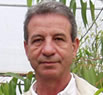
I guess most of our readers are familiar to our dear friend Teo, the nickname who was adopted by the sector to identify one of the most sincere eucalyptus' friends: the forest engineer Teotonio Francisco de Assis. I know Teo since 1985. I met him for the first time during an IPEF symposium in Piracicaba, about "Trends in the Development of the Brazilian Forest Sector". At that opportunity, Teotonio made a bright, clear and outstanding speech about the hybridization and cloning program in Acesita Energetica, the company he was working for at that moment. From that time onwards, we had a chance to meet each other in some forestry events in Brazil. The sector was booming and Teo was giving his first important contributions to this growth. In 1989, we started working together in Riocell, a private market pulp manufacturer in south of Brazil. During 10 years we were able to join efforts in favor of the eucalyptus technologies, both forestry and wood quality and utilization. In 1998, I decided to follow my career by my own, and to leave Riocell, but we had a continuation of our technical and personal friendship. We had several papers published as co-workers, and Teo provided a lot of support to my students from the Federal University of Santa Maria, when I was teaching as professor there. His participation in the eucalyptus forest breeding in Brazil has been decisive and outstanding. However, Teo has also links and strong participation in other countries eucalyptus improvement programs, as in Chile, Uruguay and Argentina. Teotonio is also very popular in Australia, Iberian countries, and in a number of international forestry congresses. One of his strengths is innovation. He is being very innovative in several areas of the eucalyptus forestry. Thanks to his work, there are several very useful knowledge fields developed to improve the forest productivity, and the quality of the commercial eucalyptus plantation forests. He knows very well the links between scientific new knowledge and the potential application for them. Just to summarize some areas that Teotonio has worked to promote optimizations and to generate new technologies: introduction of new eucalyptus genetic material, forest breeding, molecular genetics and gene mapping, forest biotechnology, hybridization and cloning, cuttings and micro-propagation in agamic seedling production, seedling quality, eucalyptus diseases, wood quality for industrial utilization, planted forest quality and productivity. His scientific production is huge, and this may be proved by the number of technical papers and speeches presented by him in many journals and conferences in a world basis.
Teotonio was born in 1952. He is from Goias state, a central state in Brazil. He comes from a family of 6 kids, and from them, 4 have selected the forest engineering career. Teotonio was the second. In 1995, his mother received an award from the Minas Gerais State Society of Forest Engineers, in appreciation for her contribution in favor of the Brazilian forestry development. His beginning with the eucalyptus comes from the time he was studying in the high school, in Vicosa. His elder brother Jose Batuira de Assis was studying forest engineering at UFV. Teo was frequently invited to attend the practical classes with him. The growing interest for this theme directed him to the same career as his brother. In 1973, he started his undergraduate studies and in 1976 he got his degree as forest engineer. Along the college period of his life, he was active in extra training. During the vacation time, he was able to work as trainee at Florestas Rio Doce, and in the Secretary of Agriculture of the State of Goias. He also acted as trainee in PRODEPEF, a very important Brazilian forest development program at that time. In PRODEPEF he received the advising and guidance from Dr. Lamberto Golfari, one of the most renowned experts on ecological zoning for eucalyptus plantations. He participated in evaluations of different species and provenance trials of eucalyptus for introduction in several regions in Brazil. After the graduation, Teotonio decided to go to further studies in the same university. He got his Master of Science degree in Genetics and Tree Breeding. His major professor and adviser was Dr. Arno Brune. His MS dissertation had as title "Heritability estimates and correlations for young progenies of Eucalyptus grandis". Although studying in the master course, he was able to grab his first job at Acesita Energetica. In Acesita he worked during 11 years, mainly with forest breeding, hybridization and cloning. His dedication to search highly productive hybrids for cloning has been amazing. He was even able to obtain very difficult hybrids, as the one obtained by controlled pollination of Corymbia citriodora and Corymbia torelliana. At the late period he had with Acesita, he was involved in a program for vegetative propagation. It was a joint effort between Acesita and a specialized biotechnological company called Bioplanta. In this partnership, Teotonio could participate in developing the first protocols for micro-propagation of Eucalyptus species, together with Dr. Linda Caldas and Dr. Dario Grattapaglia. At that time, he started the first studies about micro-propagation. Years later, he was able to develop the pioneer micro-cutting technique in Riocell. This technique is today the most widely used technology for cloning eucalyptus in the world. In 1989, he received the invitation to join Riocell. Our common friend and "almost brother" Jorge Vieira Gonzaga convinced him to change job positions, and to move from center Brazil to south. One of the attractions in Riocell was the R&D orientation the company had at that time, being one of the most famous companies in the world in this respect. In Riocell he was able to work in the development of a good number of very innovative technologies and forest tools. Most of them are the predominant techniques being used in Brazil, thanks to the interaction and cooperation among universities and forest companies. His main achievements were related to the following technologies:
-
development of micro-propagation and micro-cutting,
-
development of the concept about indoor crossing orchards,
-
development of the controlled pollination technique: artificially induced prothogyny,
-
improvements in the paclobutrazol precocious induced flowering in eucalyptus, utilizing plants in containers,
-
development of induced sprouting in standing eucalyptus trees,
-
production of over 100 hybrid combinations among different eucalyptus species and genetic materials,
-
developments of tree breeding in Acacia mearnsii,
-
utilization of the E. globulus in controlled crossings to obtain selected hybrids for improvements in the quality of the wood for pulping. These new hybrids were able to change the potential of eucalyptus wood quality in Brazil. The pulping performance of these woods were improved due to better pulping yields, higher wood basic density, lower specific wood consumption, lower lignin content, and higher hemicellulose content.
Along his professional life, he had two important trips to Australia for collecting seeds and genetic materials for tree breeding. Because of these two scientific trips, he is one the persons who has introduced a very wide genetic basis for the future developments of the eucalyptus in Brazil. The first scientific travel happened during the time he worked for Acesita. He went to Australia together Mr. Rivelli, another forest engineer. The orientation was to bring material of species more feasible for charcoal manufacturing: E. camaldulensis, E. tereticornis, E. pellita, E. pilularis, E. pyrocarpa, E. cloeziana, Corymbia citriodora and Corymbia torelliana. The second trip happened in 1990. The objective was to collect material to the Riocell tree breeding program. The selections were: E. saligna from New South Wales, and E. grandis from Atherton area. Also, in this second trip, several seeds from other Eucalyptus species were obtained from CSIRO / Australia: E. globulus, E. dunnii and other species suitable for planting in south Brazil.
In Riocell, and according to the technology management model we had in the company, Teotonio was able to develop expertise and skills in consulting work. This consulting service had as targets the own company, the companies of the Klabin group, Riocell most important shareholder, and other customers of the Riocell technological center. Later, he performed as tree breeding expert to the whole Klabin corporation. When Riocell was bought by Aracruz, Teotonio had another change. He stayed with Aracruz during 1,5 years, until the creation of his own consulting company (Assistech). Today, he acts as consultant for several forest based companies in Brazil, Chile, Uruguay, Argentina, in the pulp and paper, charcoal and lumber industries.
His academic life as supporter of forest engineering courses always was one of his main features. In Riocell, he was active on advising young students from the local state college of forestry, and master students on forestry. Today, he is visiting professor in a North Carolina State University international course on Forest Genetic Tree Breeding. His classes are about vegetative propagation and controlled crossings in Eucalyptus. In our talks, Teo told me one of his future dreams. This dream includes his wife Marisa, who is expert on pedagogy for high skilled children. The plan is to develop eucalyptus wooden toys for these kids education, in cooperation with specialized organizations.
A part of the most important papers written by Teotonio Francisco de Assis are brought to you by the following euca-links:
Current status of clonal forestry in Brazil (Estado atual da clonagem florestal no Brasil). T.F. Assis. 1 p. English
http://www.celso-foelkel.com.br/artigos/outros/
Arquivo%2007.%20Current%20Staus%20of%20Clonal%20Forestry%20in%20Brazil.docMelhoramento para produtividade e qualidade da celulose de fibra curta (Breeding for productivity and quality in the hardwood pulp production). T.F. Assis. 18 pp. Portuguese
http://www.celso-foelkel.com.br/artigos/outros/
Arquivo%2008.%20Estrat%E9gias%20de%20Melhoramento%20FIBRA%20CURTA.docEstrategias de melhoramento para obtencao de madeira de qualidade para laminacao e serraria (Breeding strategies for obtaining high quality wood for veneer and saw-timber). T.F. Assis. 18 pp. Portuguese
http://www.celso-foelkel.com.br/artigos/outros/Arquivo%2009.%20Estrat%E9gias%20de
%20Melhoramento%20para%20Obten%E7%E3o%20de%20Madeira%20de%20Quali.docHistorical development to the state of the art with propagation of Eucalyptus sp. (Desenvolvimento historico para o estado-da-arte na propagacao de Eucalyptus sp.). T.F. Assis. 1 p. English
http://www.celso-foelkel.com.br/artigos/outros/
Arquivo%2010.%20Historical%20Development%20with%20propagation%20of%20Eucalyptus%20sp.docImprovement of forestry productivity and wood quality through hybridization (Melhoramento da produtividade e qualidade da madeira atraves hibridacao). T.F. Assis; G.D. Rezende; A.M. Aguiar. 1 p. English
http://www.celso-foelkel.com.br/artigos/outros/Arquivo%2011.docCurrent status of breeding and deployment for clonal forestry with tropical eucalypt hydrids in Brazil (Estado atual do melhoramento e mobilizacao para a clonagem florestal com eucaliptos tropicais hibridos no Brasil). T.F. Assis; G.D.S. Rezende; A.M. Aguiar. 1 p. English
http://www.celso-foelkel.com.br/artigos/outros/Arquivo%2012.docBiotechnology and the KISS principle in Eucalyptus breeding (Biotecnologia e o princípio KISS no melhoramento do eucalipto). T.F. Assis. 1 p. English
http://www.celso-foelkel.com.br/artigos/outros/Arquivo%2013.%20Kiss%20Principle.docMelhoramento genetico do eucalipto (Eucalyptus genetic breeding). T.F. Assis. 35 pp. Portuguese
http://www.celso-foelkel.com.br/artigos/outros/Arquivo%2014.%20melhoramento%20eucalipto.docArtificially induced prothogyny: an advance in the controlled pollination of Eucalyptus (Protogenia induzida artificialmente: um avanço na polinizacao controlada do Eucalyptus). T.F. Assis; P. Warburton; C. Harwood. Australian Forestry 68(1): 26 – 32. 2005. English
http://www.celso-foelkel.com.br/artigos/outros/
Arquivo%2015.%20PAI%20Protoginia%20Artificialmente%20induzida.pdfEvolution of technology for cloning eucalyptus in large scale (Evolucao na tecnologia para clonagem de eucalipto em larga escala). T.F. Assis. 16 pp. English
http://www.celso-foelkel.com.br/artigos/outros/
Arquivo%2016.%20Paper%20IUFRO%202001%20corrected.docOs propulsores da produtividade dos eucaliptos (The eucalypts forest productivity drivers). T.F.Assis. Revista Opinioes. 2006 Portuguese
http://www.revistaopinioes.com.br/Conteudo/CelulosePapel/Edicao002/Artigos/Artigo002-14-A.htmCurrent techniques and prospects for the clonal propagation of hardwoods with emphasis on Eucalyptus (Tecnicas atuais e projecoes para a propagacao clonal de folhosas com enfase no Eucalyptus). T.F. Assis; A.G. Fett Neto; A.C. Alfenas. In "Plantation Forest Biotechnology for the 21st Century". 2004. 31 pp. English
http://www.cababstractsplus.org/google/abstract.asp?AcNo=20053035518Utilizacao comercial de propagacao agamica de especies de Eucalyptus (Commercial utilization of agamic propagation in Eucalypus). T.F.Assis. XI Jornadas Forestales de Entre Rios. Argentina. 1996. 7 pp. Portuguese
http://www.sagpya.mecon.gov.ar/new/0-0/forestacion/biblos/pdf/1996/62-1996-02.pdfMetodos alternativos de cruzamentos controlados em Eucalyptus (Alternative methods of controlled cross breeding in Eucalyptus species). T.F.Assis; N.S.Jardim; J.F.S.Bauer. IUFRO Congress about "Silviculture and Breeding of Eucalyptus". 5 pp. Portuguese
http://bosques.cnpf.embrapa.br/node_embrapa/uploads/gotjaygcjo.pdfAracruz encontra no E.globulus uma fonte de qualidade de madeira para se tornar mais competitiva (Aracruz finds in the E.globulus a new source of wood quality to become more competitive). Celso Foelkel interviews Teotonio Francisco de Assis. O Papel - September 2004: 41 – 43. Portuguese
http://www.celso-foelkel.com.br/artigos/outros/
Arquivo%2018.%20aracruz%20encontra%20no%20e.globulus.pdfNew pulping technology and Eucalyptus wood: the role of soil fertility, plant nutrition and wood ion content (Novas tecnologias de producao de celulose e a madeira do eucalipto: o papel da fertilidade do solo, da nutricao da planta e do teor de ions na madeira). C.Foelkel, T.F.Assis. IUFRO/CRC for Temperate Hardwood Forestry. 4 pp. 1995. Available to public. English
http://members.forestry.crc.org.au/cgi-bin/doc.pl?doc_id=514http://members.forestry.crc.org.au/cgi-bin/doc.pl?rm=search&query=foelkel
Sintetizacao de hibridos de Eucalyptus por cruzamentos controlados (Eucalyptus hybrids synthesis by controlled crossings). T.F.Assis; J.F.S.Bauer; G.Tafarel. Ciencia Florestal 3(1): 161 - 171. 1993. Portuguese
http://www.ufsm.br/cienciaflorestal/artigos/v3n1/art10v3n1.pdfFatores operacionais que afetam a regeneracao do Eucalyptus manejado por talhadia (Operational factors affecting the sprouting of the Eucalyptus stumps managed by clear cutting). J.E.M.Klein; E.P.Bortolas; T.F.Assis; E.P.Perrando. Technical Series IPEF 30(9): 95 - 104. 1997. Portuguese
http://www.ipef.br/publicacoes/stecnica/nr30/cap9.pdfProduction and use of Eucalyptus hybrids for industrial purposes (Producao e uso de hibridos de eucaliptos para propositos industriais). T.F.Assis. Proceedings of the QFRI/CRC/SPF Symposium "Hybrid Breeding and Genetics of Forest Trees": 63 - 74. 2000. Available to public. English
http://members.forestry.crc.org.au/cgi-bin/doc.pl?doc_id=332http://members.forestry.crc.org.au/cgi-bin/doc.pl?rm=search&query=assis
Propagacao vegetativa de Eucalyptus por microestaquia (Vegetative propagation of Eucalyptus by micro-cuttings). T.F.Assis. IUFRO Congress about "Silviculture and Breeding of Eucalyptus". 1997. 5 pp. Portuguese
http://bosques.cnpf.embrapa.br/node_embrapa/uploads/sbmphqjskl.pdfSporothrix eucalypti - Um novo patogeno do eucalipto no Brasil ( Sporothrix eucalypti -A new pathogen of Eucalyptus in Brazil). A.C.Alfenas; E.A.V.Zauza; O.P.P.Rosa; T.F.Assis. Revista Fitopatologia Brasileira 26(2): 221. Portuguese
http://www.scielo.br/pdf/fb/v26n2/a21v26n2.pdfQualidade da celulose kraft antraquinona de Eucalyptus dunnii plantado em cinco espacamentos em relacao ao Eucalyptus grandis e E.saligna ( Kraft anthraquinone pulp properties of Eucalyptus dunnii obtained within 5 tree plantation spacings and compared to commercially planted E.grandis and E.saligna). G.W.Ferreira; J.V.Gonzaga; C.E.B.Foelkel; T.F.Assis; E.Ratnieks; M.C.M.Silva. Ciencia Florestal 7(1): 41 - 63. 1997. Portuguese
http://www.ufsm.br/cienciaflorestal/artigos/v7n1/art5v7n1.pdfComportamento da madeira de Eucalyptus globulus com diferentes teores de lignina para producao de celulose kraft (Kraft pulping behavior of Eucalyptus globulus woods containing different lignin contents). C.A.B.Rosa; G.V.Cardoso; S.M.B.Frizzo; C.E.B.Foelkel; T.F.Assis; P.Oliveira. 35th ABTCP Annual Congress. 2002. 7 pp. Portuguese
http://www.celso-foelkel.com.br/artigos/ABTCP/abtcp.%20para%20site%202002e.pdfVariacao da densidade basica da madeira de Eucalyptus globulus no sentido longitudinal da arvore (Variability in the tree height of the Eucalyptus globulus wood basic density). G.V.Cardoso; S.M.B.Frizzo; C.A.B.Rosa; C.E.B.Foelkel; T.F.Assis; P.Oliveira. 35th ABTCP Annual Congress. 2002. 7 pp. Portuguese
http://www.celso-foelkel.com.br/artigos/ABTCP/abtcp.%20para%20site%202002d.pdfOtimizacao das condicoes do cozimento kraft de Eucalyptus globulus em funcao do teor de lignina da madeira (Kraft pulping optimization of Eucalyptus globulus woods with different lignin contents). G.V.Cardoso; S.M.B.Frizzo; C.A.B.Rosa; C.E.B.Foelkel; T.F.Assis; P.Oliveira. 35th ABTCP Annual Congress. 2002. 7 pp. Portuguese
http://www.celso-foelkel.com.br/artigos/ABTCP/abtcp.%20para%20site%202002a.pdfBook: Clonagem e Doencas do Eucalipto (Cloning and Diseases of Eucalypt) A.C.Alfenas; E.A.V.Zauza; R.G.Mafia; T.F.Assis. Editora UFV. 2004. 442 pp. Portuguese
https://ssl503.websiteseguro.com/livraria2/produtos.asp?produto=672https://ssl503.websiteseguro.com/livraria2/Sumario.asp?Cod=672
Book review: http://www.sbmp.org.br/cbab/sisartigo/pdf/4(1)%202004/Cbab-Book-Rew.pdf
Book chapter: Biotecnologia Florestal (Forest Biotechnology)
Editor Aluizio Borem . Editora UFV. 2007. 387 pp. Portuguese
https://ssl503.websiteseguro.com/livraria2/produtos.asp?produto=917https://ssl503.websiteseguro.com/livraria2/Sumario.asp?Cod=917
Technical Mini Article by Celso Foelkel
The Eucalyptus Bleached Kraft Pulp Manufacturing and the Water Consumption
The pulp and paper industry is a great water consumer. This happens since paper manufacture was invented, more than 2000 years ago. The idea of making a paper sheet in a wire, using a well-diluted fiber suspension is still the same. At the same time that the pulp and paper mills are collecting enormous flows of water from rivers, lakes or wells, when this water is used in the mills, an important fraction becomes contaminated. This contaminated water has to be treated and discarded later as effluents. Another important fraction of the collected water is lost , it does not return back to the water courses. The losses are due to evaporation, losses to the ground, water following solid wastes as moisture, etc. The total water loss may vary from 10 to 20%, depending on the water management and in the design of the installations, mainly the conceptual project of the spills collecting and recovery systems.
Not so long ago, around the 70's, pulp and paper mills were used to be very open in their water cycles. Water consumption per ton of bleached pulp was as high as 250 m³/adt, an exaggeration, no doubts. Water has been till now an inexpensive material to the industry. The total water cost has only been calculated by the sum of the costs for collecting, treating and distributing. The fresh water was a kind of gift from Nature, it was only a question of taking it from the rivers. It is obvious that this situation has to change, and it is. The reason for high water consumption is simple: more water a mill uses, cleaner are the pulp and the processes. The water removes unwelcome contaminants, those that may cause dirt in the pulp, difficulties in bleaching, and incrustations and plugging in the process. Colloids, mineral ions, chromophoric groups, wood extractives, organic radicals, slime, stickies, and a lot more, may be eliminated from the process through the water. Good to the process, bad to the environment. When water systems are closed and water consumption minimized, these contaminants may cause problems as production and final product quality losses. For these reasons, the pulp and paper mill technical personnel would prefer to work in mills very open in terms of their water cycles. That is the reason for water consumption as high as 150 to 250 m³/adt of bleached pulp in recent past. At that times, the water consumption to manufacture white paper was about 25 to 40 m³ per ton of paper, also an exaggeration. Something unacceptable according to today's standards.
The world has changed from the 70's till now. The pulp and paper technologies are more modern, the mills have closed as they could their water circuits, and they are generating less effluents. Today, the bleached kraft pulp manufacture is reporting values from 25 to 40 m³/adt and the white paper manufacture from 7 to 15 m³/ton of final paper. It is a substantial improvement, but I cannot accept this as good, yet. Water is still very inexpensive, from 0.05 to 0.12 US$/m³ (2 to 4 US$/adt), but the cost to treat and to discard effluents is not that low (from 7 to 15 US$/adt of bleached pulp, depending in the type of treatment and quality of effluent). In all cases, we are only talking about direct costs, not including investment and depreciation costs.
There is also a very interesting physics law applied to this situation. More water a mill uses, more effluent it will generate. This is very understandable. It is explained by the well-known Lavoisier's law for the mass conservation in the systems: "what comes in has to goes out". It is then obvious that more water we use, higher are our costs, both in water and in effluents.
What we are seeing today are the pulp and paper mills spending enormous sums of capital in the construction of huge water and wastewater treatment plants (WTP & WWTP). They could save a lot in these investments, since we are plenty of availability for important improvements in the water consumption. Reading what I'm writing, it will be simpler to understand my points. I fully understand that we are not so close to the "zero effluent mill", the mill with the water cycle completely closed. Today, we are able to find very interesting bleached kraft mills running with the generation of about 20 m³ effluents/adt. In the white paper manufacture we may see mills with 5 to 10 m³/ton. I'm happy with this evolution, but not satisfied or satiated. I've seen many improvements, but I'm not convinced that we have reached the state-of-the-art. Most of the mills are engineered to treat, treat and treat the effluents, using end-of-pipe techniques. They are not designed to prevent, to recycle, to segregate and to discipline. This is a conceptual point of view, and it is created at the moment of the mill conceptual design. When we have an existing pulp mill running with 30 m³ effluents/adt because the design was for doing this, it is difficult to this mill to have substantial reductions. The mill, the equipment’s (pumps, tubes, canals, streams, tanks, valves, reactors), all were designed for this flow. Reducing the water consumption to half of this, for example, it is not that simple. Remember that the operators have the option to use more water, they do not have limitations until 30 m³/adt or even more. The ideal situation is to project and to build a pulp or paper mill with limitations and new concepts in the water consumption. First of all, the new designing should be based on water segregation. The today's philosophy is to blend all residual waters and to treat the "raw effluent" in a huge, costly, and unnecessarily dinausaric WWTP - Waste Water Treatment Plant. Pulp and paper mills have the mind hold down to the economy of scale, to huge equipment’s, huge and simple installations. Because of this judgement, very good quality waters from the mills are blended with highly contaminated waters. These clean waters also become contaminated and dirt. Some of these clean waters are almost drinking waters, they could very easily be used back in the process. Examples: sealing waters, cooling waters, hydraulic system waters, gasket lubricating waters, purged water from boilers, clean condensates from pulp machine, rain waters, etc. Adding up all these flows, we may reach 20% of the total water consumption in the mill. Remember that we are also discarding water to the atmosphere in the form of steam or mist (steam from pulp and paper dryers, mist released by the cooling towers, moisture in the smokes from boilers and lime kiln, etc.). Only the cooling towers used to reduce the temperature of the industrial water or raw effluent through away 1.5 to 2 m³/adt of mist to the atmosphere. It is difficult to accept that cooling towers in the wastewater treatment plant may be discarding raw effluent to the air. Raw effluent is no good to the river, but goes in part to the air due to the cooling towers. Better to use indirect contact heat exchangers or condensers to depress this mist.
Another important issue is to make a distinction between the numbers when we talk about them. Water consumption is one thing, generation of effluents another one. Both are very different. Almost all mills are used to measure the flow of final generated effluent. It is simpler, one single point, and also legislated by law. Water consumption and water losses by sectors are seldom or unusual. Whole mill water balances are simple to be made, but they are not common. It is very important to discover all points in the process where we are losing water, and to quantify these losses.
Where do we have water losses in a pulp mill? There are many points, some are so evident and clear:
Well, in summary, there are many points for water losses in a mill. For these reasons we have the 10 to 20% difference between what is taken from the river, and the returning effluent. This percentage may be higher or lower, depending on the technological advances of the mill, and on the water management developed among the mill personnel.
Another problem is the lack of distinction between the different waters, in terms of their qualities. The pulp and paper sector has become used to utilize clean and close to drinking water as industrial water. There are many points where this quality is not needed at all: sealing waters, cooling waters, log washing water, floor and pavement washing water, etc. All these waters could be recovered waters from other sources in the pulp and paper process. Even treated or partially treated effluents could be appropriate for many practical utilization, where clean fresh water is not required.
In a very detailed evaluation of all water flows that are running in a pulp mill, we may notice that about 70 to 80% of them do get really dirt due to a noticed contamination level. However, something between 20 to 30% of the waters have a mild contamination or only get warmer or hot due to heat exchanging. I cannot understand why someone designing wastewater flows and WWTPs wants to mix such clean waters to the dirt ones! Why to send clean waters to the biological secondary treatment, since they do not have organic matter to be decomposed? Since they don't have food to feed the microorganisms, then, why to send them to the activated sludge system? Just to the need to increase the reactor dimensions? We should evaluate very well from the beginning the drawing of water circuits in order to segregate the waters avoiding by this way to spend extra money we don't need to waste. Clean, hot or recovered waters may be recycled in the process, depending on finding the right place. The same water may be recycled several times a day, and the savings are possibly very significant. For example, the cooling towers to reduce the clean and hot industrial waters temperature have a flow that corresponds to 100 to 200 m³/adt. This because the same water recycles more than once a day in the cooling system.Another usual problem in mills is the lack of balance in the water and effluent flows in different mill sectors. In one area the water is missing, in another one we have an excess of water or effluent. In the place we have an excess, surely we have drainage to the effluent. A possible solution could be one large tank or a large pond to regulate and to compensate flows, and to balance them in the mill. I'm definitively in favor to have a large pond to receive all these good quality waters I have mentioned till now. From this pond, the water could be reused as such in some points of the mill, or sent to the water treatment plant (WTP), replacing some fresh water from the river intake. We would save capital at the end-of-the-pipe by adding some investment in the beginning-of-the-pipe.
Another historical issue that is very harmful to the water consumption in pulp and paper mills, is the way the pulp is transferred from one area to another. Usually, in most (or all situations), the pulp is transferred by low consistency pumping (2.5 to 3.5%). Water is the vehicle to carry the pulp in the mills. This means that for each dry ton of pulp, we are also pumping 30 m³ of water (unbelievable this figure, isn't it?). This vehicle is not clean. The water has several contaminants that follow to the other area together with the pulp. We know that we may find colloids, ions, fines, pitch, chromophoric groups, sand, volatile odorous compounds (VOCs), toxic compounds (AOX), etc., etc. We are transferring pulp, water and dirt materials. We should move to other concepts, this is essential for improving our processes. Today we have magnificent washing presses or other high consistency washers. The technology exists. Raising consistency to around 30%, and transferring the pulp by the use of belt conveyors, we could be transferring only 2.5 m³ of water for each dry ton of pulp. It is surely another concept. Instead of 30 m³/ton, we would be transferring only 2.5 m³. A goal in favor of the rationality. Fortunately, I'm seeing some medium sized mills utilizing belt conveyors to the transference of pulp using medium or high consistency: great to the environment, and to the pulp and paper processes. However, the large new fiberline projects are not including this concept, yet. But, I know that it is the right way, and it will come soon. Let’s wait or make some pressure for.
The utilization of water in the pulp and paper mills is still vital. Our technologies are based on the water use. Without water, we need to find other technological roads. However, we are good enough to reduce substantially the water consumption in the today's existing and new mills. We need to develop, to understand and to practice new concepts and methods. Some barriers need to be overcome. We have also old paradigms to be destroyed. What we need is to change the way of engineering the new fiberlines, not keeping the method of copy/paste projects.
Following these introductory remarks, I'm bringing to you some strategies for reflections and to be considered in this new age for water savings and optimization in the pulp and paper industry:
1. Identify very well the qualities of all water flows (contaminated, clean and hot, with suspended solids, etc., etc.);
2. Segregate very well the different types of waters, according to their qualities. Avoid mixing good and clean waters with contaminated waters.
3. Have separate systems for collecting, treating and storing the different waters. The consequences are better water use and recovery and smaller wastewater treatment plant. And also, lower water and effluent costs.
Today, the overall technology is based on sending all waters to the WWTP – Waste Water Treatment Plant. All residual water follows to primary, secondary and tertiary (in some cases) treatments. All water or raw effluent flows through a good-looking, pompous, costly, and somewhat unnecessarily large WWTP. Waters could be treated according to their needs. There are many effluents that could be treated locally, in the area where they are generated. And recovered in the same area.
I really believe that small wastewater treatment facilities, appropriate to each situation, could be used, instead a single, gigantic and dinosauric WWTP. These simple treatments would be complementary to a smaller, but efficient, wastewater treatment plant, for the remaining and more contaminated effluents. There are several potential facilities to be used in such way: indirect heat exchangers, condensers, evaporators, distillers, incinerators, filters, reverse osmosis membranes, constructed wetlands, demisters, etc.
In recent times, I've seen with interest and curiosity the utilization of membranes (reverse osmosis or ultra-filtration) as a kidney to treat the final effluent. The technology is fantastic, the results excellent, but the position for the membranes sometimes is not very wise. This expensive treatment is to be used in selected positions, and not to treat the whole blended effluent. Segregation again is needed, do you agree?
In the sector a local and small waste water treatment be installed, the treated water may be reused again in the same area. For example: a constructed wetland is perfect to treat the water from the wood yard and wood preparation room. The effluents in these areas are rich in organic compounds from the bark, leaves, wood, and contains sand, clay, etc. A constructed wetland would be very appropriate to treat this type of waters. It would be very natural, since the contaminated waters contains completely natural chemicals from the trees. The biomass generated in the wetland could be harvested from time to time, and burnt in the power boiler (as biomass).
4. Avoid the concentration of ions, wood extractives, fines, slime, colloids, etc., by an appropriate water management (diagnosis, evaluation of options, decisions, actions).
5. Reuse clean residual waters or recovered waters in all places that it would be feasible and convenient. Replace fresh clean industrial water as much as possible.6. Recycle within the mill fences part of the industrial treated or partially treated effluent.
Many times, I've listened the following exultation coming from proud mill personnel or executives: "our effluent quality is better than the river water quality" . Well, in case this is true, why not to recycle at least a portion of this flow back to the mill? I understand the problems of chlorides and potassium accumulation, but I'm quite sure that some sound percentage of the mill effluent could be internally recycled. There are new roads to remove non process elements from the mill systems. Part of this well-treated effluent could be directed to the Water Treatment Plant, in substitution of some fresh water taken from the river. We may also find good uses for partially treated effluents or mill filtrates: to rewet the chips in the chip piles, to wash the logs in the wood preparation area, etc.
7. Work for reducing the consumption of water in the points the water is needed. One simple way to discipline this is not to offer the possibility to send the effluent to the WWTP. This means, plug all effluent pipes from areas this is possible to be done: causticising, chemical plant, recovery boiler, digester, lime kiln, etc. Don’t have mercy.
8. Improve the concept of the spill collecting system, by including also the words segregation, recycling and reuse.
9. Close to the maximum possible the water cycle in the pulp machine area. In case the pulp could be transferred from bleaching line to pulp machine at 30% consistency, the water would not be excessive in this area. The pulp machine is well-known for generating a clean and acid effluent, that could be easily recycled. However, we always have excess of this water going to the waste water treatment plant, another example of clean water running away to the sewer. The only point in the pulp machine area that may generate a dirt effluent are the centricleaners. The final stage of the centricleaners gives a "dirt and contaminated effluent". But the contaminants are fibers, some pitch and sand, nothing difficult to be segregated also. For this reason, do not blend the final drain from the cleaners to the white acid water. It is a "candour" attitude or decision. The centricleaner residual water has in general a consistency about 1%. The mills have fiber losses of about 0.1% via this system purge. This means that for each ton of dry solids purged by the centricleaners, we are discarding 100 m³ of water. Both, fibers and waters could be easily recycled.
10. Have a clear and transparent talk with the environmental control authorities proposing reasons why it is better to have the environment control limits based on daily loads (for example: kg COD/day) than concentrations (ppm of COD). The control by concentrations do not offer incentives to the mills to close the systems of water, since dilution is favorable to reach the legislated concentrations. However, be open to accept concentrations in situations the fragility of the receiving water stream demands this for some specific pollutant.
Well friends, I have just brought to you many points for deep reflections. A great part of my professional career I've been involved in improving the environmental performance of forest plantations and pulp and paper mills. I'm used to pay attention to the future, to keep an eye in the trends, and finding ways to reach a better future. I don't like to stay accommodated to the today's situation, even if it is confortable. Also, the exultation of our present and past achievements are important, but we cannot stop because these accomplishments. We need more, we need better. We had fantastic gains in terms of environmental performance in the pulp and paper sector. However and fortunately, we are plenty of room for additional and substantial improvements. I believe very much that in near future we may reach the specific generation of 10 to 15 m³/adt of effluents in the eucalyptus bleached kraft manufacture. In papermaking, why not to dream with 3 to 5 m³/ton? Today, the best figures I know for bleached kraft pulp mills are 17 to 23 m³ effluents/adt. To reduce this to 10 to 15 it is not that far and difficult, do you agree? Step by step we are closing the water cycles, and approaching the minimum impact mill concept. This will come, even with the use of some water and generating some effluent. We all will be very happy, proud and pleased with this. The environment will thank.
Eucalyptus Newsletter consists of technical information texts written and made available to all people involved with the forestry and utilization of the eucalyptus
Technical coordination - Celso Foelkel
celso@celso-foelkel.com.br
Webmaster / editing - Alessandra Foelkel
Celsius Degree: Phone (+55-51) 3338-4809
Copyright © 2005-2007
This Eucalyptus Newsletter is a Celsius Degree production and it was made possible through sponsoring support provided by ABTCP - Brazilian Technical Association of Pulp and Paper, Botnia and Aracruz. The opinions expressed in the texts are those of the author or coming from the referenced technical literature or websites suggested as euca-links. They do not necessarily reflect the views of the sponsors.
In case you prefer not to receive the Eucalyptus Newsletter and the Eucalyptus Online Book, send a cancellation e-mail message to webmanager@celso-foelkel.com.br
In case you want to support or to sponsor the Eucalyptus Online Book & Newsletter, having your logo or name associated with them, click here - to get more information