

Editorial
Dear friends,Good morning, my dear Eucalyptus friends. Here we are again, with the 15th issue of our Eucalyptus Newsletter. In this edition, we are again bringing a lot of information and knowledge about these wonderful trees and their utilization. Remember that most of this information is brought to you for your better understanding about the Eucalyptus. I hope you may, like me, also admire these trees and the products they offer to Society.
In this edition of the Eucalyptus Newsletter we are introducing to you some more chapters of our Eucalyptus Online Book, both with focus on the efficiencies and inefficiencies at our Eucalyptus pulp and paper mills.
As an inhabitant of the state of Rio Grande do Sul, Brazil, I'm seeing with a great enthusiasm the growth of the plantation forestry and forest-based industry is happening in the region. For this reason, I'm bringing back the section "The World of the Eucalyptus - State of Rio Grande do Sul". I hope you may also get enthusiastic about the tremendous growth of the plantation forestry in this Brazilian state.
In the Ester Foelkel's section about "Curiosities and Oddities about the Eucalyptus" she is telling us about the "Production of Bonsais" from Eucalyptus, an interesting and curious activity.
In the section "The Friends of the Eucalyptus", I'm telling to you the professional life and the career of a young Galician, Mr. Gustavo Iglesias Trabado. Gus, as he likes to be called, is a dedicated friend of the Eucalyptus, having created an Internet blog to honor them. Moreover, Gus has his professional life completely linked to the Eucalyptus. He acts as a consultant in the Iberia countries, doing his best to promote the better utilization of these trees to several purposes, including those ornamentals. I'm very honored to have the opportunity to introduce him to you in this issue of the Eucalyptus Newsletter.
I'm also creating a quick section to appear in two editions of the Eucalyptus Newsletter. It is related to the so called "Myths and Facts about the Eucalyptus". The intent is to offer to you the chance to read available articles both about the myths and about the facts and realities. In this issue, I'm suggesting articles and speeches written by people opposing the Eucalyptus. They may have their reasons for doing this, then it is wise to hear them. About the facts and realities, based on the best science, I'm frequently writing in the mini-articles on these Eucalyptus Newsletters. I hope you are reading them. By the way, I'm continuing writing about this theme in this present newsletter. The today's article is titled "The Eucalyptus Plantation Forestry and the Environment". My purpose is to offer to readers, in a simple format, the main impacts and risks when planting Eucalyptus forests, and also the main benefits. In case of negative potential impacts, it is important to the tree planter to take the already known measures to mitigate these impacts to minimize the risks of environmental and social harms and damages.
As we are used to do, in this newsletter issue, we are bringing a lot of interesting subjects about the Eucalyptus. The purpose is to offer knowledge in a way that you may learn more, and to enjoy doing such. For this, we are forcing you, in some extent, to navigate the web to grab as much on good information as possible. We also offer good articles, and recommendations of books and interesting events.
In case you are not registered yet to receive free-of-charge the Eucalyptus Newsletter and the chapters of the Eucalyptus Online Book, I suggest you to do it through the following link: Click here for registration.
We have now several non-financial supporting partners to the Eucalyptus Online Book & Newsletter: TAPPI, IPEF, SIF, CeluloseOnline, CETCEP/SENAI, RIADICYP, TECNICELPA, ATCP Chile, Appita, CENPAPEL, TAPPSA, SBS, ANAVE, AGEFLOR, EMBRAPA FLORESTAS and GIT - Eucalyptologics. They are helping to disseminate our efforts in favor of the Eucalyptus in countries such as: Brazil, USA, Chile, Portugal, Spain, Colombia, Argentina, Australia, New Zealand and South Africa. However, thanks to the world wide web, in reality they are helping to promote our project to the entire world. Thanks very much to our partners for believing in what we are doing.
Know more about all of our today’s partners at the URL address:
http://www.eucalyptus.com.br/partners.htmlThanks again for the support to our work. We have just now reached the 7,000 registered people receiving these online publications about the Eucalyptus. Even so, I beg your help to inform about and to promote our project to your friends, in case you feel these publications may be helpful to them. Please, accept my personal thanks, and also the gratitude from CELSIUS DEGREE, ABTCP, BOTNIA, ARACRUZ, INTERNATIONAL PAPER DO BRASIL, CONESTOGA-ROVERS & ASSOCIATES , SUZANO, VCP and from the supporting partners.
Our best wishes to all of you, and please enjoy your reading.
Celso Foelkel
http://www.celso-foelkel.com.br
http://www.eucalyptus.com.br
http://www.abtcp.org.br

Eucalyptus Online Book Chapter 6 (in English)
Eucalyptus Online Book Chapter 10 (in Portuguese)
The World of the Eucalyptus - State of Rio Grande do Sul, Brazil
Eucalyptus: Doubts, Creeds, Myths, Facts and Realities - Part 01: The opinion of the "contrary interested parties"
Curiosities and Oddities about the Eucalyptus: The Eucalyptus being used to the Production of Bonsais (by Ester Foelkel)The Friends of the Eucalyptus - Mr. Gustavo Iglesias Trabado
References on Events and Courses
Technical Mini-Article by Celso Foelkel
The Eucalyptus Plantation Forests and the Environment
Eucalyptus Online Book Chapter 6 (in English)
For downloading the chapter (in Adobe pdf - 9.2 MB) just click the name of the chapter. In case you do not have the Adobe Reader installed in your computer, please visit http://www.eucalyptus.com.br/available.html and find the instructions how to get it.
"Eco-efficiency in managing the pulp fiber losses and the broke generated in paper manufacturing"
Eucalyptus Online Book Chapter 10 (in Portuguese)
For downloading the chapter (in Adobe pdf - 21.3 MB) just click the name of the chapter. In case you do not have the Adobe Reader installed in your computer, please visit http://www.eucalyptus.com.br/available.html and find the instructions how to get it.
"Oportunidades para ecoeficacia, ecoeficiencia e producao mais limpa na fabricacao de celulose kraft de eucalipto"
The World of the Eucalyptus
State of Rio Grande do Sul, BrazilThe state of Rio Grande do Sul is the Southernmost state in Brazil, having borders with Uruguay and Argentina. Its location allows to have different seasons along the year, with green and blossoming Springs, hot and cheerful Summers, and cold Winters, plenty of the traditional gaucha rich food. Gaucho is the nickname given to the people of Rio Grande do Sul.
The RS, as we are to mention the name of the state from now onwards, has a wide territorial area with forestry potential. The global state area is 282 thousand square kilometers, a combination of prairies, uplands, and mountains
(http://webcarta.net/carta/geo.php?r=84&lg=pt). In a great percentage of this region we have wide areas of man-made pastures and natural grasslands; in others we may find Atlantic Natural Forest remainders; in others a high quality agriculture; and also an important area planted with Eucalyptus, Pinus and Acacia mearnsii (black wattle) forests by the man. It is estimated that by now the area covered by plantation forests in RS is about 450,000 hectares. This represents 1.6% of the state geographical territorial area. In comparison to Brazil, RS holds 8.3% of the total planted forests area of the country. The most frequently planted forest species are Acacia mearnsii and Pinus taeda. Following them, a variety of Eucalyptus species: Eucalyptus grandis, E.saligna, E.dunnii, E.viminalis, E.tereticornis, E.paniculata, E.robusta, Corymbia citriodora and more recently, the hybrid E.urograndis. Moreover, RS is the sole Brazilian state able to house high quality plantations of E.globulus globulus and E.globulus maidenni, due to its appropriate weather. There are today some few thousands of hectares planted with these two E.globulus sub-species.When someone tells the history of the Eucalyptus in Brazil, RS has an outstanding position. It is considered to be one of the routes of entrance of the first Eucalyptus trees into the country. Probably, the species was E.globulus originated from Uruguay and the time was late 1800's. We may even find in the city of Rio Grande a very old and centennial tree of Eucalyptus in one of the city squares. Because of this fact, this tree is considered to be a tourist attraction in the city. Another wonderful tree species that is native in the Rio Grande do Sul mountains is Araucaria angustifolia, the Brazilian Conifer: its beauty adorns the Gaucha Mountains and the seeds ("pinhoes") fill the meals of the native people during the winter time.
The added value by the planted forests in RS is very impressive, and it is now in an accelerated process of expansion. The state wood-based industry is very competitive, mainly the production of wood panels, furniture, and pulp and paper. This network generates at moment about 200 to 250 thousand job positions and it is also growing impressively. The development program Forest Industry RS has the goal to promote the forest plantations and associated industry in the state. The goal is to reach one million hectares of plantation forests (3.5% of the state territorial area). This growth is being oriented to the Central and South regions of the state. To support this growth the entrepreneurs are basing their foundations on competitiveness and cooperation among business companies, state government and rural farmers. The aim is to develop competitive forestry clusters as the major driver to this expansion. There is the estimate of investments in the range of 5 billion American dollars in the next couple of years. New pulp and wood panel mills are being built or expanding capacities: Aracruz Celulose, Votorantim Celulose e Papel, Stora Enso, Fibraplac, Masisa, Satipel, etc. We are not mentioning here the great growth also expected in the furniture and lumber associated industries.
The foundations of the Forest Industry RS plan are the following:
• creation of forest clusters having "anchor businesses" to be the growth drivers,
• Local and regional productive arrangements,
• Multiple utilization of the forest plantations,
• Plantation incentives to the rural farmers,
• Agroforestry development,
• Zoning of the agricultural state area to orient forest plantations to the most suitable areas,
• Environmental impact assessment studies to the wider areas being planted,
• Forest chain sustainability as a main target,
• Promotion to the development of the following forest-based segments: furniture, saw-timber, lumber, panels (medium density fiberboard, oriented strand board, particle board), pulp and paper, tannin and resin chemicals, poles, charcoal, biomass fuel, forest residues utilization, biorefineries, etc.In short, the program is ambitious, but well-fundamented and having the support of the main state drivers. The interested parties are committed and the dialogue with Society is opening room for program optimizations.
In order to offer to you the opportunity to know more about the state of Rio Grande do Sul and its enormous potential as one of the most important regions where the Eucalyptus may grow, we have selected several websites for your navigation. Our purpose is not to be exhaustive. This selection also brings to you the chance to find other links when visiting the sites and literature being indicated. Unfortunately, to those not used to the Portuguese language, most of the references are in this idiom.
Business associations linked to the forest-based industry in the state of RS
AGEFLOR - Gaucha Association of Forest Companies
http://www.ageflor.com.br
AFUBRA - Association of the Tobacco Planters in Brazil
http://www.afubra.com.br/principal.php
MOVERGS RS - Association of the Furniture Industry in the State of RS
http://www.movergs.com.br
SINDIMADEIRA - RS ("Wood Coalition in RS")
http://www.sindimadeira.org.br
SINPASUL - Business Federation of the Pulp, Paper and Cork Industry in RS
http://www.sinpasul.org.brEducational, Forestry Colleges and R&D Institutes
CEPEF - Center of Forestry Research
http://www.ufsm.br/cepef/index_2.html
CETEMO - Technological Center for the Furniture
http://www.cetemo.com.br
Junior Forest Company (Federal University of Santa Maria)
http://br.geocities.com/florestajr/indexvelho.html
http://www.wix.com/joabel/florestajr (To access you need to have the Adobe Flash Player version 9,0,124,0 or higher)
UFSM - Federal University of Santa Maria - Forest Engineering and Forest Sciences
http://www.ufsm.br/dcfl (Campus de Santa Maria)
http://www.cesnors.ufsm.br/graduacao/engenharia-florestal (Campus CESNORS de Frederico Westphalen)
http://www.ufsm.br/cepef/florestajunior.html (UFSM Junior Forest Company - it is present also at the UFSM website)
http://w3.ufsm.br/daef (UFSM Forest Student Association)
Websites of the most relevant forest-based industries in the RS state (forestry, furniture, pulp and paper, wood panel and saw-timber)
Aracruz Celulose S/A (Pulp and paper)
http://www.aracruz.com.br
http://www.al.rs.gov.br/Download/CED/Projeto_Aracruz.pdf (Presentation of the Aracruz expansion project in RS)
http://www.aracruz.com.br/show_press.do?menu=false&id=1490&act=stcNews&lastRoot=296&lang=1 (Have a look to the movie "Expansao Guaiba")
Cambara Produtos Florestais S/A (Pulp and paper)
http://www.cambarasa.com.br
Carraro Moveis (Furniture)
http://www.carraro.com.br/site/index.php
Dell Anno Móveis (Furniture)
http://www.dellanno.com.br/home
Fibraplac Chapas de MDF (MDF wood panels)
http://www.fibraplac.com.br
Flosul - Wood Industry and Trade (Wood panels and lumber)
http://www.flosul.com.br/pt/index.php
Habitasul Florestal (Naval stores and pine chemicals)
http://habitasul.com.br
Masisa S/A (Wood panels)
http://www.masisa.com
Melbar LignoTech Products of Lignin (Lignosulfonates)
http://www.melbar.com.br
Reflorestadores Unidos (Forestry, lumber and panels)
http://www.reflorestadoresunidos.com.br
Satipel Industrial (Wood panels)
http://www.satipel.com.br
ScanCom do Brasil (Lumber)
http://www.ra-smartwood.org/CustomerFactSheets/2067.asp
http://www.scancom.net
Seta Extrativa Tanino de Acacia (Tannin and wood chips)
http://www.setaonline.com
Souza Cruz Florestal (Tobacco and cigarretes)
http://www.souzacruz.com.br
http://www.souzacruz.com.br/oneweb/sites/SOU_5RRP92.nsf/vwPagesWebLive/
7905122C95D930E5C12571CC005D081E?opendocument&DTC=&SID
http://www.centrodelogistica.com.br/new/teses/pdf/01dez04_Paulo_Grigorovski.pdf ("Souza Cruz strategies in 101 years", Master Dissertation by Paulo Grigorovski, UFRJ, 460 pp. - 2004)
Stora Enso / Derflin Agropecuaria (Forestry)
http://www.ageflor.com.br/index2.php?iProduct=84&p=productMore
http://www.storaenso.com/CDAvgn/showDocument/0,,4673,00.pdf (Speech about the reasons for the Stora Enso growth in South America)
http://www.federasul.com.br/repositorio/BibArq000005.ppt (Mr. Otavio Pontes's speech at Federasul)
http://www.silviconsult.com.br/relatorio_de_impacto_ambiental.pdf (Environmental Impact Assessment Study for the Stora Enso/Derflin Eucalyptus forests plantations)
Tanac S/A (Tannin and wood chips)
http://www.tanac.com.br
Tecnoplanta Viveiros Florestais (Forest species seedlings)
http://www.tecnoplantamudas.com.br
Todeschini S/A (Furniture)
http://www.todeschinisa.com.br/Todeschini/main/main.aspx
http://www.todeschini-rs.com.br/Todeschini/main/main.aspx
VCP - Votorantim Celulose e Papel (Pulp and paper)
http://www.vcp.com.br/losango/ptb/home (Losango project in RS)
http://www.mz-ir.com/webcast/vcp/apmc3t06/download/vcp_apr_por.pdf (VCP - Strategies updating. APIMEC speech, 2006)Articles, speeches and suggested euca-links
Continuous forest inventory for the State of Rio Grande do Sul.
It is a very useful and creative website, showing the results of a wide inventory that has been performed about the forest resources in the state of Rio Grande do Sul, late 1990's. The coordination of this study was under responsibility of the Federal University of Santa Maria - UFSM. The project leader was our dear friend Dr. Doadi Antonio Brena. Logistic and financial support was provided by the Environmental Secretary of this state. In the webpage you are able to find statistics, maps, methodologies, conclusions, about the state forest areas, both natural ecosystems and planted forests. Please, visit:
http://coralx.ufsm.br/ifcrs/frame.htmEnvironmental zoning for the plantation forestry activity in Rio Grande do Sul state.
FEPAM - RS State Agency for Environmental Protection is the control and licensing office to all activities with potential and significant environmental impacts. The forest plantations in large areas by the forest-based companies is considered to be as one of the sectors to deserve an EIA (Environmental Impact Assessment) study. Parallel to this, FEPAM has also leaded an wide forum of dialogue with the interested parties with several public hearings aiming to establish the legislation and guidelines to the activity of silviculture in the state of Rio Grande do Sul. As a result of this process, a wide document was issued imposing the legal restrictions and providing the guidelines to the plantation of forests with commercial purposes. It is an unique process in Brazil and all the documents are available for public consultation. Please, visit the address to download these valuable papers.
http://www.fepam.rs.gov.br/biblioteca/zoneam_silvic.asp
http://eta.fepam.rs.gov.br:81/biblioteca/zoneam_silvic.asp
Rio Grande do Sul: the new pulp frontier. M. Faleiros. O Papel (March): 34 - 41. (2008)
http://www.abtcp.org.br/Arquivos/File/reportagem%20capa%20pot%20bx.pdf (Portuguese)
http://www.celso-foelkel.com.br/artigos/outros/02%20%20ABTCP%20Reportagem%20RS%20English.pdf (English)
Programa de desenvolvimento florestal sustentavel com base em arranjos produtivos de base florestal no Rio Grande do Sul. D.A.Brena; P.Pereira. PowerPoint presentation: 64 slides. (2007)
http://www.cgimoveis.com.br/Members/lhansen/documento.2007-11-26.4790991183/at_download/arquivo
Estrategia para desenvolvimento de "clusters florestais": a iniciativa gaucha. D.A.Brena. Revista Opinioes. (Dec 2007/Feb 2008)
http://www.revistaopinioes.com.br/Conteudo/CelulosePapel/Edicao010/Artigos/Artigo010-23-G.htm
Crescimento baseado na competitividade e na cooperacao. R.Justen. Revista Opinioes. (Dec 2007/Feb 2008)
http://www.revistaopinioes.com.br/Conteudo/CelulosePapel/Edicao010/Artigos/Artigo010-13-G.htm
Indicadores de formacao de uma plataforma exportadora de celulose no Rio Grande do Sul. M.D.Benetti. Economy and Statistics Foundation RS. 11 pp. (2007)
http://www.fee.rs.gov.br/sitefee/download/indicadores/35_03/3-parte.pdf
Perspectivas de desenvolvimento sustentavel da metade sul do Rio Grande do Sul com base nos arranjos silvicolas emergentes e na producao de etanol celulose. O.I.B.Santos; A.Magalhaes; R.Chaves; A.L.F.Blos; T.N.Silva. IX ENGEMA. 17 pp. (2007)
http://engema.up.edu.br/arquivos/engema/pdf/PAP0365.pdf
Forum Florestal Estadual: Silvicultura - Sustentabilidade florestal. An event sponsored by UNEF - Uniao Nacional dos Engenheirandos Florestais at the Federal University of Santa Maria. Several speeches have been presented about forest engineering and the role of the planted forests in the state of Rio Grande do Sul, an activity in important growth in the state. June. (2007)
http://w3.ufsm.br/unef/home.php
http://w3.ufsm.br/unef/programacao.php (Program)
http://w3.ufsm.br/unef/img/pro_silvic.pdf (Flyer Pro-silviculture)
http://w3.ufsm.br/unef/palestras.zip (Speeches 86.4 MB)
Metodos de cenarios prospectivos como ferramenta de apoio ao planejamento relativo a substituicao do atual uso do solo por florestamento: estudo de caso - a bacia do rio Ibicui, RS. A.S.Cortez. PhD Thesis. UFSM. 237 pp. (2007)
http://cascavel.cpd.ufsm.br/tede/tde_arquivos/11/
TDE-2008-04-30T131428Z-1497/Publico/ALEXANDRE%20CORTEZ.pdf
A abordagem de temas polemicos no curriculo da EJA ("Educacao de Jovens e Adultos"): o caso do florestamento no RS. Master Dissertation. UFSM. M.S.Forgiarini. 132 pp. (2007)
http://w3.ufsm.br/ppge/diss_forgiarini_07.pdf
Fatos e numeros do Brasil florestal. SBS - Brazilian Society of Silviculture. 110 pp. (2007)
http://www.sbs.org.br/FatoseNumerosdoBrasilFlorestal.pdf
A competitividade da exportacao brasileira de cavacos de madeira. F.C.Neutzling; E.M.Palmeira. Observatorio de la Economia Latino Americana. Nº 77. (2007)
http://www.eumed.net/cursecon/ecolat/br/07/nmp.htm
Pedras Altas, Assis Brasil e os eucaliptos. Photo gallery, texts and images by Poti Campos. (2007)
The legendary diplomat, politician, farmer, cattle grower, writer and gaucho leader Joaquim Francisco de Assis Brasil (1857-1938) is considered by many people in RS to be the first farmer to plant Eucalyptus in commercial stands in Brazil at his Pedras Altas farm. Please, visit the suggested website to know the wonders of his farm in this photo essay by Poti Campos. It is a fantastic historical report, it deserves to be visited:
http://api.flickr.com/services/feeds/photoset.gne?set=
72157603093056076&nsid=83802087@N00&lang=en-us
Cadeias produtivas do agronegocio florestal na regiao sul do Brasil. A.W.V.Castro; E.A.Pedrozzo; J.L.Quadros. Economy and Statistics Foundation RS. 26 pp. (2006)
http://www.nead.unama.br/prof/admprofessor/file_producao.asp?codigo=79
http://www.fee.tche.br/sitefee/download/jornadas/2/e13-06.pdf
Analise do desenvolvimento economico sustentavel: uma visao do avanco da atividade florestal no Rio Grande do Sul. C.S.Amaral. Student Monograph. UFPel/RS. 62 pp. (2006)
http://ich.ufpel.edu.br/economia/professores/xavier/Desenvolvimento_Economico_
Sustentavel_atividade_florestal_monografia_Carine_Severo_do_Amaral.pdfImpactos socio-economicos da producao de celulose em larga escala: o projeto da empresa Votorantim na metade sul (RS). C.A. Freitas; E.E. Mello; O. Martinelli Jr.; P.J. Marion Filho; R. Luz Jr.; U. Bonilha; A.M. Teixeira; F.B. Zuchetto; J.V. Feltrim; D.M. Bourscheidt. UFSM. 107 pp. Main report & 429 pp. Annexes. (2006)
http://coralx.ufsm.br/depeco/doc_cae/Relatorio%20Final%202007.pdf (Main report)
http://coralx.ufsm.br/depeco/doc_cae/Anexos%20Votorantim.pdf (Annexes)
Historico do melhoramento genetico do eucalipto no Brasil. A.D.F.Carvalho. ESALQ/USP. PowerPoint presentation: 57 slides. (2006)
http://www.genetica.esalq.usp.br/pub/seminar/ADFCarvalho-200602-PPT.pdf
O paradoxo do eucalipto. G. Hasse. Digital article in the Jornal Ja. (2005)
Please, visit to know the history of the Eucalyptus in the Rio Grande do Sul state, a masterpiece written by the journalist Geraldo Hasse.
http://www.jornalja.com.br/especial_detalhe.php?id=171&cat=9
Florestamento na regiao sul do Brasil - Uma analise economica. A.G.M.P.Alves; C.A.V.Silva; E.R.Santos Junior; L.G.Moises; M.C.S.Pereira; O.A.Bremer. BRDE. 51 pp. (2003)
http://www.brde.com.br/estudos_e_pub/Florestamento%20na%20Região%20Sul%20do%20Brasil.pdf
Projeto florestal: alternativas para diversificar a atividade florestal. Base referencial - Programa estrategico floresta-industria RS. A.J. Mallmann. EMATER RS. PowerPoint presentation: 39 slides. (undated)
http://saturno.crea-rs.org.br/crea/documentos/Palestra%20Mallmann.pdf

Eucalyptus: Doubts, Creeds, Myths, Facts e Realities
Part 01: The opinion of the "contrary interested parties"The Eucalyptus trees are able to bring emotions that travel from the most pure love and admiration to the most warm positions against their planting. These contradictory viewpoints exist in different regions of our planet. Some of these negative positioning are strongly attached to political or religious ideologies; other are result of mistakes made by the plantation forest sector some decades ago, mostly based on the silvicultural technologies available on those times. Another thing we cannot forget is that the Eucalyptus trees grow so well and so fast that to everyone, incidentally or not, is giving the chance to pay attention to them. For these reasons and for others, there are millions of literature citations about the Eucalyptus in articles, interviews, scientific papers, columns in newspapers, reports and studies. It is quite right that the Eucalyptus are, among the trees, one of the few to deserve this honor to be so much referenced by the literature. Surely, as in any democracy it should be, the opinions are divided. This is very healthy, since different points of views may be drivers for changes and improvements. I'm quite sure that some of the environmentally friendly technologies being adopted in the Eucalyptus plantation forestry are result, in some extent, to the criticism placed by some NGOs or by the midia, or because some researches that have pointed negative impacts. The negative opinions are important to bring a chance for reflections and eventually to show new routes to be followed in our process and operations.
I have always believed that the best way to understand the opinions placed against ours is to clearly hear them. If we do not do this, and try to warmly defend our points, without understanding the someone else views, the conflict is absolutely inevitable. It is much better to use the dialogue to try to find common points or roads of understanding. For this reason, I have decided to create this section in our Eucalyptus Newsletter: my purpose is not to present magnificent arguments in favor of the Eucalyptus or to clarify the doubts by myself. What I intend to do is to offer to all of you the chance to navigate in selected references available in the web. Some are in favor, some against. To those who admire the Eucalyptus, as myself, the reading of contrary points may disclose some new points for reflections. I hope that the contrary parties may also have a chance to think about the thousands of positive contributions of the Eucalyptus to Mankind, as the next edition will show. They may also get acquainted to the more sustainable technologies and attitudes being now-a-days adopted in the plantation forest segment. I'm not considering to indicate to you the literature based or sustained just on ideologies, although they are frequent. My selection is more related to technical issues, either to those writing in favor or against the Eucalyptus. However, I've discovered that it is inevitable to disconnect the contraries from some ideological points that are rooted to the negative views they have about the Eucalyptus and about the Eucalyptus planters.
I have written several articles in the Eucalyptus Newsletter about these contradictory points. I have written about the planted forests of Eucalyptus and the water consumption, about the biodiversity impacts, and recently about the soil conservation. In this edition, I'm bringing to you another mini-article, this time opening the positive points and the benefits achieved when planting Eucalyptus forests, and also the negative ones, with the associated risks. For these last ones, it is given the recommendation to care about them to minimize the negative impacts on the operations. Emphasizing these points in my mini-articles, I understand I'm bringing my contribution to better inform the Society about the importance of the Eucalyptus for people's welfare and how to grow them with minimum impact to the environment.
In the next edition, I'll bring a selection of articles and speeches in favor to the Eucalyptus. Some of them are very good papers clarifying many of the doubts someone may have about the Eucalyptus. I'm sure that some of the myths will be destroyed by the facts will be presented. But this is to happen in Eucalyptus Newsletter number 16. This today edition is to show only the "contrary parties" viewpoints. We are to hear and read from them first. I understand that their voices may give us some additional inputs in the direction of the aimed sustainability. Curiously, it was difficult to find contrary parties arguments based on sound science. Seldom we could find technical and scientific articles to sustain the negative points about the Eucalyptus in the contrary parties arguments and websites. On the other hand, these NGOs and many of their members are excellent in communications and to promote their points based on emotions. Even the events organized by relevant universities and engineering institutions had speakers emphasizing more the ideologies and the creeds than showing scientific proofs of the myths. Anyhow, we are able to see in other cases, a hybrid of political positions and also technical considerations, for this reason also indicated in this selection.
In the next Eucalyptus Newsletter, we'll have the explanations coming from renowned scientists from Brazilian universities and technical people from the forestry sector. Be patient. I'm counting with your visit to both parts of this section.
Unfortunately, to those not used to the Portuguese language, most of the references are in this idiom.
Websites of some active NGOs campaigning contrary to the Eucalyptus plantations
WRM - World Rainforest Movement. (Uruguay)
WRM is one of the most active NGOs in Latin America, leading a Latin American network of NGO's combating what they call the monocultures of trees.
http://www.wrm.org.uy
http://www.wrm.org.uy/plantations/index.html (Campaign against the forest monocultures)Christian Lang's website. (Germany)
Mr. Christian Lang is one of the most renowned activists placing strong criticism against the Eucalyptus plantations, against the pulp and paper industry and also to the forest certification schemes and to tree genetic engineering. The page has several reports and news available for downloading. In case you may have the interest to know more about the criticism encompassing the Eucalyptus plantations, this is a page to visit.
http://chrislang.org
NGO Robin Wood. (Germany)
The Robin Wood NGO is one of the most active environmental organizations in Europe, campaigning very strongly in favor of the recycled paper and against the planted forests, including those with Eucalyptus. The majority of the pages in the website are in German, but you may find some in English to visit.
http://www.robinwood.de/german/papier/neu/index.htm
NGO Urgewald. (Germany)
This German NGO has a wide campaign against the banks that are financing harmful businesses, as classified by their members. They have included pulp and paper and planted forests production among them.
http://www.urgewald.de
http://www.urgewald.de/index.php?page=9-97-348 (Section about worldwide paper industry)
Website PulpMillWatch.org. (Germany)
This is the English webpage of the Urgewald NGO, with the focus to counteract the pulp and paper industry growth, mainly the companies based on forest plantations. The majority of the arguments are related to water and biodiversity impacts and social aspects of these sectors.
http://www.pulpmillwatch.org (General website)
http://www.pulpmillwatch.org/media/pdf/Brazil_profile.pdf (A fact sheet about Brazil)
http://www.pulpmillwatch.org/countries/brazil/brazil.html (A website section about Brazil)
http://www.pulpmillwatch.org/countries/uruguay/uruguay.html (A website section about Uruguay)
http://www.pulpmillwatch.org/media/pdf/SouthAfrica_profile.pdf (A fact sheet about South Africa)
http://www.pulpmillwatch.org/media/pdf/Australia_profile.pdf (A fact sheet about Australia)
http://www.pulpmillwatch.org/media/pdf/Indonesia_profile.pdf (A fact sheet about Indonesia)
http://www.pulpmillwatch.org/media/pdf/China_profile.pdf (A fact sheet about China)TNI - Trans National Institute. (The Netherlands)
TNI consists in a network of activists and knowledge developing members committed to evaluate and to place their views to the global problems they consider to be relevant. Among the many issues they study, the Eucalyptus plantation forests are also a core one.
http://www.tni.org (General website)
http://www.tni.org/detail_pub.phtml?know_id=223&username=guest@tni.org&password=9999&publish=Y (Carbon trade and forests)
http://www.tni.org/detail_pub.phtml?&know_id=79 (La Via Capesina I)
http://www.tni.org/docs/200805151812458496.pdf? (La Via Capesina and the agrarian reform)
http://www.tni.org/detail_page.phtml?act_id=16545 (Brazil: an overview of the Eucalyptus monocultures)
http://www.tni.org/detail_event.phtml?act_id=16710 (Expansion of the Eucalyptus monocultures in Brazil)FASE - Federacao de Orgaos para Assistencia Social e Educacional. (Brazil)
FASE is a Brazilian NGO involved both in social and environmental issues and campaigns. They are members of a NGOs network combating what they refer as "green deserts" or "tree monocultures". They have several publications available in the website questioning the forest plantations, with strong emphasis on the negative social impacts. The most renowned of these publications is the one titled "Certifying the uncertifiable", edited by WRM.
http://www.fase.org.br/_fase
http://www.fase.org.br/projetos/clientes/noar/noar/UserFiles/
12/File/Rede_alerta/Documentos/550_wrm.pdfLatin America Network against the Tree Monocultures (Several countries in Latin America)
All NGOs that are members of this network are presented in Chilean OLCA website (Observatorio Latinoamericano de Conflictos Ambientales)
http://www.olca.cl/oca/monocultivo/red.htmNatBrasil - Nucleo Amigos da Terra. (Brazil)
This Rio Grande do Sul NGO belongs to the "Friends of the Earth" network. They are showing strong opposition to the plantation of Eucalyptus and Pinus forests in the South of Brazil. They are campaigning very consistently with a well-documented website. The handbook "O Pampa em disputa" presents their vision about the plantation of forests in central Rio Grande do Sul, in a very illustrative brochure. Have a look :
http://www.natbrasil.org.br/monocultura.htm
http://www.natbrasil.org.br/Docs/monoculturas/cartilha_pampa_sustentabilidade.pdfArticles, speeches, and reports providing arguments against the Eucalyptus
Danos reais e potenciais das monoculturas de arvores exoticas sobre as comunidades e biota regional. Event having several speakers at UFSM - Federal University of Santa Maria. Some speeches are available in PowerPoint for downloading. Unfortunately, some of the speeches are more political than technical. (2007)
http://www.multiweb.ufsm.br/web/cpdeventos/?controle=detalhes&categoria=6&id=62O "no" do eucalipto: a sustentabilidade da silvicultura na metade sul. S.A.Anesi. Hydrological Resources Seminar "The Eucalyptus and the Hydrological Cycle". University of Taubate. 8 pp. (2007)
http://agro.unitau.br:8080/dspace/bitstream/2315/119/1/351-358.pdfEucalipto: arvore do bem ou do mal? Cover and main report. Espaco Ambiental Magazine 1(3): 26 - 32. (2007)
http://www.espacoambiental.com.br/pdf/espaco03.pdf
Revolucao verde = deserto verde. SEDUFSM Special Radar. 1 pp. (2007)
http://www.sedufsm.com.br/jornal/pdf/J0706-04.pdf
A monocultura com eucaliptos e a sustentabilidade. L.Buckup. ONG IGRE. 8 pp. (2006)
http://www.igre.org.br/monocultura_e_sustentabilidade.htm
http://www.defesabiogaucha.org/textos/texto11.pdf
http://www.igre.org.br/noticias.htm (A selection of news and articles by Dr. Ludwig Buckup / UFRGS)
Cartilha do eucalipto. S.Pinheiro. Fundacao Juquira Candiru. Unfortunately, this guidebook is not available for downloading in digital format, we are bringing only the reference as a book. 126 pp. (2006)
http://dedalus.usp.br:4500/ALEPH/POR/USP/USP/DEDALUS/FULL/1548247
O latifundio do eucalipto - Informacoes basicas sobre as monoculturas de arvores e as industrias de papel. Via Campesina. 33 pp. (2006)
http://www.mabnacional.org.br/materiais/cart_eucalipto_via.pdf
Trading water for carbon with biological carbon sequestration. R.B.Jackson; E.B.Jabbagy; R.Avissar; S.B.Roy; D.J.Barrett; C.W.Cook; K.A.Farley; D.C.Maitre; B.A.McCarl; B.C.Murray. Science 310: 1944 - 1947. (2005)
http://www.natbrasil.org.br/Docs/monoculturas/artigo_science_impactosmonoculturas.pdf
Ruschi, o agitador ecologico. A digital book by R.Medeiros. Website Seculo Diario. (undated)
http://www.seculodiario.com/ruschi (Book with all chapters)
http://www.seculodiario.com/ruschi/ruschi5.doc (Chapter "Desertos de florestas - Desert of forests", by Augusto Ruschi)Monocultivo de arvores, papel e celulose na metade sul do RS. Lino De David. 8 pp. (undated)
http://www.sof.org.br/marcha/paginas/desertoVerde/docs/Monocultivo_de_arvores.rtf
Curiosities and Oddities about the Eucalyptus
by Ester Foelkel
(http://www.celso-foelkel.com.br/ester.html)
In this edition*: The Eucalyptus being used to the Production of BonsaisBonsai is the art to develop trees, that would naturally grow high and big, in small recipients or trays. These miniature trees are developed thanks to pruning, thinning, root reduction and bending techniques for better conduction and formation. The Bonsais first started over more than 10 centuries ago in China, and got improved in Japan, place from where the name bonsai came: Bon = recipient or tray, sai = tree. Generally, the bonsai represents the adult tree format or an entire forest in dwarfing size with 18 to 80 cm high. Furthermore, there are also the such called macro-bonsais. They are bigger than 1 meter and can be developed up to 2 m high.
The bonsai age is identified through its root system, that starts to appear above the recipient ground level, and by the trunk, that becomes thick with big diameter, like an old tree trunk would be on natural form. Many species of Eucalyptus can be used for this purpose.
The Eucalyptus bonsai techniques are frequently found among the Australians, where this tree is indigenous from. However, thanks to the good characteristics for becoming a bonsai, we can find miniature Eucalyptus in all parts of the world. This is also valid for beginners in the bonsai art. Some bonsai specialists tell that the principles of this art are relatively hard to learn in the beginning, but after it becomes extremely grateful and captivating.
To make an Eucalyptus tree bonsai you must know the tree biology and to study first its natural shapes as well, before starting pruning for the bonsai formation. Generally, the Eucalyptus bonsais come from seed, but they can also be done with vegetative propagation of seedlings, through cutting and cloning techniques, if the bonsai-maker has this knowledge.
The seedlings can be produced by the bonsai-maker, acquired from commercial nurseries or obtained from natural germination seedlings at the environment. The unsuitable environmental factors imposed to the plants development lead them to interesting natural forms, as much alike a bonsai. These characteristics are very much appreciated by the bonsai-growers. The natural growing Eucalyptus seedling is the ideal plant for this purpose, due to its owns style. All plants may be pest and disease-free. Phytosanitary problems can be harmful for the bonsai development, specially because the plant is already stressed under pruning, thinning, bending and reductions methods.
The Eucalyptus vigor and the ability to shooting and sprouting along the year make them very appreciated as bonsais. Other important Eucalyptus characteristics that are desired by bonsai collectors: all year green, flexibility for different bonsai formats, ornamental trunks, bark with intense color; distinct shapes, color and nice smell leaves.
Eucalyptus globulus also known as white Eucalyptus is the most frequently used species for bonsais. It’s a fast-growing species, with silver bluish leaves colors and smooth bark alternating white and green shades. Other species also requested as bonsai are: E.gunnii, E. melliodora, which are less vigorous and Corymbia citriodora (Eucalyptus citriodora), appreciated by the smell of the leaves (essential oils). E. archeri, E. coccifera, E. nicholii, E. parvula and E. vernicosa are commonly used as macro-bonsais in Australia. They have small leaves, a well-desired characteristic for the success of these techniques.
Almost all Eucalyptus need direct sun light for growing well. So, they should be exposed to solar radiation from the beginning of Spring. In general, a climatization period using a shadow wire for one week is required when climate changes may be harmful to the bonsais. It is also important a Winter resting period to the plant, to reduce the vegetation. This rest gives plant benefits, helping its better development later when climate becomes suitable again. In Spring time, plant shooting starts and the plant needs again a climatization step prior to be taken to a place with direct sunshine. Irrigation is important, but do not forget the Eucalyptus do not like excess of water in their roots.
Pruning and fertilization are recommended before starting the vegetative period. N-P-K or capsule fertilizers specialized for bonsais can be found on the market. The application of these products should be done during the Summer and on small quantities on Winter time. Manure and compost, if well-applied, are also welcome for good bonsai development.
Both the young Eucalyptus bonsai plants and the old ones may be tied with wires or lines during six to eight months to obtain the desired and most appropriate shapes in the plants. In a two or three years basis, a cosmetic pruning before shooting is recommended for cutting the damaged or excessive roots, branches and twigs. The early formation pruning must begin during the same time of the year, starting with the removal of the main axial root (the central one). After that, the plant is transferred to the tray. It is important that the bonsai plant does not have a taproot system. This is an advantage to the vegetative propagated seedlings.
The most appropriate soil for Eucalyptus bonsais should be those well-drained and low-fertilized to better bonsai-makers working the form of the plant. Intense vegetation is undesirable.
Most Eucalyptus species when are young bonsais they have a visible lignotuber just above the ground level. It’s a reserve tissue near the base of the stem of the plant, helping it on fast recovery specially when the axial primary stem is damaged by fire, insect or other herbivorous attacks. Many people wrongly cut the lignotuber for not knowing that this act may harm and stress the plant or even lead it to death. The lignotuber should be maintained and managed because it gives the ideal shooting for the desired bonsai style. In addition to that, the lignotuber is completely surrounded by the trunk, roots and branches after the bonsai grows to the adult age, becoming an important evidence of the bonsai age. The most conventional Eucalyptus bonsai styles are: formal erect, informal erect and slightly bent (inclined).
The formal erect style is commonly used for the major Eucalyptus species. As the tree grows, its trunk become thicker, without any curvature. So, the twigs should be disposed in an alternate pattern on the primary trunk. The informal style respect the tree deformations (trunk and twigs bends) caused by the stringent environmental factors. The slightly bent style try to simulate the inclined trees found on Nature. Dominant wind and geographical disadvantages drive the tree trunk to a bent or inclined style. The twigs or branches in this style must be vertical, without any inclination.
According to Roger Hnatiuk, an Australian native plants bonsai expert, another well-known Eucalyptus style is the "mallee". This style also takes what we are able to watch on Nature and to reproduce it in small scales. If the species has heavy branches and long trunks, so it should show as a bonsai. Miniature Eucalyptus forests can be reproduced in the mallee style. They can have very long and erect trunks or alternatively short, tortuous or thick ones.
To access wonderful Eucalyptus bonsai pictures, its production techniques, pruning and shape styles go to the indicated websites as suggested below. There, you can also learn a lot more about the styles of the bonsais and the most recommended species of Eucalyptus. Find out more information about the art of the bonsais and their beauty, specially when they made with the Eucalyptus:
http://git-forestry-blog.blogspot.com/2007/06/eucalyptus-bonsai-grow-them-indoors.html (English)
http://asgap.org.au/APOL2007/feb07-1.html (Article by Roger Hnatiuk in English)
http://asgap.org.au/bonsai/newsletter.html (English)
http://asgap.org.au/apol-bi.html (English)
http://asgap.org.au/APOL6/jun97-3.html (English)
http://asgap.org.au/bonsai/apab-02.pdf (English)
http://asgap.org.au/bonsai/apab-03.pdf (English)
http://asgap.org.au/bonsai/apab-04.pdf (English)
http://www.anbg.gov.au/bonsai/bonsai-anbg-2005.html (English)
http://www.anbg.gov.au/bonsai/bonsai-anbg-2006.html (English)
http://www.anbg.gov.au/bonsai/images-06-captions/24-Eucalyptus-camphora-RH-e-137-3762_IMG.html (English)
http://www.anbg.gov.au/bonsai/images-06-captions/19-Eucalyptus-gunnii-RH-e-137-3778_IMG.html (English)
http://www.blueram.net/eucalyptus/indepthguide/bonsai.asp (English)
http://www.abc.net.au/gardening/stories/s1849366.htm (English)
http://www.abc.net.au/gardening/stories/s1990189.htm (English)
http://bonsaisite.com/index.html (English)
http://www.bonsaisite.com/mainten1.html (English)
http://www.bonsaisite.com/rocks1.html (English)
http://www.bonsaisa.org.au/pdf/2006-06-bonsai-Newsletter.pdf (English)
http://cgi.ebay.com.au/Eucalyptus-camaldulensis-Red-river-gum-Bonsai-
seed_W0QQitemZ350061299291QQihZ022QQcategoryZ59702QQtcZphotoQQcmdZViewItem (English)
http://www.bonsaipalace.net.au/page20.htm (English)
http://www.flickr.com/photos/tamburo/482575841/in/set-72157600136342575 (English)
http://www.elhogarnatural.com/bonsai.htm (Spanish)
http://www.elhogarnatural.com/bonsais/eucalyptus%20globulus.htm (Spanish)
http://www.iberbonsai.com (Spanish)
http://fichas.infojardin.com/bonsai/eucalyptus-globulus-eucalipto-blanco-gomero-azul-bonsai.htm (Spanish)
http://www.atelierdobonsai.com.br/phpbb/viewtopic.php?t=9125&sid=8da7ac065ac1930c87bc0fe6e56cfa86 (Portuguese)
http://www.flickr.com/photos/75224299@N00/1383594853 (Portuguese)*The Eucalyptus bonsai picture presented in the introduction of this section was kindly provided by the Friend of the Eucalyptus Mr. Gustavo Iglesias Trabado.
Gustavo Iglesias Trabado, or our dear friend Gus, as he likes to be called, is no doubts about one of the best Eucalyptus' friends. There are several ways to be defined as a friend of the Eucalyptus. One of them, is being a scientist, developing innovative researches to enrich the knowledge about these great trees. Another one is to definitively be someone in permanent love to these eucalyptic species, as it would be said by Gus. There are several ways to prove this friendship, and Gustavo is well-acquainted to put them into practice. Although not being a scientist or an academic researcher, Gus is a great defender and an applied science endless studious about the Eucalyptus. Furthermore, he tries to disseminate all good knowledge that may help the better understanding to the interested parties in the Society.
Gustavo Iglesias is a young man who was born in Galicia - http://en.wikipedia.org/wiki/Galicia_ (Spain), in the city of Lugo, Spain, in 1978. Although young, he has had his great efforts in favor of the Eucalyptus well-renowned, both due to his professional activities, but also due to the creative manner he discovered to promote his friends Eucalyptus. Soon, I will introduce to you his blog "Eucalyptologics", a very well-elaborated digital messenger to scatter news about the genus Eucalyptus. We are being partners in this purpose to transfer knowledge about the Eucalyptus. We have had many talks by e-mail messages, but we never had a chance to meet each other personally. Well, we are living a new era in Earth, aren't we? On the other hand, as it is well said by Mathematics principles, the good Eucalyptus friends, are also friends, isn't correct?
Gustavo had forest engineering classes at the Superior Polytechnic College in Lugo, University of Santiago de Compostela. For several of his own reasons, he decided to have the course unfinished, leaving the university to go to the professional life in subjects related to forestry (technical assistance and support to rural farmers, seedling production, practical issues on forestry, etc). Soon, he discovered the need to be in continuous updating process, since new forest issues are always coming with force: forest certification, forest plantation productivity improvements, cloned trees, sustainable forest management, agroforestry systems, forest soil management, etc. For this reason, Gustavo is a frequent participant in the Iberian forestry seminars and congresses. He considers to be vital to stay in the state-of-the-art knowledge with regard to forest plantations, with special focus on the Eucalyptus ones. However, he does not satisfy himself only learning new things, he also needs to transfer this fresh new knowledge to other interested people. He is being very successful on doing this, believe me.
Along the practice in forestry themes on his professional career, he has soon faced an intriguing question: the Eucalyptus trees are very popular in Spain, they are very much planted by farmers, but "would they be evil or blessed by God trees?" How to defend planting Eucalyptus in the dialogue to farmers with this type of doubt? In consideration to all these myths and doubts, Gustavo decided to study, but to study as much as he could to clarify these points, both to him and to those people he had to work with. He discovered an incomplete social perception about this controversial issue; he also could notice the important negative advertising being promoted by some NGOs; and the forestry academic segment was being shy, slow and modest to communicate and to clarify Society with clear and reliable information. All these findings were drivers for additional motivation to grab as much information as he could, both positive and negative. He had to read, to study and to take his own conclusions, keeping a neutral and unbiased position. The information arrived in new and old paper books, in the format of digital files or websites to be navigated, etc. Some were bought, others sent as recommendation or even by gift from friends. His library was becoming rich on knowledge, and today Gustavo claims to have one of the major worldwide sources of technical and scientific information about the Eucalyptus. I believe that both Gustavo and myself, we may have thousand of thousands of pages with knowledge about our Eucalyptus friends.
After obtaining this good fundamental knowledge in the literature, he went working but at the same time, grabbing practical details about the cultivation of the Eucalyptus in Northern Spain. He has soon become used to the reality of the Eucalyptus plantations providing raw material to farmers and to a growing industry based on the wood coming from these forests. Being an enthusiast for pictures, he is taking tens of thousands of shots to allow better understanding and also to compare the evolution of the Eucalyptus planted forests along the time. He also started to compare the Spain reality to the Eucalyptus forestry in other countries as Portugal, Brazil, France, etc. "Observing, measuring, comparing, registering, understanding: these are the basics for applied science", he concludes.
His forest consulting company GIT-Forestry started in 2001 as a process of "reverse consulting", "asking and not giving answers". At the same time the questions were being rose and new doubts were appearing, the answers could be searched with determination: everybody in the process could learn more. A wide knowledge network was created including forest companies, scientific and technical organizations, universities, government agencies, knowledge generation and transfer entities, etc. The excellence being searched where it could be: in Spain or outside the country borders. The topics related to the Eucalyptus have become predominant and every day with increased importance.
From 2004 onwards, new needs had to be placed in the forest business: a wider view in the production and supply chain to the wood based industry became essential. Some strong demands for sustainability came at once. The Spanish forest based industry was changing and new opportunities were being created. The needs for good quality seedlings came as a great opportunity, both for industrial production forests or ornamental purposes. The clonal propagation was definitively a winning method for seedling production. Mechanized harvesting was also implemented very fast in Spain, just in a couple of years. Furthermore, the rural farmers were accepting without restrictions to plant Eucalyptus: the "blessed-tree" was being finally accepted and had become winner in the controversy conflict. GIT-Forestry found its chance to grow. Today, Gus' company has a team of 4 forest engineers and agronomists, working in a cooperative manner in an office oriented to forestry and agricultural services.
In regard to the Eucalyptus, and thanks to his services with GIT-Forestry, the following great lines of achievements were reached in recent years:
• species identification for the great majority of the Eucalyptus cultivated in Northern Spain, no matter whether in gardens, arboretum, tree collections, forest plantations, etc.;
• evaluation of the importance and potentials of the Eucalyptus as a forest and industrial resource to the country, with the trends to grow;
• re-collection of seeds for the dominant Eucalyptus species and ecotypes growing in the region;
• evaluation and imports of improved Eucalyptus genotypes;
• optimization of the nursery techniques, enabling the production of more than 30 Eucalyptus species with industrial, agricultural and ornamental potential in addition to those species already in use in the region;
• Eucalyptus seedling exports to other European Union countries, from 2004 onwards.
GIT Forestry activities are sustained in three pillars:
• promotion of Eucalyptus tree productive plantations in a sustainable manner, following good silvicultural management techniques applicable to each kind of end-product: pulp fiber, solid timber and energetic fuel biomass.
• development and transfer of new technology including forest tree breeding to the small and medium sized rural farmers, and to the forest services companies acting in the business;
• development and promotion of the Eucalyptus as ornamental plants to the market.Please, have a look at the GIT Forestry website to better know Gustavo Iglesias, a dedicated friend of the Eucalyptus in Spain: http://www.git-forestry.com. I hope you may also have a chance to know the Eucalyptic Photo Gallery in:
http://git-forestry.com/gallery.htmPlease, also visit some of his online publications:
Eucalyptus planting.
http://www.git-forestry.com/EucalyptusEarlyGrowth01.htm
Eucalyptus silviculture.
http://www.git-forestry.com/EucalyptusEarlyGrowth02.htm
Early silvicultural operations in Eucalyptus - Pruning E.nitens.
http://www.git-forestry.com/EucalyptusEarlyGrowth04.htm
Some giant Eucalyptus.
http://www.git-forestry.com/OldEucalyptusGlobulus.htm
The "Karri Knight: the tallest tree in Europe?
http://www.git-forestry.com/OldEucalyptusGlobulus.htm
Ornamental Eucalyptus.
http://git-forestry.com/OrnamentalEucalyptusWorldwideBARK.htmHowever, in my opinion, the Gustavo's major and magnificent contribution to the Eucalyptus is his blog Eucalyptologics. The blog is the result of the need Gus had early identified in his professional career: the lack of reliable and honest source of information about the Eucalyptus to the general Society. Eucalyptologics is still a child in the blogosphere: it has about one year of age, leaving the "test tube stage" in the last quarter of 2007. However, everything is very fast in the digital age. This valuable information messenger is now reaching 92 countries through the registered people. The trend is to grow even further.
Eucalyptologics has come to life due to the feelings Gustavo had in his career that Society was not being appropriately informed about the Eucalyptus. The lack of information was enormous, mainly to the people not acquainted to scientific reading. With the growth and simplicity of the information technology, Gustavo had the belief that he could fulfill this room, supplying clear and honest information, specially to the farmers and other interested parties in the communities. GIT efforts in this regard is to provide good quality information, no matter if developed by their own, or by third parties (available in the web, or generated by the science). The blog has the aim to reach a wide variety of readers: ornamental plant lovers; rural farmers interested to plant trees; industrial companies needing the Eucalyptus as raw materials, and the Society consumers demanding more knowledge about the products being manufactured thanks to the Eucalyptus. The objective is to make justice to the Eucalyptus, placing them in the right position they deserve as source of renewable, sustainable and recyclable resources to Mankind. Furthermore, the Eucalyptus businesses are also important generators of job positions to the people in Society. Gustavo has several good examples about how many people have changed viewpoints about the Eucalyptus. Several farmers, by lack of knowledge, were used to consider the Eucalyptus as a pest or a weed. Now, they have turned position: they are planting, defending and promoting the Eucalyptus because the economic advantages and by the social and environmental positive aspects they know about them. Gustavo hopes that more cases like these may continue to come, as a result of his efforts. He is always in search of partners to fulfill his objectives, among them our inter-link between http://www.eucalyptus.com.br and Eucalyptologics. Gustavo has a special consideration to Dr. John Purse, another Eucalyptus' friend from United Kingdom, owner of the Primabio company and website (http://www.primabio.co.uk).
When I asked a question about his future dreams he told me he would very much like to travel worldwide taking pictures of Eucalyptus trees, no matter where they could be found. He defines himself as a "tree hunter", but to admire and to photograph them. He mention to be sorry that Antarctica is not in his travel plans, since there are no Eucalyptus there (until now, I guess!).
Please, visit the blog Eucalyptologics in the following address:
http://git-forestry-blog.blogspot.comWhen I asked him to tell me something important he had done to the Eucalyptus he replied to me with a parable, and I'm sharing it with you:
"I collected seeds from a tree someone else had planted, and I said thanks. I planted these seeds, I saw them germinating. I provided water and light to the just born seedlings; and I said again, thanks. I was able to see the trees growing, and they were so high, reaching the sky. Once more, I said thanks. I harvested the trees, I converted the wood in lumber, furniture and an ark. Someone is to use it as my coffin someday in the future, I hope late, thanks to God. The seeds from those trees were also disseminated throughout the world. Earlier, during and later. And I was proud to say thanks again. Life is a cultivation cycle. Seed ideas. Someone, somewhere in some moment is to harvest them"
Thanks Gus for your magnificent work in favor of and in benefit to the Eucalyptus.
Online Technical References
In this section, we are offering some very good euca-links with relevant publications available in the virtual world wide web library. You have only to click the URLs addresses to open the documents and/or to save them. Since they are references, we are not responsible for the opinion of the corresponding authors. However, believe me, they are valuable references that should be watched carefully, since they are very much connected with the Eucalyptus. In this section, we are trying to balance recent and historical publications, those that are helping to build the foundations and the history of the Eucalyptus forestry, environment, industrial utilization, and many other areas related to these magic trees."Fazenda Legal" - (Portuguese)
A handbook edited in 2007 by the Agricultural Federation of the State of Rio de Janeiro. The aim is to provide guidance to rural farmers in environmental and social issues to allow a more sustainable agriculture. 72 pp.
http://www.faerj.com.br/TELAS/FazLegal/downloads/Cartilha%20Ambiental.pdf
"Reflexoes sobre um Futuro Viavel" - (Portuguese)
A celebration issue of the BRACELPA magazine (Brazilian Association of Pulp and Paper) dedicated to the Bracelpa Sustainable Development Award to Journalists. The magazine shows a series of landmark articles written by renowned journalists and thinkers with reflections about the social-environmental development of the country. The selected authors were as follows: Jacques Marcovitch, Aldem Bourscheit, Sergio Adeodato, Jaime Klintowitz, Sandra Balbi, Renata Brasileiro and Maristela Crispim. 52 pp. (2007)
http://www.bracelpa.org.br/bra/revista/pdf/revista_bracelpa.pdf"Plan de Manejo de Residuos Industriales - Celulosa Arauco Planta Licancel" - (Spanish)
A well-detailed plan to minimize the impacts of the solid wastes generation at Licancel mill, one of the Celulosa Arauco y Constitución company in Chile. An excellent description of the pulp process and the points of wastes generation is provided, together with the measures of preventing and managing them. The same type of document Arauco has to the other mills using Eucalyptus as fibrous raw material, as Nueva Aldea and Valdivia mills. 87 pp. (2005)
https://www.e-seia.cl/archivos/Plan_de_Manejo___Licancel_Final.pdf
"La Receta de la Sostenibilidad Papelera" - (Spanish)
Excellent and well-illustrated document edited by ASPAPEL - The Spanish Association of Pulp, Paper and Cartonboard Manufacturers, showing the sustainability of the paper production chain in Spain. 82 pp. (2008)
http://www.aspapel.es/memoria_final.pdf
"Manual de Silvicultura para Pequenos Propietarios y Familia Campesina" - (Spanish)
A guidebook provided by CORMA - Chilean Wood Corporation to the rural farmers in Chile who are planting forests as promoted by the program "Bosques para Chile - Forests for Chile". 31 pp. (Undated)
http://www.cormabiobio.cl/6accionar/bibliotecas/documentos/Manual%20Silvicultura%20Corma.pdf
"Sustainability of Forest Plantations" - (English)
A great study written by Julian Evans through the UK Department of International Development, United Kingdom, with the purpose to help developing countries with their plantation forests programs. 35 pp. (1999)
http://www.riverpath.com/library/pdf/sustainability_of_plantation_forestry.pdf
"Biological Sustainability of Productivity in Successive Rotations" - (English)
Also, a study by Julian Evans to the FAO - Food and Agriculture Organization with the aim to show the effects of the continuous utilization of the same soil by pine, teak and fir plantations in some selected countries.
ftp://ftp.fao.org/docrep/fao/006/ac122e/ac122e00.pdf
"Plantation Improvements Using Cloning Propagation - An overview of the latest technology in Australia" - (English)
An article by Peter Radke and Ann Radke presented at the Congress "Prospects for High-Value Hardwood Timber Plantation in the Dry Tropics of Northern Australia". 14 pp. (2004)
http://www.plantations2020.com.au/reports/pfnq/acrobat/3-2_radke_radke.pdf
"Fiber Atlas - Identification of Papermaking Fibers" - (English)
A classic book about the microscopic identification of pulp fibers, written by M.S. Ilvessalo-Pfaffli and published by Springer-Verlag in 1995. Now, the book is being made available through Google Books. However, not all 400 pages are available, but the sections you are able to read are fantastic, specially to those who love wood and fiber anatomy.
http://books.google.com.br/books?id=jVXarsglcXgC&dq=vasicentric&source=gbs_summary_s&cad=0This section has as aim to introduce to you several very good links with recently already happened events. The advantage provided to the readers is that the event organizers made the presentations or proceedings available for free downloading. This is a very good way to practice social and scientific responsibility. Our most sincere thanks to all these organizers for this friendly procedure, sharing the event material with the interested parties.
Brazilian Congress of Plant Breeding - (Portuguese)
In April 2007, in Sao Lourenco, MG, we had the 4th CBMP (BCPB), organized by the Federal University of Lavras and by the Brazilian Society of Plant Breeding. Even considering that this event is more oriented to agriculture crops, the main concepts are very similar, and the speeches are very good. Some of the speakers are also frequent writers in the forest tree breeding literature, being well-known also in the forestry sector. We had excellent presentations about genomics, biotechnology, molecular markers, etc. They are all available to the interested parties. Go to visit them:
http://www.ufla.br/eventos/cbmp/programacao.htm (Event program)
http://www.ufla.br/eventos/cbmp/Palestras.htm (Speeches in PPT)
Forest Science Graduated Students Symposiums - (Portuguese)
They are traditional events organized by the graduate students on Forest Science in Brazil, comprising several universities. The symposium is taking place in a two year basis since the year 2000. The first edition happened at the Federal University of Santa Maria, followed by the events in Vicosa, Manaus, Piracicaba and this year in Brasilia. To the events that have taken place in the years 2000, 2002, 2004 and 2006 it is already possible to find the articles and speeches to download them.2000 (Federal University of Santa Maria - specific webpage)
http://efl.unb.br/simposio/simpsantamaria.html2002 (Federal University of Vicosa - 8.1 MB RAR files)
http://efl.unb.br/simposio/Anais_2_Simposio/Anais_2_Simposio.rar2004 (Federal University of Amazonas and INPA - National Institute of Amazon Researches - 16.4 MB RAR files)
http://efl.unb.br/simposio/Anais_3_Simposio/Anais_3_Simposio.rar2006 (ESALQ - University of Sao Paulo - 6.8 MB RAR files)
http://efl.unb.br/simposio/Anais_4_Simposio/Anais_4_Simposio.rar
International Pulp Week - World Market Pulp Open Forum - (English)
One of the most traditional events about market pulp with outstanding presence of the Brazilian pulp manufacturers. It is organized every single year by the PPPC - Pulp and Paper Products Council (http://www.pppc.org/en/1_0/index.html). The PPPC is an alliance of pulp and paper associations covering over 70% of the world market pulp production, altogether. The event takes place in general in Montreal or Vancouver, Canada. I had the great opportunity to present a speech in the 2005 event at Montreal. The title of the speech "South America: the ABC and U countries". It is available to you in a link below. We were able to find in the web some links to other speeches, but not all of them. In general PPPC discloses only the speeches presented at the World Market Pulp Open Forum, one of the sections of the International Pulp Week great event. In case you may have interested to the pulp and paper markets, have a look on the suggested euca-links.
2005 Event::
http://www.internationalpulpweek.com/c011.html
http://www.pppc.org/en/presentations/PW2005/2005-IPW-REVISED-PROGRAM.pdf (2005 IPW event program)
http://www.celso-foelkel.com.br/artigos/Palestras/Market2005.pdf (Speech by Celso Foelkel)
2006 Event::
http://www.internationalpulpweek.com/c013.html
2007 Event:
http://www.internationalpulpweek.com/p014.html2008 Event:
http://www.internationalpulpweek.com/p003.html
XXII IUFRO World Congress "Forests in balance: linking tradition and technology" - (English)
This is one of the most renowned events in the forestry area, organized by IUFRO (International Union of Forest Research Organizations). To download the speeches and papers of this event that took place in Brisbane , Australia, 2005, please visit:
http://www.iufro.org/events/congresses/2005
Euca-Links
Here, we are bringing to you a series of links with several very good websites that have strong connection with the Eucalyptus. I hope you may visit them, taking advantage of the good technical material they offer at a no cost basis.
Speeches for downloading at SBS - Brazilian Society of Silviculture website - (Brazil)
The SBS - Brazilian Society of Silviculture is one of the first created forestry associations in Brazil. The association plays important roles in technical, legal and political issues in forestry in the country. In general, SBS has a strong position on forestry events, always presenting remarkable speeches about the Brazilian plantation forestry sector. Have a look on the speeches at the SBS website:
http://www.sbs.org.br (General website)
http://www.sbs.org.br/secure/palestra-download.php (Speeches and articles)
UFPR Forest Fires Laboratory - Federal University of Parana - (Brazil)
This is a very interesting website related to prevention and control of forest fires. Besides the illustrations, guidelines and prevention measures explanations, the website has a wide list of academic theses and articles about this subject, all available for downloading.
http://www.floresta.ufpr.br/firelab (General website)
http://www.floresta.ufpr.br/firelab/artigos.html (Articles)
http://www.floresta.ufpr.br/firelab/teses.html (Theses)
ABTG Forum about the environmental impacts of printing on paper - (Brazil)
This is a discussion forum having the coordination of our dear friend Mr. Manoel Manteigas de Oliveira. It is provided to public through ABTG - Brazilian Association of Graphic Technology. The purpose is to debate and to hear opinions about the environmental effects of printing papers. Please, visit the forum, place your comments and read the available ones. After all, the major proportion of printing papers manufactured in Brazil have the Eucalyptus fibers as main raw material.
http://forumabtg.blogspot.com
Forest Certification Resource Center da Metafore - (USA)
Metafore is a non-profit organization dedicated to the innovation and improvements on the forest and paper businesses, aiming the sustainability. One of the Metafore focus is forest certification. At the Metafore website, there is a wide section covering this issue. To all readers willing to know more about forest and wood products certification, please visit this website:
http://www.metafore.org (Metafore website)
http://www.metafore.org/index.php?p=Forest_Certification_Resource_Center&s=147
(FCRC - Forest Certification Resource Center)
Plants of the Cerrado Biome - (Brazil)
Cerrado is one of the largest Brazilian biome (http://en.wikipedia.org/wiki/Cerrado). In this interesting website by Fernando Tatagiba, the author presents several Cerrado most typical plants. This website is a section of the wider biological website http://biologo.com.br.
http://biologo.com.br/plantasCIS - Madeira - (Spain)
CIS Madeira or CIS Wood is the website corresponding to the CIS - Wood Innovation and Services Center in the region of Galicia, Spain. The website has very useful information about the woods, mainly those related with the Eucalyptus. There is a digital book about the wood of Eucalyptus globulus ("White" Eucalyptus) for downloading, a knowledge masterpiece material. There is also another book about the Eucalyptus wood applications, also a very good technical report to be read.
http://www.cismadeira.es/Galego/inicial.htm (General website)
http://www.euroglobulus.com/content/consultaEbook.asp?id=8 (White Eucalyptus Handbook)
http://www.cismadeira.es/Galego/downloads/eucaliptoweb.pdf (Eucalyptus: wood applications)
http://www.cismadeira.es/Galego/publicacions/artigosonline.htm (Online digital articles, with strong emphasis on saw-timber and sawing techniques to the Eucalyptus wood)
The Eucalyptus Plantation Forests and the Environment
Planting forests may be an excellent and environmentally friendly alternative for obtaining the required wood to fulfill the demands from Society. When planting forests in an appropriate manner we will be helping to preserve the natural forests and to protect the environment. The FAO - Food and Agriculture Organization classifies the planted forests in two categories: productive plantation forests and environmentally protective plantation forests. The main product obtained from commercial and productive planted forests is the wood log, with bark or debarked. These logs are to be fed into industrial processes to the production of pulp, paper, furniture, construction material for houses, etc. Another very important utilization for the productive forests is the supply of biomass fuel as firewood or the derived charcoal. In all these cases, we are dealing with renewable natural products, since the forests may be replanted again after being harvested, and this happens in a successive way. The protective planted forests aim to solve environmental problems as such: combat to desertification, dunes retention, hillsides and slopes protection, recovery of degraded lands, carbon sinking from atmosphere, improvements of the flow regularity in water resources, improvements of the water quality in the rivers, etc., etc. Several of these protective roles are also performed by the production forests along their lives.
FAO has recently published a report about the Global Inventory of the Earth Forests, having collected statistics from 174 countries. The data from this report, known as FAO Forestry Paper Nº 147 - Global Forest Resources Assessment - FRA 2005, may be found in the following URL address: http://www.fao.org/forestry/41555/en. As it may be seeing in this report, in the year 2005 there should be found an area of 109.4 million hectares of productive plantation forests and 30.1 million hectares of forests planted for environmental protection. This report modifies the figures in relation to previous FAO reports due to changes in the criteria to define the forests. The country leaders in productive plantation forests were in the order: China (28.5 M ha), USA (17 M ha), Russia (10.7 M ha), Brazil (5.4 M ha), Sudan (4.7 M ha), Indonesia (3.4 M ha) and Chile (2.7 M ha). The order is slightly different as protective plantation forests are ranked by countries: Japan (10.3 M ha), Russia (5.1 M ha), China (2.8 M ha) and India (2.2 M ha).
Planting forests is an activity in force almost all over the world. The areas covered by planted forests are far below the areas of natural forests, agricultural crops and pastures. In Brazil, the area covered with planted forests corresponds to about 0.7% of the country territorial area, while the soybean complex occupies 2.6% and cattle growing pastures 20%. The main sources of wood to human beings are still the natural forests. The FAO, worried with the deforestation process taking place in several regions of the world, is strongly suggesting the plantation of forests as a measure to provide the needed wood to the human demands. In Brazil, the industrial forest sector is strongly based on the wood coming from plantations, specially the pulp and paper segment. Regarding this sector, the industrial production is totally based on the wood of Eucalyptus, Pinus and Acacia plantations.
Planting forests is an activity similar to agriculture, in some extent. The technical fundaments are more or less the same. It consists in the selection of appropriate lands and selected forest species to grow in compatible growth rates and supplying the required quality in the wood. In general, the forest species are flexible and adaptable to different environmental conditions. They have low exigencies on soil fertility, weather variations and water supply. The major advantage the planted forests have in comparison to conventional agriculture is the longer cycle, mainly in relation to annual crops (corn, soybean, wheat, rice, sugar-cane, etc.). Since the plantation forests are oriented to the long-term harvesting in Brazil, from 6 to 25 years, the human interventions in the planted areas are minimum.
Even in comparison to fruit orchards or plantations of coffee or cocoa, the human visits to the plantation forests are fewer in number. To plant the forest, the man has the soil prepared to receive the seedlings. During this phase, the soil receives a minimum impact preparation, and fertilizers, insecticides and herbicides are provided as agrochemicals. After this step, the next human visits will take place on operations as pruning, thinning or harvesting. This means that during some years the forests grow alone, the man only come to monitor the growth or to detect potential risks of fire, pests or diseases.
It is important to recognize that any intense and concentrated anthropic activity has a potential to generate social and environmental impacts. It is the case of large areas of afforestation for industrial utilization of the forest products. These impacts may be positive or negative, and they have different intensity and magnitude. For this reason, it is important to perform an environmental impact assessment study in the case of projects for large areas of plantation forests. An appropriate planning is also vital, to minimize the negative effects and risks, and to optimize the positive effects expected from the project. Associated to the eco-forestry complex planning that is vital to precede any activity in the field, it is also important to have criteria for the perfect land zoning in the region. Doing this, it is possible to orient areas for permanent environmental preservation, others to the production of food and others to the forest production in plantations. Everything demanded by Nature and Society in search of Sustainability.
Both Brazilian forest legislation and scientific and technical knowledge have developed very significantly, adding environmental quality to the plantation of forests in Brazilian lands. The leading Brazilian forest companies are using advanced forest management technologies, the same recommended by the most renowned forest certification organizations in the world. These technologies are oriented to sustainable production and environmental protection. They are dominant in the forest companies, no matter they are planting Eucalyptus, Pinus, teak, black wattle, Araucaria, etc. The technologies are in continuous process of improvements through cooperative research studies including the forest companies, the universities and research institutes. In the past 40 years, the forestry science had a tremendous development in Brazil, both to forest productivity and environmental protection. This is the result of a lot of science and investigations. Thanks to the modern technologies, it is possible to combine a high quality silviculture with ecoefficiency and minimum environmental impacts. On the other hand, it is also right to admit that impacts exist, they are inevitable. However, we are able today to minimize the negative impacts by protection and preventive measures. We may also maximize the positive impacts. Unfortunately, as it is typical in human beings, not all people have the same principles and behavior. It is in this moment that the government control agencies and environmental entities of the Society may play their role as inspectors. We consider to be fundamental the honest and efficacious environmental control in the agriculture, cattle growing and forestry activities. It is also important to provide more information to the ordinary citizen. Awareness and knowledge have also to be developed and maintained in entrepreneurs, business people, politicians, inspectors, and to the citizens of our Society in a whole. We need food, wood, water, energy. The science is offering us technologies with minimum environmental impacts. It depends on us, Mankind, to use the best available knowledge to optimize our eco-efficiency and eco-efficacy. I have no doubts that in 40 years ahead from now, our silviculture will be much better and more environmentally friendly. Our abilities to produce wood and to protect the environment will be better. However, to reach this future time, we need to keep planting forests, studying, researching and showing good will to make the best. We need also to hear the points of views of those placing criticism, to understand their points and to incorporate new reflections in search of continuous improvements in our forestry.
Independently of the developed knowledge and modern eco-efficient technologies, with sounder levels of sustainability, the negative social and environmental impacts of the plantation forest projects need to be identified, evaluated, monitored, mitigated and minimized with a great level of responsibility and commitment. The forest business people who want to have good productivity in their planted forests in the long-term, they must also work for environmental excellence and social justice. For this reason, they need to understand their environmental and social impacts, and must work to optimize them. Doing this, they will be helping Nature and adding happiness to the persons who are directly or indirectly connected to their forest operations.
Some of the best tools that have been offered to the forest tree planters were the environmental management system certification and the forest certification schemes. All leading Brazilian companies are already certified in both types of systems. These certifications are a demonstration of the care they have with the social and environmental managements when planting and harvesting the forests. These certifications are also a proof that the best available forestry technologies are in force at the forest certified companies. To be certified the operations are evaluated in terms of their environmental and social impacts. The impacts have to be identified, evaluated, quantified, controlled, mitigated, optimized and further monitored along the time. The companies are also submitted to third parties environmental audits to check their compliance to the recommended criteria and principles. A vital basic exigency from all certification system is that the forest company be in accordance and in compliance to all applicable legislation, no matter whether forest codes or environmental, labor and taxation laws. The certification according to the standards IS0 14001 and OHSAS 18000 are demonstrations that the forest operations are following the most required environmental and social concepts. They also are an indication that the companies are committed to a continuous improvement program, with clear and defined targets, some of them negotiated with the surrounding communities.
Despite all these technical and managerial advances and commitments in the plantation forest segment, there are some permanent question marks about the silviculture, mostly of them originated in some segments of the Society. Some of these objections are due to the unknown position they have about what the forest companies are doing and about what the science has revealed. Others are result of some mistakes the forest sector has made in the past, using the available technologies at that times: they resulted in myths and creeds about forest plantations. Finally, we have typical complaints that are due to ideological and political reasons.
In reality, the science and the technology for planting forests in Brazil is very recent. The first forest engineers were graduated in the country about 40 years ago. It is a young career. The silviculture oriented to highly productive and fast growing forest stands has a couple of years more than 100 years. All this is recent and a lot of things have appeared in just few decades. Furthermore, the forest sector is not being very efficient in communicating these advances to the same Society it supplies with forest products. The consequence is that there are several myths and doubts not very clarified to the citizens of the general Society. I'm trying to elucidate some of these points in my recently written mini-articles in different editions of the Eucalyptus Newsletter. I'm doing my best to write these technical issues in a clear, honest and simple writing to allow good understanding. In this present mini-article, my purpose is to relate all the main positive and negative effects of the plantation forestry activity. They will be revealed in a general way, not detailed, neither classified according to some ranking technique. Furthermore, we need to understand that the negative effects should be considered as potential risks. They may happen in variable intensities, depending the procedures to prevent or to control them. On the other hand, the positive effects may be maximized to allow further gains to the Society or to Nature. The intensities, magnitudes and trends are in general local, varying case-by-case. Better explaining, a social positive impact as job generation may be very important and significant in a small town, and of low importance in another city, where the demand for labor is well-balanced by the existing offer. Other example: the impact on soil erosion may vary according to the kind of soil, with the slope, with the planted species, the soil management, etc.
Definitively, it is very important to know the potential of the impacts and the risks associated and to work for mitigating and controlling them. It is vital to have a preventive attitude. For example: the risk for soil erosion exists, it is a negative and important one. The soil must be prepared for planting, and when harvesting the forest, the land stays exposed and unprotected. It is responsibility of the forest planters and their technical teams to develop preventive measures using soil conservation techniques already known and developed by soil science. By doing this, even in the case the risk of the erosion negative impact is considered important, the resulting effect on soil may be minimum due to the preventive and mitigation procedures that have been adopted. For making this happen, it is vital to plan, to know the more advanced techniques, to be committed and to later monitor the results of the operational actions. Measurements, quantifications and vital environmental and social indicators are needed to be developed in order to check the results of operational actions, no matter the impacts are positive or negative.
Some of the potential negative risks and impacts the Eucalyptus plantation forests may have are presented ahead. It is important to mention that the great majority of these risks are also common in other agricultural crops when they are planted in areas similar as those occupied by the plantation forests. These risks are not presented in an order of magnitude, as said before. We know that the intensity of the risk and the negative impact depend on each situation, case-by-case. Following they are:
• Changes in the agriculture matrix of the region, with displacement of some of the traditional land utilizations;
• Changes in the rural landscaping (also known as "monoculture effect", due to the potential monotony in the landscape);
• Increasing traffic of vehicles and machinery, with risks of accidents involving people and also the fauna;
• Reduction in the hydrological resources as a result of the forest canopy water interception and evapotranspiration of the soil/forest complex;
• Reduction of the water quality in the water streams and water courses, due to the sediments dragged by the rain run-off and soil erosion;
• Decreasing in the food production by the displacement of agricultural and cattle growing areas;
• Increasing soil erosion due to planting and harvesting operations, as well by the construction of new forest roads;
• Loss of soil fertility by the nutrient exports with the wood and other products taken out from the forests;
• Increasing forest soil compaction;
• Increasing risk of forest fires;
• Increasing risk of forest workers accidents;
• Increasing forest plantations by rural farmers not using the more sustainable technologies that have been mentioned till now;
• Use of agrochemicals (insecticides, herbicides, fungicides, fertilizers, etc.);
• Effects on the quality, quantity and on the habits of the biodiversity, both flora and fauna, in the areas cultivated with the monoculture;
• Generation of dust and noise;
• Consumption of fuels to move machines and vehicles;
• Risk of new pests and diseases due to the concentration of the plantations of single species and by the changes of vegetal species planted in the region;
• Risk to bird migrations;
• Increasing flow of people migration to the region due to the job opportunities just created by the operations;
• Risks to archaeological and paleontological sites;
• Risks of changes in the culture of the people living in the region due to the introduction of new concepts by the just arrived persons coming to work in the business;
• etc.
From the time the potential negative risks are disclosed and identified, it is possible to project and to implement mitigation programs and monitoring plans to evaluate the effectiveness of the adopted measures. The leading plantation forest companies in Brazil are working very efficiently on this, working through:
• Previous evaluation impact assessment studies as environmental and social management tools;
• Adoption of environmental and workers safety management systems (ISO 14001 and OHSAS 18000);
• Forest certification (forest management and chain-of-custody);
• Risk and environmental impact evaluation and management;
• Protection and rehabilitation of permanent preservation areas;
• Reservation of additional protected areas in compliance to the Brazilian legislation (Legal Reserve Areas);
• Protection of environmental natural areas as RPPNs - Private Reserves of Natural Heritage (http://pt.wikipedia.org/wiki/Reserva_Particular_do_Patrim%C3%B4nio_Natural);
• Adoption of micro watersheds installed for hydrological monitoring and management purposes;
• Extirpation of invasive exotic plants in the surrounding agricultural lands and in the areas of natural protection;
• Wide monitoring plans to follow up the effects on fauna, flora, hydrological resources, soil, etc;
• Building of wastewater treatment units to treat the nursery effluents and the sanitary sewer from the workers camps;
• Building of organic matter composting stations to convert organic wastes into compost to be used in the forests or at the nurseries as fertilizer;
• Wide system for prevention and protection of the forests against fires, pests, diseases, etc.;
• Environmental education programs developed to the workers and to the communities;
• Protection and recovery of archaeological and paleontological sites;
• Creation of dialogue forums to hear the points of view of the communities, adding transparency to the process;
• etc.All activities in such size offer risks, but they also bring several benefits and positive effects. The benefits are very valid, specially to the surrounding communities, but there are also gains to the environment. We may present the following list of positive effects derived from the Eucalyptus plantation forests:
• Generation of valuable and renewable forest products, used to improve the quality of life of the human Society;
• Utilization and recovery of degraded and exhausted lands due to the previous intense utilization by the agricultural crops or pastures;
• Substantial increasing in the areas of permanent natural preservation in comparison to other uses of the land. To each one or two hectares of net effective planted area with forests, the Brazilian forest sector is preserving one hectare of untouched native forests. This is definitively a gain to the environment and to biodiversity preservation and protection.
• Reduction on the pressure over the natural forests since the wood to fulfill the Society needs may come from the plantation forests;
• Implementation of the areas known as RPPNs - Private Reserves of Natural Heritage;
• Guarantees of better ecological balancing and stability in the eco-forestry complex because the longer cycles of the plantation forests, by the appearance of the under-story vegetation, for the fauna sheltering provided, for the protection of the biodiversity in the permanently preserved natural areas, etc.;
• Liberation of pure oxygen to the atmosphere due to the photosynthesis performed by the growing forests. To each net ton of dry organic matter stored by the growing forest as plant tissues, it releases 1.18 tons of oxygen. A good quality Eucalyptus planted forest forms around 20 to 35 tons of dry organic matter per hectare per year during its vegetative growth period. Making the right calculations, it is possible to verify the importance of such physiological action of the Eucalyptus planted forests;
• Absorption and sinking of the atmospheric carbon, cooperating to the reduction of the Global Warning referred as Green-House Effect. Every single year, a growing Brazilian Eucalyptus planted forest is able to sink from 8 to 13 tons of carbon. This corresponds to about 30 to 50 tons of carbon dioxide. This gas is part sunk and part converted into oxygen to the atmosphere, what a great gain to the environment!
• Contribution to the hydrological resources flow stabilization and to the better water quality of these resources due to the filtering effect provided by the eco-forest complex;
• Reduction of soil erosion and dragging of soil sediments due to the longer times the soil remains covered by vegetation;
• Attenuation of soil erosion in regions with sharp slopes due to the eco-mosaic and to the areas permanently preserved;
• Conservation of an organic litter covering the soil surface, improving the soil richness, fertility, moisture and consequent micro-life and biology;
• Attenuation of the wind forces thanks to the effect of a wind-barriers given by the forests;
• Minimization of the variations in the local micro-weathers and climates;
• Improving the diversity in the rural farms, by the introduction of another option to the land owners;
• Offer of an alternative clean and renewable energy source (biomassa fuel);
• Offer of new sources of incomes and opportunities to the rural farmers;
• Acceleration and growth of the local and regional economy;
• Increasing collection of duties and taxes improving the financial health of the municipalities;
• Generation of new opportunities of jobs to the human Society. For each 100 hectares of effective planted forests we have the estimate for the generation of 2 to 5 direct jobs. The generation of indirect job positions is a lot more impressive, it reaches 3 to 5 times more. This is due to a phenomenon known as "income leverage effect on jobs generation";
• Diffusion of new technologies and agricultural techniques with appropriate level of sustainability;
• Implementation of environmental education programs to the surrounding communities, offering the chance for better integration among the different actors of the Society;
• Strong and important integration to the education and research systems, cooperating to the scientific and technological development of the country;
• etc.Risks and benefits are words that travel side-by-side. It is the role of the tree planting entrepreneurs to minimize the negative economic and social-environmental risks and to leverage the benefits of their plantation forest projects. Doing this, they are being fair to their business, to Society and to the Environment. They will be also travelling in the direction of the proclaimed Sustainability.
There is one thing to me that is absolutely right in this process of planting trees : "Those who plant trees believe in the future". Sustainability is also a concept with a vision of future and long-term.
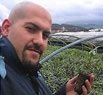
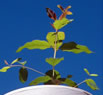
Eucalyptus Online Book & Newsletter are technical information texts written and made available free of charge to all people involved with the forestry and utilization of the Eucalyptus. It depends only on registering yourself to receive them.
Technical coordination - Celso Foelkel
celso@celso-foelkel.com.br
Webmaster / editing - Alessandra Foelkel
Celsius Degree: Phone (+55-51) 3338-4809
Copyright © 2007-2010
This knowledge oriented service was made possible through sponsoring support provided by ABTCP - Brazilian Technical Association of Pulp and Paper and by Botnia, Aracruz, International Paper do Brasil, Conestoga-Rovers & Associates, Suzano and VCP. The opinions expressed in the texts are those of the author or coming from the referenced technical literature. They do not necessarily reflect the views of the sponsors.
In case you prefer not to receive the Eucalyptus Newsletter and the Eucalyptus Online Book, send a cancellation e-mail message to webmanager@celso-foelkel.com.br
In case you want to support or to sponsor the Eucalyptus Online Book & Newsletter, having your logo or name associated with them, click here - to get more information
In case you want to register for receiving the next Eucalyptus Online Book chapters or the next issues of the Eucalyptus Newsletter, please click here and register by filling the requested boxes.